
A sunrise alarm wakes an ADHD brain better than sound alone only when the light is bright enough and the setup is simple enough to run every night. The Hatch Restore 3 wins on routines and sound, and Philips and Lumie win on brightness. One woman described a goblin that takes over the second her alarm rings, even though an app makes her do math to silence it. This guide compares 6 options by what happens at 7 am.

For ADHD mornings, pick a sunrise alarm by brightness and effort. The Hatch Restore 3 costs $169.99 and adds routines and sound. Philips SmartSleep and Lumie Bodyclock cost about $160 to $180 and run brighter, with no app. Choose the clock you will set every night, and keep its light in view.

Save this for later
You will want this again. Pin it to your planning board so it is one tap away when you need it.
Pin it for laterWhy Does the Alarm Fail an ADHD Brain Even When You Mean It?
An alarm fails because the sound arrives while your body clock still says it is night, and a sound has nothing to argue with that. A 2025 perspective article in Frontiers in Psychiatry, which summarizes earlier research, reports that delayed sleep wake timing occurs in up to 78% of people with ADHD, and that the evening melatonin rise arrives about 90 minutes later than in adults without ADHD. Where that 78% estimate comes from, and what it cannot prove, is explained on our ADHD statistics page. A body clock that runs 90 minutes late makes a 7 am alarm feel like 5:30 am.
One woman in an r/adhdwomen thread described what that feels like from the inside. Every morning a goblin takes over the second her alarm rings. She is set on getting up the night before, and the goblin wins anyway. An app that makes her do math and scan her toothpaste to silence the alarm has not stopped her from crawling back into bed, where her thumb opens everything she told herself not to open. She knows the exact moment it takes the wheel, and knowing has not been enough to stop it.
Is this a willpower problem? Nothing in her account points that way. Her alarm rings, she is awake for it, and the failure happens in the minutes after. A gentler wake up changes that minute, which is the reason to look at light.
How Does a Sunrise Alarm Actually Work?
A sunrise alarm raises the light in your room slowly, usually over 15 to 90 minutes, and then plays a sound at your wake time. Lumie sets its sunrise length anywhere from 15 to 90 minutes, and the Hatch Restore 3 moves from red to orange to white before its sound starts.
Does it work? A study of dawn simulation tested a light that rose from 0 to 210 lux over the 30 minutes before wake time. After that dawn light, perceived sleep quality was higher, alertness ratings were higher, and reaction times were faster: 0.81 seconds against 0.86 seconds with no light. That study was not about ADHD, so read it as a sign that the mechanism is real, not as proof that a clock fixes ADHD mornings.
The same Frontiers review reports that bright light therapy and melatonin can move a delayed body clock earlier in adults with ADHD. Ask your prescriber before adding melatonin. Should light be the first thing you try instead? A light on a timer carries no such question.
What Should You Look for in a Sunrise Alarm With ADHD?
Look for five things: brightness, ramp length, effort, sound, and price. Each one decides whether you use the clock on a tired night or abandon it in a drawer.
- Brightness: measured in lux at the distance of your pillow. A dim glow does not wake anyone, and brightness is the most common failure.
- Ramp length: 30 minutes is the length tested in the study above, and clocks let you set from 15 to 90.
- Effort: the number of buttons, menus, and app screens between you and a set alarm. Fewer is better for a brain that skips steps.
- Sound: a soft backup tone matters, because light alone will not wake every sleeper.
- Price: $30 to $130 for traditional sunrise alarm clocks, and about $160 to $180 for the models below.
Effort deserves extra weight. One reviewer bought a sunrise alarm with high hopes, and the light never got bright enough to wake her, more of a dim glow than a real sunrise. Changing the settings was so fiddly that she needed the manual every time. The gentle wake up idea was lovely, she said, and that clock did not deliver it. Brightness and effort are exactly where a clock can fail.
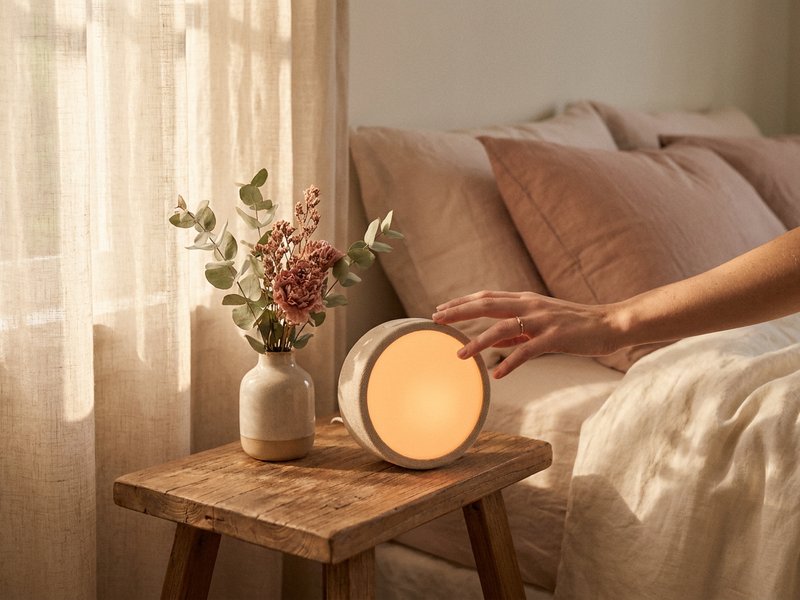
Hatch Restore 3: What Does It Do Well?
The Hatch Restore 3 does routines well: it strings a wind down, a sound, and a wake up into one clock. It costs $169.99, plays 40 plus sleep sounds, offers 20 plus sunrise alarms, and has a large button on top that starts a routine, snoozes, or turns the alarm off, with a knob for volume.
On brightness, one independent light meter test measured 610 lux at one foot. That is slightly below the Philips at 650 lux, and the Lumie Shine 300 at 730 lux, so Hatch is not the brightest of the three.
The app is optional. The Hatch+ subscription costs $4.99 a month or $49.99 a year for more audio and content, and a purchase comes with a 30 day free trial. The clock works without it. For an ADHD brain, the subscription is a small decision that returns every month, so decide once whether you want it, then cancel or keep it.
Philips SmartSleep: The Bright One With No App?
The Philips SmartSleep HF3650 is the bright, no app option, at about $180. It offers sunrise and sunset simulation with 25 brightness settings, a tap to snooze, an FM radio, and no subscription. A light meter test measured it at 650 lux at one foot, brighter than the Hatch Restore 3.
What does it lack? Guided meditations, stackable routines, and a large sound library, all of which the Hatch carries. If your morning problem is light and nothing else, that gap is a feature. If your evening problem is winding down, you may miss the routines.
Lumie Bodyclock: Warm Light and Fewer Menus?
The Lumie Bodyclock Shine 300 gives you warm, bulb like light and button only control, at $169 on Lumie’s own site and about $159 on Amazon. It runs a 15 to 90 minute sunrise, plays 15 sounds and an FM radio, and taps to snooze. Lumie backs it with a 3 year warranty and a 45 day trial.
The Shine 300 measured the brightest of the group at 730 lux at one foot. There is no app to open and no account to make. Why does that matter? Every screen between you and a set alarm is another step for a brain that drops steps. The bigger Bodyclock Luxe 750DAB adds Bluetooth, DAB radio, and 30 plus sounds for £229 in the United Kingdom, and Lumie lists it as a Class 1 medical device.
Can a Smart Bulb Replace a Sunrise Alarm Clock?
A smart bulb can replace a sunrise clock if you already own the bulb and can set a wake routine once. The Philips Hue Go, at $89.99, has a Wake Up routine that brightens the light over a set time, and the Hue automation turns bedroom lights on slowly over 30 minutes. The Govee portable light costs about $25 less.
The idea rests on lived experience. One woman swapped a harsh bathroom bulb for a smart light because the old one was so overstimulating, especially in the shower. Now she dims it low and sets it to a soft warm color, and the whole room feels calm instead of clinical. It was such a small change, she said, and it made her showers and her evening self care easier. Light color and brightness were doing more work than she expected. This worked for her, and your sensory profile may differ.
Is a bulb enough on its own? The trade is that a bulb has no snooze button, no radio, and a phone app for every change. It suits women who like their gadgets already, and it is a weaker pick if a new app makes you feel behind.
Do You Need a Dark Room for a Sunrise Alarm to Work?
A darker room gives the ramp more to add, since the light starts low and rises. That is reasoning, not a study, so treat it as a guide. One woman bought blackout curtains to finally darken her room. The fabric and color were lovely, but they were not truly blackout: light crept in around the edges and through the cloth at dawn. If you need a properly dark room to sleep, she said, they were not enough on their own.
Her story cuts two ways. If you want a dark room, check that a curtain is tested as blackout before you buy it. If you want a gentle dawn, some light around the edges may do part of the clock’s work. For more on setting up the room, see aesthetic nightstand ideas for ADHD soft sleep.

Hatch vs Sunrise Alarm at a Glance: Which Ones Win?
The table lines up all 6 options by the job each one does. Prices are current United States ranges, except where noted, and they shift with sales.
| Product | Best For | Price Range | My Take |
|---|---|---|---|
| Hatch Restore 3 | Routines, sound, and an app | $169.99, plus optional Hatch+ at $49.99 a year | The most polished all in one, and slightly dimmer than Philips or Lumie. |
| Philips SmartSleep HF3650 | Bright light and no app | About $180 | Simple, bright, and subscription free. It skips the routines. |
| Lumie Bodyclock Shine 300 | The brightest light, button only | $159 to $169 | Warm light and no menus, with a 45 day trial. |
| Lumie Bodyclock Luxe 750DAB | Bluetooth, DAB radio, more sounds | £229 in the United Kingdom | The premium pick, and not sold widely in the United States. |
| Philips Hue Go | Women who already use smart lights | About $90 | A Wake Up routine in a portable lamp, with no snooze button. |
| Traditional sunrise alarm clock | A low risk first try | $30 to $130 | Check the lux before you buy, since a dim glow will not wake you. |
What Do You Do When Light Alone Does Not Wake You?
When light alone fails, look under the alarm at the sleep itself. One commenter in an r/adhdwomen sleep thread did everything by the book, including CBT for sleep, and none of it moved the needle. It took 4 months of barely any sleep before she stopped treating sleep as the target and started treating the anxiety sitting underneath the insomnia. The shift was not a new technique. It was accepting that some nights would still be sleepless and that she would be okay regardless.
Why tell that story in a clock guide? Because a clock only moves the moment you wake up. If you are lying awake at 2 am, the fix starts earlier in the evening. ADHD sleep struggles explained covers the causes, and how to sleep with racing ADHD thoughts at night covers the night itself.
How Do You Set Up the Clock So You Actually Use It?
Set up the clock once, then leave the settings alone. Every change is a chance to stop. Five steps turn a purchase into a habit.
- Pick one wake time. Use the same time seven days a week, since a body clock learns from repetition.
- Set a 30 minute ramp. That matches the length used in the dawn study above.
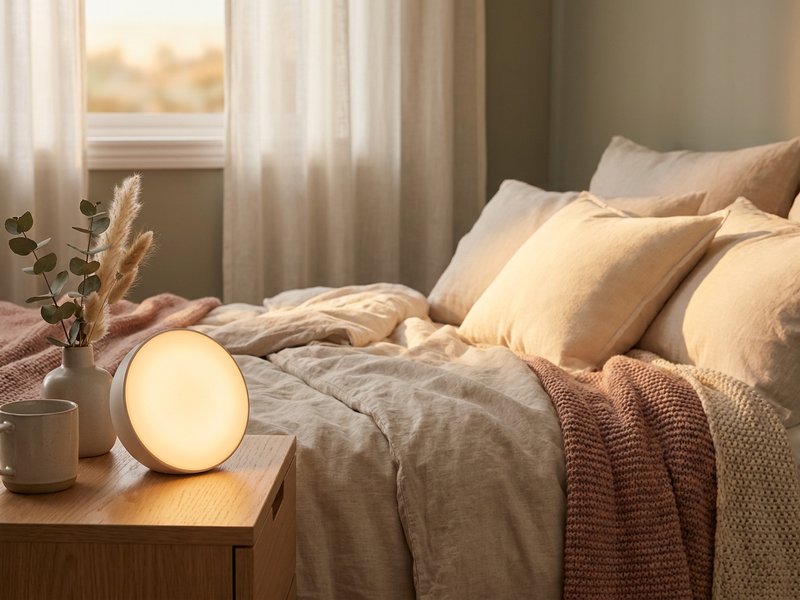
- Put it on the nightstand, facing the bed. The light has to reach your closed eyelids.
- Keep the backup sound soft. Light wakes you gradually, and a gentle tone finishes the job.
- Test it for a week. Most clocks come with a trial, so use the trial before you judge.
Once the clock works, feed it a morning worth waking for. How to build a morning routine that works with your ADHD brain shows what to do in the first 30 minutes, so the light leads somewhere.
Which Sunrise Alarm Should You Buy?
Buy the Hatch Restore 3 if you want routines, sound, and an app in one clock. Buy the Lumie Shine 300 or the Philips SmartSleep if you want the brightest light with nothing to manage. Buy a traditional $30 to $130 clock only after you check its lux. Choose by the failure you know: bright light problems point to Lumie or Philips, and wind down problems point to Hatch.
A small win can look like this. One woman put off a recipe for weeks, set multiple alarms, and left herself notes. Then one day she started it early, on her own, before an alarm went off, and felt a little burst of excitement. Beating her own avoidance, even once, felt like a real shift. Your morning may start with a clock, and it grows from small starts like hers. You’re not behind. You’re just differently wired.
Found this helpful? Pin this guide so you can come back to it anytime.
Frequently Asked Questions
Is a Hatch better than a sunrise alarm clock for ADHD?
The Hatch Restore 3 is a sunrise alarm with extra routines and sound. It suits women who want wind down and wake up in one clock. Philips SmartSleep and Lumie Bodyclock measured brighter in one light meter test, so pick Hatch for features and Lumie or Philips for light.
Do sunrise alarms work for ADHD?
Dawn simulation improved alertness and reaction time in one study, and delayed sleep timing is common in adults with ADHD. No trial has tested sunrise clocks on ADHD mornings, so treat them as a low risk tool. Test one for a week before you decide.
Do you need the Hatch subscription?
No. The Hatch Restore 3 works without a subscription, and a purchase includes a 30 day free trial of Hatch+. The subscription costs $4.99 a month or $49.99 a year for more audio content. Decide once whether you want it, then keep or cancel.
What is the best sunrise alarm for late diagnosed ADHD women who hate apps?
The Lumie Bodyclock Shine 300 and the Philips SmartSleep HF3650 run without an app. Lumie measured 730 lux at one foot with button only control, and Philips measured 650 lux with tap snooze. Both cost about $160 to $180 and skip the subscription.
How do I stop hitting snooze with ADHD?
Give your body a gradual wake up, keep one fixed wake time, and use a soft backup sound. If you are lying awake at night, work on the evening too. A clock moves the wake up moment, and it cannot fix a late body clock alone.