The best sleep products for ADHD cut light, sound, and restlessness together, and 9 are compared below from $12 to $169. One woman who rips the tucked sheet off a made bed assumed a weighted blanket would feel confining. She says a 20 lb blanket makes her body feel weightless instead, and that is the kind of surprise this guide sorts into products worth buying.

Start with the cheapest fix for your biggest sleep problem. A $20 pair of blackout curtains, a $34 mask, or a $49 sound machine each removes one trigger. Add one product at a time, keep it two weeks, and skip anything that needs an app or a subscription to work.

Save this for later
You will want this again. Pin it to your planning board so it is one tap away when you need it.
Pin it for laterWhy Do Sleep Products Matter for an ADHD Brain?
Sleep products matter because an ADHD brain notices every light, sound, and itch that a typical sleeper filters out. A review of sleep in adults with ADHD reports that they went to bed 39 minutes later on average and that 47% reported daytime sleepiness, against 30% of adults without ADHD. The sample sizes and caveats for this and six other sleep and emotion findings are on the ADHD statistics page.
Is it a willpower problem? Nothing in these numbers says so. It is a nervous system that stays on watch, which is why the products below change the room instead of asking you to try harder. For the habits that go with them, read why ADHD sleep struggles happen.
Which Sleep Products Are Best for ADHD in 2026?
Nine products cover light, sound, pressure, and wake up, each from a different price tier. The table sorts them by the job they do, using current United States prices that shift with sales.
| Product | Best For | Price Range | My Take |
|---|---|---|---|
| NICETOWN blackout curtains | A fully dark room | $20 to $29 | The cheapest big change, since light is the trigger you cannot see yourself. |
| Manta Sleep Mask | Blocking light without pressure | $39 | Blackout with cups that keep the mask off your eyelids. |
| Nodpod weighted sleep mask | Pressure on your face | $34 | A weighted mask for people who like a weighted blanket. |
| Loop Experience Plus earplugs | Light sleepers | $44.95 | Soft silicone that stays put when you roll over. |
| LectroFan Classic | Steady noise | $49 | A digital machine with fan sounds and no app. |
| Yogasleep Dohm Classic | Real fan sound | $45 to $50 | A mechanical fan, so the sound never loops. |
| Weighted blanket | Restless bodies | $65 to $179 | Pick 5 to 12% of your body weight and check the return window. |
| Hatch Restore 3 | A light and sound system | $169 | Useful, but the best features need a subscription. |
| Magnesium glycinate | Restless evenings | $12 to $14 | A small study effect, and your doctor decides if it is for you. |
Which Products Block Light for a Brain That Wakes at Dawn?
Blackout curtains and a sleep mask block light, and curtains win on price. NICETOWN curtains cost $20 to $29 and tested near zero lux with a wrap around rod. A Manta Sleep Mask costs $39 and keeps pressure off your eyes, while a $34 Nodpod adds weight across your face.
Which one first? Curtains, because they work for the whole room and for a partner. A mask is the better second step when you travel or share a room. Both cost less than a single month of many subscription apps. Does a mask replace curtains? No, since a mask covers only your eyes while curtains also stop the early light that wakes the whole room.

Which Products Quiet the Noise That Keeps You Awake?
Earplugs and a sound machine quiet a night, and they solve different problems. Loop Experience Plus earplugs cost $44.95 and suit people who wake at every sudden sound. A sound machine suits people who are kept up by silence and the thoughts that fill it. Why do some women wake at every small sound? A nervous system on watch does not filter, and earplugs lower what reaches it.
One woman with anxiety and light sleep went back and forth on Loop earplugs for months, a research spiral that many ADHD shoppers know. She says they are the first thing that helps her stay under without jolting awake at every sound, and she wishes she had stopped overthinking it sooner. Her note is honest too: what works for her may not work for you.
Why Did One White Noise Machine Fail?
A cheap white noise machine can fail because its sounds are thin. One woman bought a small machine that was loud enough, but the fan settings were fine and the water sounds came out tinny, almost worse than silence. She went back to a basic fan.
The lesson is to buy for the sound you can stand, not the number of sounds. A LectroFan Classic at $49 is built around fan and white noise sounds, and a Yogasleep Dohm at about $45 to $50 uses a real mechanical fan, so the sound does not loop. Both skip the app, which matters when your phone is the thing keeping you up.
Does a Weighted Blanket Help You Settle?
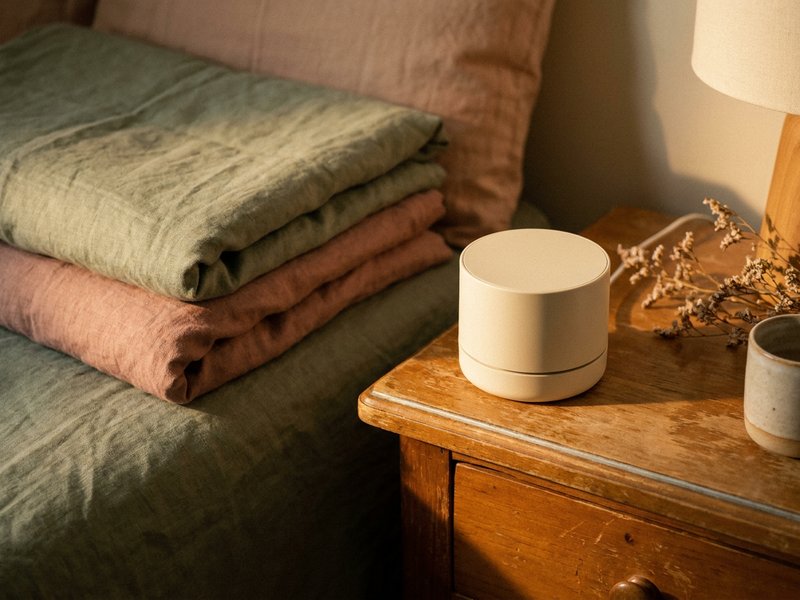
A weighted blanket helps many restless bodies settle, and it works best at 5 to 12% of your body weight. Prices run from $65 for a basic cotton blanket to $179 for a washable knit. For brands, weights, and cooling, see the full weighted blanket guide when it goes live.
The opening story shows why a trial matters. The woman who hates being trapped compares the feeling under her 20 lb blanket to a dry float, where she lay on a warm water bag, and now mostly wants to stay under it in bed. Does heavier always mean calmer? No, since heat and weight both count. A blanket that suits one body can feel confining to another, so check the return window before you buy.
Is a $169 Hatch Restore 3 Worth It for Sleep?
A Hatch Restore 3 is worth $169 only if you will use its light, sound, and routines every night. It combines a sunrise alarm, a wind down light, and a sound library, but its best features need the Hatch membership, which adds an ongoing cost.
A cheaper stack gets you most of it: $20 curtains, a $49 sound machine, and a $35 sunrise clock. For the head to head, read Hatch vs sunrise alarm.
Does Magnesium Glycinate Help You Fall Asleep?
Magnesium glycinate helps some people and the effect is small. A randomized trial of 153 adults who reported poor sleep gave 250 mg of magnesium for 4 weeks and found insomnia scores fell 3.9 points, against 2.3 with placebo, with a small effect size.
Real accounts split. One woman with restless legs says bedtime stopped being something she dreaded after a few weeks, and she now wakes rested. Another stopped a well reviewed magnesium because it left her queasy, which she calls a me thing, not a never thing. The National Institutes of Health sets 350 mg a day as the upper limit for supplemental magnesium, and I am not a doctor, so ask yours before you start. Is it worth $12 to try? For some people yes, and a 120 tablet bottle of Doctor’s Best costs $11 to $14.
What If Your Brain Wakes at 3 AM No Matter What You Buy?
Waking at the same hour each night usually points to something products cannot fix alone. One woman on r/adhdwomen spent 15 years waking between 1:00 and 3:00 am, the only quiet hours that felt safe to her. A standard bedtime routine never touched it. Could the cause sit outside sleep habits entirely? Yes, and that is worth saying aloud to a clinician.
What finally worked was breathwork built around the vagus nerve, first through a meditation app and then without it, with the app’s guided visuals still helping on bad nights. If a stack of products does not move your sleep after a month, talk to a clinician, and read what to do about racing thoughts at night.
How Do You Stack Sleep Products Without Overbuying?
Add one product at a time and keep it for two weeks. Buying 9 things at once repeats the mistake of more setup than you can sustain, and it hides which product helped.
- Name the trigger. Light, sound, restlessness, or racing thoughts.
- Buy the cheapest fix. Curtains for light, earplugs for sound, a blanket for restlessness.
- Test it for 14 nights. One bad night proves nothing.
- Move your phone across the room. It costs nothing and removes the biggest trigger.
- Add the next product only if the first one held.
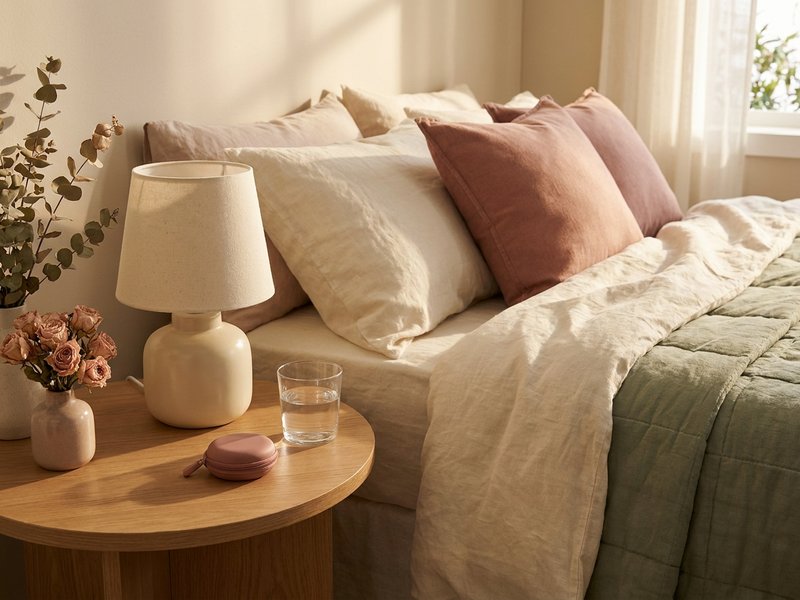
For the evening half, 10 cozy evening routine ideas for ADHD brains and an aesthetic nightstand that helps show how to arrange the products you already own.
Which Sleep Product Should You Buy First?
Buy blackout curtains first if light wakes you, earplugs if sound does, and a blanket if your body will not settle. Add a calmer morning routine after, because a better night shows up at 7 AM, and a morning routine built for an ADHD brain keeps it going.
One woman counts her first rested morning as a win. She woke before her alarm and felt rested, and it was not one magic product but the whole stack: a dark room, steady noise, magnesium, and her phone across the room. After years of dreading mornings, one good night felt enormous. You’re not behind. You’re just differently wired.
Found this helpful? Pin this guide so you can come back to it anytime.
Frequently Asked Questions
What are the best sleep products for ADHD?
Start with blackout curtains at $20 to $29, a sleep mask at $34 to $39, earplugs at $44.95, and a sound machine at $45 to $50. Each removes one trigger. Add one at a time, keep it for 14 nights, and skip products that need a subscription.
Why can’t I sleep with ADHD?
An ADHD brain notices light, sound, and restlessness that others filter out. A review of adult sleep reports bedtimes 39 minutes later and daytime sleepiness in 47% of adults with ADHD against 30% without. Changing the room often helps more than trying harder.
Does a weighted blanket help ADHD sleep?
It helps many people settle. Choose 5 to 12% of your body weight, from about $65 to $179, and check the return window. One woman who hates feeling trapped says a 20 lb blanket makes her body feel weightless, while others find any blanket too hot.
Is magnesium glycinate good for ADHD sleep?
A 4 week trial of 153 adults gave 250 mg and found a small improvement over placebo. The upper limit for supplemental magnesium is 350 mg a day. Ask your doctor before starting, since it left one woman queasy and settled another’s restless legs.
What is the cheapest way to sleep better with ADHD?
Move your phone across the room for free, then add blackout curtains at $20 to $29. Light and phone alerts are the two triggers that wake most light sleepers. Judge each change after 14 nights before buying the next product.