
Cozy fall self care works for a differently wired brain when it costs less than the thing it repairs. Autumn asks for more warmth and more rest at the same time your energy drops, and most fall self care ADHD women find online still reads like a second job. I tried the 5am that girl routine for exactly three days. By day four I was crying into a cold matcha I had made beautifully and forgotten to drink. Gentle consistency is the only thing that has ever lasted.
Make the smallest version count. One warm drink with nothing else, one blanket within reach, one honest check of what your body needs before it turns urgent. Autumn self care is about lowering the cost of care, not adding a new evening routine you will abandon by November.

Save this for later
You will want this again. Pin it to your planning board so it is one tap away when you need it.
Pin it for laterWhat Does Cozy Fall Self Care Mean for a Differently Wired Brain?
It means care that takes under 10 minutes, needs no decision, and stays where you already are. Not a spa evening, and not a reset day either. A short list of warm, low cost things your brain can reach on an average Tuesday in October.
The usual version fails for a specific reason. Most self care advice is written as a reward for a day that went well, and the days that need it most are the ones that went badly. Care you can only access at full capacity is care you will never use.
So what counts? Three things: a warm drink you actually drink, ten minutes with your eyes closed, and one item of clothing that feels good against your skin. Small enough to happen. Real enough to change the hour.
Why Does Autumn Make Self Care Harder Instead of Easier?
Because the season raises what your body needs at the exact moment daylight stops helping you meet it. Summer hands you free warmth, free light, and free reasons to go outside. October takes all three back in the same fortnight.

Here is the mechanism. Every act of care has a cost in decisions, energy, and setup, and shorter days raise that cost across the board. Getting outside used to mean opening a door. Now it means a coat, boots, and a scarf you cannot find, so the same walk carries three extra steps before it starts.
What does that mean in practice? Cut the setup, not the care. Leave the coat on the hook by the door, the boots directly under it, and one scarf in the sleeve so the walk stays a single decision instead of four.
How Do You Notice What Your Body Needs Before It Turns Urgent?
Set one fixed check point a day rather than waiting for a signal your brain turns the volume down on. Interoception is the sense that reports hunger, temperature, and tiredness from the inside, and it runs quietly for a lot of differently wired women.
My body cues come in almost too late to use. I rarely notice I need the bathroom until it is urgent, never feel too hot until I am already sweating, never feel cold until someone hands me a blanket. I can spend a whole afternoon cranky and clueless, then peel a blanket off my lap and realize I have been overheating for hours. The signal is there. My brain just turns the volume down.
A fixed check point replaces the missing alarm. Pick a moment that already happens every day, such as the kettle boiling or the 3pm slump, and run four questions: am I cold, thirsty, hungry, or overdue for a break? Answer with an action inside 60 seconds, because a noticed need that gets logged instead of met is still an unmet need.
Where Should You Start When Everything Feels Like Too Much?
Start with warmth, because it is the only form of care that works while you do nothing. A hot drink, a blanket, or a shower each raise comfort without asking your brain for a plan, a decision, or a finished task.
Rank your options by how many steps they need. One step: a glass of water, socks on, curtains closed. Two steps: tea made, blanket fetched. Five or more steps: a bath, a long walk, a face mask you have to rinse off. On a heavy day you get exactly one step, so keep three of those permanently stocked.
Why does the step count matter more than the activity? Because the barrier is starting, not doing. Once a warm mug is in your hand the rest of the evening usually softens on its own.
Which Warm Rituals Are Worth Keeping All Season?
The five that survive a bad week, not the ten that look good in a planner. A ritual earns its place when it still happens on the day you have nothing left to give.
- The 4pm warm drink. Decaf tea, cocoa, or broth, timed to the hour your energy dips rather than to a mood.
- Socks by the bed. Cold feet keep your body in low grade alert, and wool socks fix that in 5 seconds.
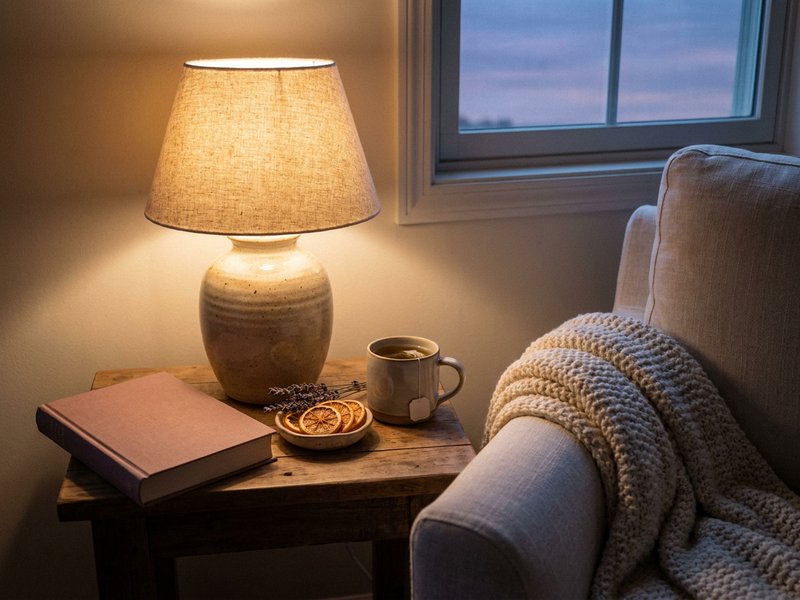
- One lamp instead of the ceiling light. Softer light at eye level signals evening to a brain that stopped reading the sky at 4:30pm.
- Ten minutes flat on the floor. No phone, no plan, no timer if a timer makes it feel like a task.
- One texture you love. A knitted throw, a fleece robe, or a hot water bottle in a soft cover, kept in the room where you actually collapse.

Keep every one of them within arm’s reach of where you land. A ritual stored in another room is a ritual that happens twice and then stops. The same rule shapes the 20 ADHD tools I use daily, where placement decides whether an object gets used at all, and it runs through the whole soft self care corner of the site.
Why Does Rest Still Feel Like Something You Have to Earn?
Because most late diagnosed women spent decades being told the problem was effort, and that story does not leave when the diagnosis arrives. Rest gets filed as a reward rather than as maintenance, so it waits for a good enough day that never quite qualifies.
A 2025 UK interview study of eight late diagnosed ADHD women, average age 41, recorded concrete shifts in daily self management once the diagnosis explained years of struggle. One participant, diagnosed 8 years earlier, linked the label directly to gentler self treatment rather than constant self criticism, explaining: “Knowing I’ve got ADHD kind of helps realise and pace myself and not beat myself up too much.” Pacing, in that account, is the practical form self care takes after a late diagnosis.
The gap most women fall into afterward is structural rather than personal. A UK survey of 52 adult women assessed for ASD or ADHD tracked what happened next: out of 31 responses on post assessment follow up, 9 confirmed being contacted by their healthcare professionals, leaving 22 without contact. Roughly seven in ten received a diagnosis with no clinical support behind it, which is why so much of this ends up self directed. Looking after your own mental health is a maintenance task, not a reward for a good week.
What Does Sensory Self Care Look Like in October?
It looks like changing what touches your skin, what your eyes have to process, and how loud the room is. Sensory input is regulation for a differently wired nervous system, and autumn changes all three inputs at once.
Work through them one sense at a time. Touch: swap anything scratchy for cotton, fleece, or brushed wool, and keep one weighted item where you rest. Sight: drop the overhead light after dusk and cut visual clutter from the one surface you look at most. Sound: a fan, rain audio, or a quiet playlist covers the household noise that keeps a busy brain half alert all evening.
Does it need to be all three? No. Pick the sense that bothers you most on a bad day and change only that one, because a single fixed input does more than three half attempts. The nervous system regulation corner of the site goes deeper on the grounding side of this.
How Do You Keep Self Care From Becoming Another List?
Cap it at three items and never track it. The moment care gets a streak, a chart, or a habit app, it turns into one more place to fail.
Three quiet rules hold the shape. No numbers, so there is no streak to break. Nothing new bought for the first month, so the setup cost stays at zero. And no swapping in a bigger version once it starts working, because that is how a 10 minute ritual becomes a 40 minute one nobody has time for.
What if you skip a week? Nothing happens. A ritual with no scoreboard cannot be broken, only paused, and picking it back up costs the same as it did the first time.
What Should You Do on a Low Dopamine Autumn Day?
Choose the one step version and let the day be small on purpose. Warm drink, blanket, list postponed. That is the whole plan, decided in advance so the decision is not made by a tired brain at 3pm.
Write it down while you are steady, and put it somewhere visible: the fridge, the bathroom mirror, or the inside of the cupboard you open most. Deciding in advance removes the argument, because on those days the argument costs more than the task.
Common signs adults report include trouble with focus, restlessness, and difficulty finishing tasks, as described by the CDC, so a flat day is a known feature of the wiring rather than a verdict on your character. Treat it as weather. Dress for it and wait it out.
What Does a Gentle Fall Week Actually Look Like?
Softer than the version in your head. Three warm drinks you finished, one evening under a blanket, and one afternoon where you noticed you were cold before someone told you.
Keep three things and let the rest go. The check point happens once a day. One ritual stays within arm’s reach. The one step version exists in writing. Everything else this season is optional.
It was a low dopamine day and for once I did not fight it. I made tea, got under a blanket, and let the list wait. A month ago I would have spent the day drowning in guilt. This time I just rested, and resting turned out to be enough.
Start with the warm drink. Add the check point when the drink has happened for a week. You’re not behind. You’re just differently wired.
Save this for later? Pin the list so it is one tap away on the first cold evening that flattens you.
Found this helpful? Pin this guide so you can come back to it anytime.
Frequently Asked Questions
What is cozy fall self care for ADHD women?
It is care that costs under 10 minutes, needs no decision, and stays within arm’s reach of where you already sit. A warm drink, a blanket, socks, and one daily check of whether you are cold, thirsty, hungry, or overdue for a break.
How do I start a self care routine when I have no energy?
Rank options by how many steps they take and keep three one step versions permanently stocked. Socks, a glass of water, closed curtains. Starting is the barrier, not doing, so the smallest warm thing usually softens the rest of the evening on its own.
Why does self care feel like something I have to earn?
Because years of being told the problem was effort file rest as a reward rather than as maintenance. Late diagnosed women describe pacing themselves more kindly once a diagnosis explains the pattern. Rest belongs in the same category as eating and sleeping.
What is sensory self care for women with late diagnosed ADHD?
Changing what touches your skin, what your eyes process, and how loud the room is. Swap scratchy fabrics for fleece or brushed wool, drop the overhead light after dusk, and cover household noise with a fan or rain audio. Fix one sense at a time.
How do I stop self care turning into another to do list?
Cap it at three items and never track it. No streaks, no habit app, no new purchases for the first month. A ritual with no scoreboard cannot be broken, only paused, and restarting costs the same as it did the first time.