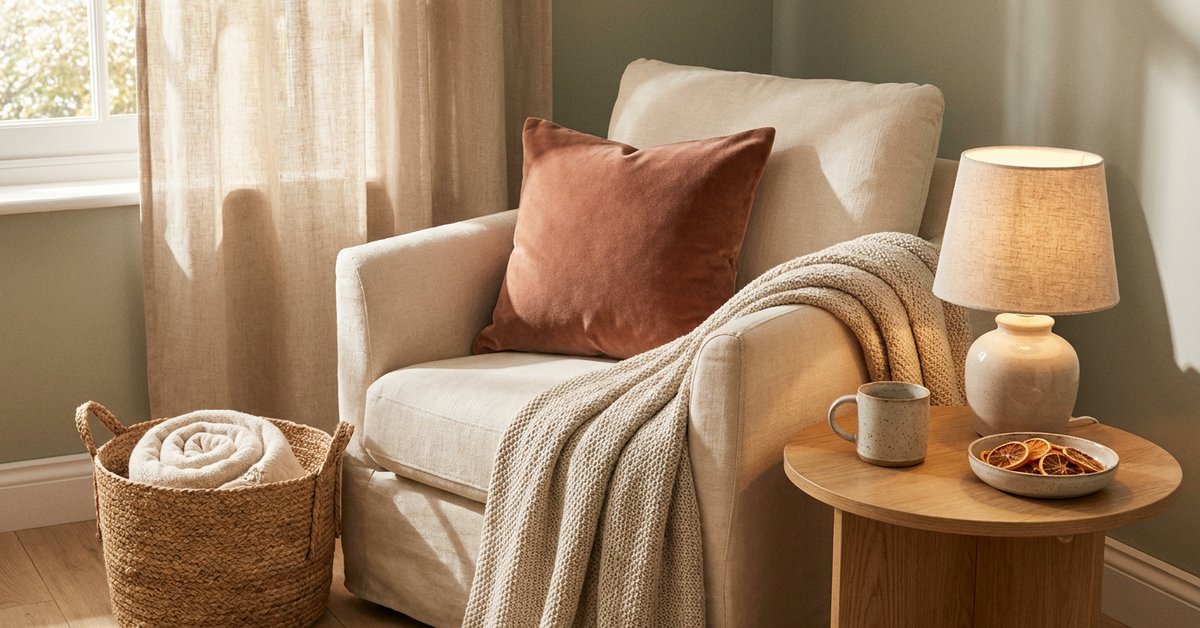
A cozy fall room refresh works for a differently wired brain when it changes one corner rather than the whole room. October pulls you indoors and drops the light at the same time, so the fall room refresh ADHD women need is about warmth and visibility, not a redesign. When I moved in, I let my mom unpack and place things wherever made sense to her. It made sense to the average brain, not mine, and for 18 months I could not find what I owned. A refresh puts the room back in reach of your own brain.
Refresh one corner, not the room. Warmer light at eye level, one soft texture where you actually sit, and storage you can see into without visual noise. Twenty minutes on a single shelf changes more than a weekend plan you never start.

Save this for later
You will want this again. Pin it to your planning board so it is one tap away when you need it.
Pin it for laterWhat Does a Fall Room Refresh Mean for a Differently Wired Brain?
It means changing three inputs, light, texture, and what you can see, in one corner you already use. Not a repaint, and not new furniture either. A refresh is a small set of swaps that make the room easier to be in once the days get short.
The seasonal version most decor content sells is a whole room project: new bedding, a rug, a gallery wall, all in one weekend. That plan fails on the same step every year, which is starting it. A project needs a free Saturday and a decision about where to begin, and both of those are exactly what runs short in autumn.
So what actually goes on the list? Three things: one lamp moved or added, one warm texture where you sit, and one surface cleared. Everything else this season is optional.
Why Does Your Room Stop Working in Autumn?
Because you spend far more hours in it while it gets darker and colder, so every small friction you tolerated in July starts costing you daily. Summer hides a lot. Open windows, long evenings outside, and bright rooms cover for a layout that was never quite right.
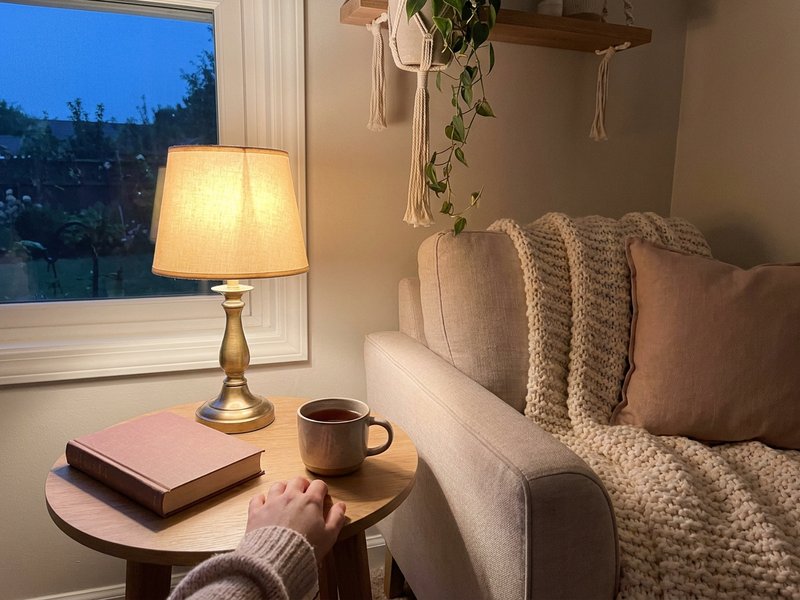
Here is the mechanism. Light level sets how alert a room makes you feel, and a ceiling bulb at 5pm in November reads as either harsh or gloomy with nothing in between. Seasonal changes in mood and energy that track daylight are documented by the National Institute of Mental Health, which describes symptoms starting in late fall and lifting in spring.
What changed between August and October? The room did not. Your hours in it doubled, and the free daylight that made it pleasant went away.
Where Should You Start if You Only Have 20 Minutes?
Clear and restyle one surface in the corner where you actually sit. A single finished shelf, side table, or dresser top gives your eyes one calm place to land, and it takes under half an hour from start to done.
Work in the same order every time. Take everything off. Wipe the surface. Put back only three things, then move the rest to one box that lives somewhere else until you decide. Three items is not a style rule, it is a limit that keeps the surface from refilling by Thursday.
Why one surface instead of one room? Because a finished corner reads as progress every time you walk past it, while a half done room reads as an unfinished task, and your brain files those very differently.
How Do You Layer Warmth Without Adding Clutter?
Swap what you already own for a warmer version instead of adding new pieces on top. A refresh that only adds ends the season with more objects and less floor, which is how autumn cosy turns into January overwhelm.
Work swap by swap. Cotton throw out, chunky wool throw in. Thin summer cushion cover off, brushed cotton or corduroy on. Light rug rolled and stored, heavier flatweave down in the same spot. Each change takes under 5 minutes and nothing new enters the room permanently.
Keep the swapped out pieces together in one labelled bag rather than scattered across three cupboards. Future you in April will thank present you for the 2 minutes that costs now.
What Should Autumn Lighting Actually Look Like?
Two or three small warm lamps at or below eye level, and the ceiling light off after dusk. Low warm light tells a nervous system the day is winding down, while an overhead bulb keeps signalling daytime long after the sky disagrees.
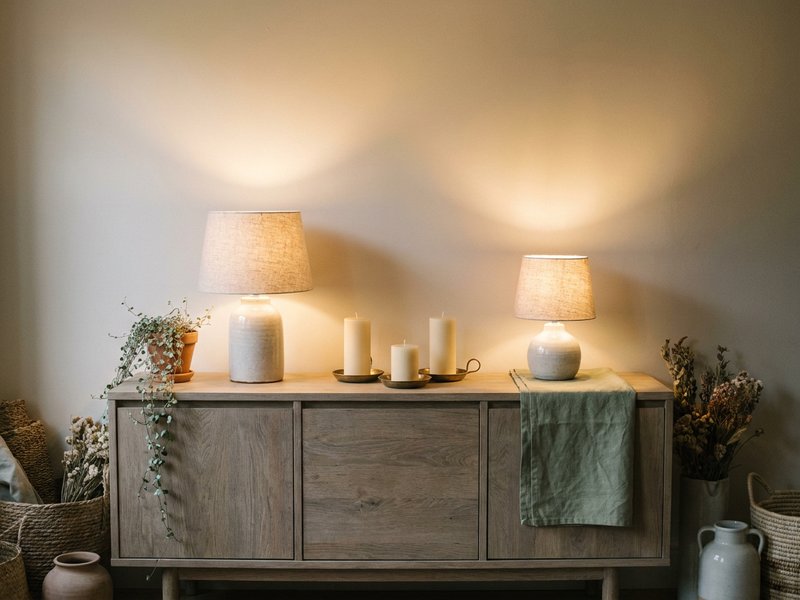
Place them by function rather than by symmetry. One where you read, one across the room so the far corner is not a dark hole, and one low near the floor if the room is big. Bulbs around 2700K read as warm white, and the cheapest fix in any rented room is changing three bulbs rather than three fixtures.
Does the switch matter? More than the lamp does. A lamp you have to cross the room to turn on gets used twice, so put every one on a smart plug or a socket you pass anyway.
Why Do Clear Bins Stop Working for Some Brains?
Because visible storage solves forgetting and creates visual noise at the same time, and for some women the noise costs more than the forgetting did. Clear bins are the standard recommendation, and they are not the standard answer.
One detailed r/adhdwomen comment documents the opposite failure mode from the one clear bins are sold to fix: constant visual input from see through containers caused sensory overload rather than helping recall. The commenter summed up the tradeoff directly: “Open/clear storage = visual overstimulation.” Her fix swapped in fully opaque containers labelled in detail, sometimes with a painted picture of the contents instead of text, which restored calm without bringing the forgetting back.
There is a name for why the labelled version still works. Perception researcher J.J. Gibson, who taught psychology at Cornell University, described an affordance as a “cue or quality an object projects indicating how we should interact with it” rather than a fixed property of the object itself. A clear picture on the front of a box is a cue. The transparency was never the point.
How Do You Store Summer Things Without Losing Them?
Keep the swap visible or labelled at the exact spot you will look for it, because a closed cupboard erases the contents. Object permanence is the quiet reason seasonal storage goes wrong every single year.
I hang every piece of clothing on open racks where I can skim the whole row, because when clothes hide in a closet I end up rewearing the same not quite clean thing. It is simply less overwhelming than digging. I live in a loft with barely any cabinets, my 4th home in a row with almost no storage, and I have come to love it. Everything stays where I can see it, so there are no hidden messes waiting for me.
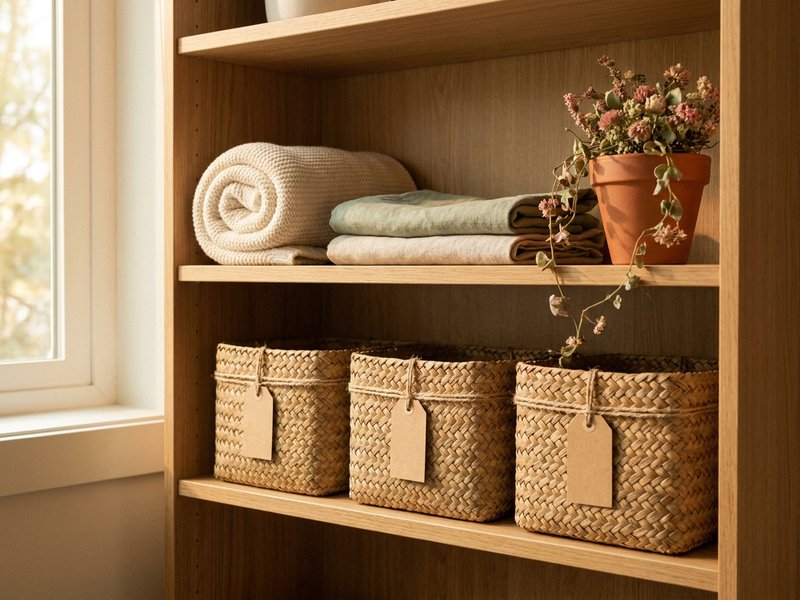
If open storage is too loud for your eyes, use the middle version. Opaque baskets with a large tag on the front, one line per tag, written the way you actually search: summer bedding, sandals, thin throws. The home organization corner of the site goes deeper on making those systems survive past week two.
Which Corner Deserves the Refresh First?
The one you land in without deciding to. Not the corner guests see, and not the one that photographs best. The seat you drop into at 6pm is where a refresh pays you back daily.
Find it by tracking rather than guessing. Notice for two days where you actually end up: the end of the sofa, the desk chair after work, the kitchen stool by the window. Refresh that exact spot, then stop, because a second corner started before the first one finishes is how both stay unfinished.
Give that corner the good things. The warm lamp, the softest throw, and the one object you love looking at go there first. You can see the same reasoning applied to objects across the aesthetic spaces corner of the site.
What Do You Do When the Room Feels Like Too Much?
Run the two minute version: clear one surface and switch on the lamp. That is the whole plan for a low dopamine day, written in advance so a tired brain does not have to invent it.
Nothing else counts on those days. No sorting, no decisions about what to keep, no opening a cupboard that turns into a project. Move the pile to one box, put the lamp on, and let the room be 10 percent better instead of finished.
Why does the box work when tidying does not? Because it separates clearing from deciding, and deciding is the expensive half. Trouble with organizing tasks and sustained mental effort sits among the adult signs described by the CDC, so splitting the two is a design choice rather than a shortcut.
What Does a Finished Fall Corner Actually Look Like?
Smaller than the version on your mood board. One clear surface, one warm lamp on at dusk, and one soft thing within reach of where you sit.
Keep those three and let the rest of the room stay ordinary this season. The corner does the work. A whole coordinated room is a project for a spring with more daylight in it.
I cleared and restyled one shelf, just the one, instead of the whole room. It took twenty minutes. Now every time I walk past it my shoulders drop a little. One finished corner did more for me than the big plan I never started.
Start with the surface. Add the lamp when the surface has stayed clear for a week. You’re not behind. You’re just differently wired.
Save this for later? Pin the refresh so it is one tap away on the first evening the room feels wrong.
Found this helpful? Pin this guide so you can come back to it anytime.
Frequently Asked Questions
What is a fall room refresh for ADHD?
It is a small set of seasonal swaps in one corner: warmer light at eye level, a heavier texture where you sit, and one cleared surface. No repainting and no new furniture. The point is making the room easier to be in once daylight drops.
How do I refresh a room when I have no energy to start?
Pick one surface in the corner you already sit in and give it 20 minutes. Take everything off, wipe it, put back three items, and move the rest into one box. A finished corner reads as progress. Half a room reads as an unfinished task.
Are clear storage bins good for ADHD?
For some brains, yes. Others find the constant visual input causes overload, and opaque containers with a large clear label work better. The active ingredient is the cue on the front, not the transparency, so choose whichever version your eyes can live with.
What lighting is best for an autumn ADHD friendly room?
Two or three small warm lamps at or below eye level, roughly 2700K, with the ceiling light off after dusk. Place them by function rather than symmetry, and put each one on a switch or plug you already pass so it actually gets used.
How do women with late diagnosed ADHD store seasonal things without losing them?
Keep the storage visible or clearly labelled at the spot you will search. Use one line per tag written the way you would actually look for it, such as summer bedding or thin throws. A closed unlabelled cupboard erases its own contents.