This reflects my personal experience with ADHD. What works for me may not work for everyone.
Most of what holds my life together costs less than a takeout order. The daily ADHD tools women like me reach for are not apps with a monthly fee, they are small objects that take over a job my brain keeps dropping. Every list of ADHD apps is a thousand people swearing that one more list app will finally sort my life out. It never does. The tools that actually help my brain are usually the odd, obscure ones nobody recommends, and I had to go find them myself. Below are the 20 I still use: for time, for the door, for memory, for my home, for loud days, for my body, and for comfort.
The tools that last move one job out of your head and into the room, where you can see it. A visual timer holds time, a tray by the door holds leaving, one running note holds memory. Start with the single tool aimed at your most expensive daily problem.

Save this for later
You will want this again. Pin it to your planning board so it is one tap away when you need it.
Pin it for laterWhy Do Small Tools Matter So Much After a Late Diagnosis?
They matter because a late diagnosis usually arrives after decades of holding everything together by effort alone, and a tool lets you finally put some of that weight down. School handed out structure for free: bells, deadlines, a teacher who noticed the drifting. Adult life quietly removed all of it.
What is a tool actually replacing, then? A piece of scaffolding that used to be built into your day. Four jobs come up again and again: sensing time passing, holding a thought long enough to act on it, getting through a transition, and turning down sensory input. Trouble with planning, task initiation, and follow through sits among the core adult signs described by the National Institute of Mental Health, so these are not personal failings to argue with.
None of these objects cure anything. They lower the cost of an ordinary day. For a brain that has been overpaying for thirty years, that difference is the whole point.
How Do I Actually See Time Passing?
I put time where my eyes already are, with a timer on the desk, a clock in every room, and alarms that speak in words instead of noise. Time management sits among the most common adult struggles named by the CDC, which is why this is the first place a tool earns its keep.
There is a name for what these tools are propping up. A clinical overview of adult ADHD routines cites researcher Russell Barkley’s framing of the condition as producing “temporal myopia”, a nearsightedness to time in which behavior follows immediate urges rather than longer goals. Read that way, a timer is not a productivity gadget. It is a prosthetic for a sense most people get for free.
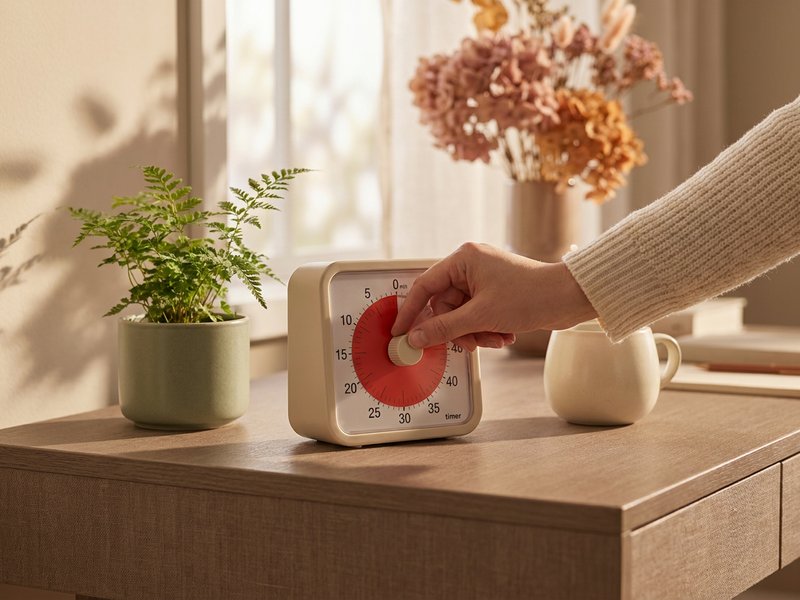
Tool 1 gets asked about more than the other 19. The beige visual timer is the only one I never resent looking at. The bright red ones made my shoulders climb up to my ears. This one sits on my desk and shows me time without yelling about it. It works for me. It might not for everyone, but the soft color decided whether I would use it at all.
Tool 2 is an analog clock in every room, the bathroom included. Digital numbers hand me a fact. Watching hands move tells a story my brain can follow while half awake.
Tool 3 is alarms with words in them. Mine do not simply ring. They say leave now, start winding down, water the plants. Why does the wording change anything? Because a label turns a sound into an instruction, and instructions are far easier to obey than a vague sense of urgency.
What Gets Me Out the Door Without a Spiral?
A tray by the front door, hooks at eye level, and a bag packed the night before. Leaving the house is a transition, and transitions are where my mornings used to come apart.
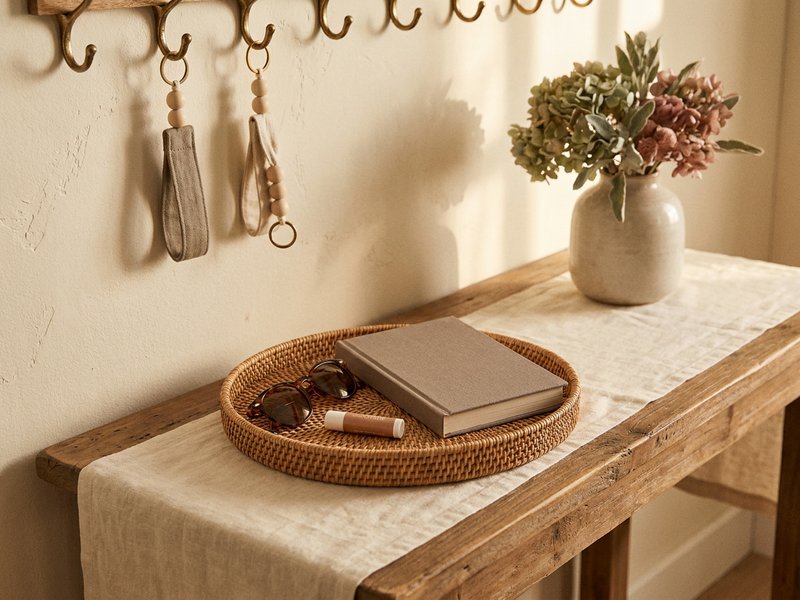
Tool 4 is a small tray beside the door. Wallet, sunglasses, lip balm, the library book due back. Anything that has to leave the house lives on the tray, because my brain cannot lose what it walks past on the way out.
Tool 5 is a row of hooks at eye level for keys. Not a drawer, not a bowl in another room. Hooks I physically face while reaching for the doorknob.
Tool 6 is packing the bag the night before, every single time. Morning me has the focus of a startled squirrel. Evening me can be trusted with zippers, and splitting the job between the two of them ended more arguments with myself than I can count.
Where Do My Stray Thoughts Go Now?
Into one of three places: a single running phone note, a pocket notebook, or a voice memo. Writing things down is not weakness. It moves memory outside a system that drops things under pressure.
Tool 7 is one note on my phone, not twelve. Groceries, ideas, the question for my doctor, all in a single scroll. Splitting notes into tidy categories sounds lovely and works for nobody with my kind of brain.
Tool 8 is a small notebook and pen in every bag I own. Paper needs no charging, and it does not open Instagram on the way to the note.
Tool 9 is voice memos in the car. Some of my best thinking happens at red lights, and it used to evaporate by the next intersection. Now it waits in my pocket.
Which Tools Make My Home Work With My Brain?
Everything I use stays visible, and everything that punishes forgetting gets automated. It took me years to stop designing my house for the woman I thought I should be.
In my early twenties my electricity got cut off because I forgot to pay the bill, more than once. So the fix was never a better reminder. It was removing my memory from the job entirely.
- Tool 10: clear storage bins. What I cannot see stops existing, and opaque boxes are where duplicates breed.
- Tool 11: autopay on every bill. My memory is not a billing system and never was.
- Tool 12: open shelves for daily items. Cabinet doors are where my habits go to die.
One caveat, because this is the tool that splits a room. Visible storage raises stress for some people instead of lowering it, and a detailed r/adhdwomen thread documents exactly that failure: see through bins produced constant visual input and tipped into overload. Swapping to opaque containers with detailed labels solved it without bringing the forgetting back. Try the version your nervous system agrees with, not the version that photographs well.
What Helps on Loud, Overstimulating Days?
Soft earplugs and a weighted blanket carry me through the loud days. Sensory overload hijacks attention before any planner gets a turn, so turning the input down comes first.
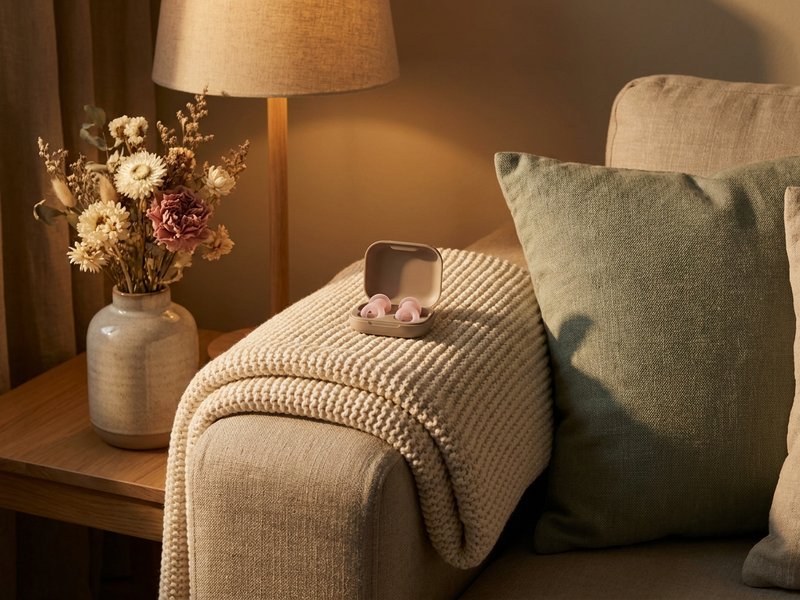
Tool 13 is a pair of soft silicone earplugs that lower the sharpness of a room without making it silent. Grocery stores, open offices, my own kitchen at six in the evening. The volume of the world became negotiable.
Tool 14 is a weighted blanket for evenings when my skin feels staticky. Deep pressure tells a nervous system the day is over before the thoughts agree. Sensory needs vary a lot between differently wired brains, so what settles mine might bother yours.
Do Paper Tools Beat Apps for an ADHD Brain?
For a large share of ADHD readers, yes, and the gap is wider than app marketing suggests. Notice how many of the 20 tools above are objects rather than software. That was not nostalgia, it was what kept working.
The pattern shows up in survey data too. ADDitude ran a survey completed by 1,342 of its own readers and found respondents chose physical planners over every tested app by a wide margin, citing the reward of physically crossing off a finished task. That single number complicates any tool guide that reaches for software first.
Why does paper hold on? An app asks you to remember it exists, get past a lock screen, and resist everything else waiting on that screen. A notebook on the counter asks for none of those. When an app does stick, it usually earns the spot by removing steps rather than adding a dashboard, and you can see more of that pattern across my ADHD tools and product reviews.
Which Tools Remind Me I Have a Body?
A large water bottle, a visible snack basket, and a weekly pill case. Interoception, the sense of what is happening inside you, tends to whisper in brains like mine.
Tool 15 is a big water bottle with a straw. The straw matters more than it should. Unscrewing a lid is one step too many on a brain fog day.
Tool 16 is a snack basket I can see from the couch. Why a basket instead of a cupboard? Food behind a door stopped counting as food, and forgetting to eat until three in the afternoon was normal for years, with the crash afterward running the rest of the day.
Tool 17 is a weekly pill case with the days printed on it. Did I take it is a question that used to eat twenty anxious minutes. Now the little lid answers in one second.
What Are the Soft Extras Worth Keeping?
A sunrise lamp, a quiet fidget ring, and one comfort playlist. None of the three are essential, and all three are the ones I would miss first.
Tool 18 is a sunrise lamp that fades on slowly. Waking to a blaring phone alarm started every day in fight or flight. Light is a kinder opening line.
Tool 19 is a plain spinner ring that passes as jewelry. My hands get to move in meetings without anyone raising an eyebrow.
Tool 20 is one playlist I have looped maybe a thousand times. Familiar songs ask nothing of my attention, which makes them the only soundtrack my chores will accept.
What Do I Wish Someone Had Told Me Sooner?
That needing tools is not a personal failure, and that a late diagnosis is information rather than an accusation. One sentence rearranged how I talk to myself:
Getting diagnosed in your 30s is not jumping on a trend. It is finally getting the manual for a brain you have been running without one.
Pick one tool, aimed at your most expensive daily problem, and live with it for two weeks before adding another. If noise wrecks you by noon, start with the earplugs. When every task swallows three hours, start with the visual timer. And when mornings collapse first, start with the sunrise lamp. New here? My Start Here page points you to the right corner of the site, and all 14 topics are in one place if you would rather wander.
I did not believe an object could calm me down. Then I sat under the weighted blanket on a rough night and my body went quiet for the first time in hours. I did not expect a thing to help that much. It quietly did.
Small wins count. So do small tools. You’re not behind. You’re just differently wired.
Save this for later? Pin the list so it is one tap away the next time a day gets loud.
Found this helpful? Pin this guide so you can come back to it anytime.
Frequently Asked Questions
What are daily ADHD tools?
Daily ADHD tools are small objects and systems that take over a job your brain keeps dropping, such as tracking time, holding a thought, or easing a transition. Visual timers, door trays, and one running note are typical. They are supports rather than cures, and the best ones remove steps.
Which daily ADHD tool should I try first?
Start with the tool aimed at your most expensive daily problem, the one costing you the most time, money, or shame. Use it for two weeks before adding anything else. One tool that sticks beats five that end up in a drawer by the end of the month.
Are paper tools better than apps for ADHD?
Often yes. In a survey of 1,342 ADDitude readers, physical planners beat every tested app by a wide margin, with readers naming the reward of crossing a task off by hand. Apps work best when they remove steps instead of adding another screen to remember.
Is it normal to need this many tools to get through a day?
Yes, completely normal for a differently wired brain. Tools are not proof you are failing. They rebuild the support structure school and routines used to provide for free. Glasses never get questioned, and supports for attention deserve that same quiet acceptance.
What are the best daily ADHD tools for women diagnosed late?
Late diagnosed women get the most from tools that make time visible and turn sensory input down: a visual timer, one running phone note, and soft earplugs cover the three biggest gaps. Add a tray by the door once those feel steady, then stop and let them settle.