I’m not a doctor or therapist. This is based on my personal ADHD experience and is for informational purposes only. Please consult a qualified healthcare provider before making health decisions.
An overstimulated ADHD brain calms fastest when you remove input, not add willpower. The ADHD nervous system filters sensory input less than a typical brain, so noise, light, and movement land at full volume. There was a little girl who hid behind the sofa when the room got too loud. Too many people, too much input, all of it landing at once. She wasn’t being difficult. That little girl was just overwhelmed, with no words for it yet. This guide covers what overstimulation is, why it hits that wall faster, and 12 gentle resets to use the moment it happens.
An overstimulated ADHD brain calms fastest through sensory reduction, not distraction. Cutting noise, dimming light, or leaving a crowded room works faster than pushing through it. The 12 resets below split into 4 groups: immediate physical resets, noise specific fixes, body based resets, and daily environment changes, so you can grab whichever matches your trigger.


Save this for later
You will want this again. Pin it to your planning board so it is one tap away when you need it.
Pin it for laterWhat does it mean when an ADHD brain is overstimulated?
Overstimulation means your nervous system has taken in more sensory input than it can process. It stops sorting signals and starts reacting to all of them at once. For a typical brain, sensory gating filters out the hum of the fridge, the tag on your shirt, and the conversation two tables over. The National Institute of Mental Health describes difficulty regulating attention and stimulation as a core feature of ADHD. For many women, that regulation gap shows up as sensory flooding long before it shows up as a focus problem.
What does that flooding actually feel like? Most women describe it as a rising static or a tightness across the chest. Some feel a sudden urge to leave a room without being able to explain why. It is not the same as being tired. Anxiety feels different too, though the three often arrive together.
Why does the ADHD brain overstimulate faster than others?
The ADHD brain overstimulates faster because sensory gating runs weaker than in a neurotypical brain. Sensory gating is the filter that decides what deserves your attention. Every sound, texture, and flicker of light competes for attention at nearly the same volume. A grocery store or an open plan office can cost an ADHD brain the same energy a full workday costs someone else.
Why does this matter beyond comfort? The same weak filter that lets in too much noise also makes it harder to filter out an unfinished task, a looming deadline, or an unresolved conversation. Sensory overload and mental overload run on the same circuit. A loud room can derail a task list just as effectively as a hard problem can.
Dopamine and norepinephrine, the two neurotransmitters most affected in ADHD, also regulate how the brain prioritizes incoming signals. When those systems run low, the brain cannot rank one input above another. Everything arrives marked urgent at once.

How do you calm an overstimulated brain right now?
You calm an overstimulated brain right now by cutting input fast, not by pushing through it. The fastest fixes work in under 2 minutes, need no equipment, and can be done anywhere, at your desk, in a car, or mid conversation.
- Leave the room, even for 90 seconds. Physical distance from the source cuts input immediately, more than any technique performed inside the same space.
- Cover your eyes with your palms. Removing visual input alone, without changing anything else, drops the total sensory load by a large share for most people.
- Run cold water over your wrists. The temperature change interrupts the overload signal and gives your nervous system one clear, simple input to focus on instead of ten competing ones.
- Name it out loud: “I am overstimulated.” Saying the word moves the experience from a vague body panic into a named, temporary state, which itself lowers the intensity for many women.
But what if you cannot physically leave, like in a meeting or on a plane? Cover one sense at a time instead of trying to block everything. Closing your eyes while keeping your ears open still removes a real share of the total load.
What helps when the trigger is noise or repetition?
Repetitive noise triggers overstimulation faster than almost any other input. A sound that repeats gives the brain no new information to file it under, and no natural stopping point. One mother described it exactly: the clicking noise, the circling, the same sound on repeat for twenty minutes. Her son wasn’t doing it on purpose, and it wasn’t bad behavior. She still hit a wall where her nervous system just couldn’t take one more repetition. Naming it as sensory overload, not impatience and not bad parenting, was the only thing that helped her step away instead of snap. Why does that one naming step matter so much? Repetitive sounds disproportionately trigger dysregulation in ADHD because of that same reduced sensory gating. The reaction is neurological, not a character flaw.
- Wear loop earplugs, not full noise cancelling. Loop style plugs like Loop Quiet earplugs cut volume without cutting you off from conversation. That matters if you still need to respond to people around you.
- Build one quiet retreat spot at home. A pop up tent meant for hostels, opened on a bed with fairy lights inside and a quiet audiobook running, gives your brain a physical off ramp. It beats trying to white knuckle through the noise. One woman on r/AuDHDWomen said this exact setup replaced her habit of scrolling until bed just to numb out, which she had started calling damage rather than a real preference. Building the retreat mattered more than removing the screen.
- Put on repetitive white noise to mask the trigger. A steady, predictable sound gives your brain one input to lock onto instead of ten shifting ones, which is often enough to make an irregular noise fade into the background.
If your home itself has become the trigger, my 8 sensory corner ideas for a calmer ADHD home walks through building a dedicated quiet spot you can reach in seconds. It works as a standing option in the room, not just for the middle of an overload.

Which body based resets calm the nervous system fastest?
Body based resets calm the nervous system fastest because overstimulation is a physical state, not just a mental one. A physical signal interrupts it more directly than a thought does. These 2 resets work through the vagus nerve, the main pathway your body uses to switch from alert mode back to calm mode.
- Exhale twice as long as you inhale. A 4 second inhale paired with an 8 second exhale signals the parasympathetic nervous system to slow the heart rate, which is the physiological opposite of the overstimulated state.
- Press your palms flat against a wall for 20 seconds. Firm, steady pressure gives the body proprioceptive input, a sense of where it is in space, which competes with and quiets the chaotic sensory signals causing the overload.
This works for me. It might not for everyone. Some women find deep pressure calming, and others find it adds one more sensation to an already full system. Test each reset on a normal day before you need it during a real overload.
How do you build a calmer daily environment?
You build a calmer daily environment by lowering your baseline sensory load before overstimulation hits. That beats just reacting once it does. These 3 changes reduce how often you need the resets above in the first place.
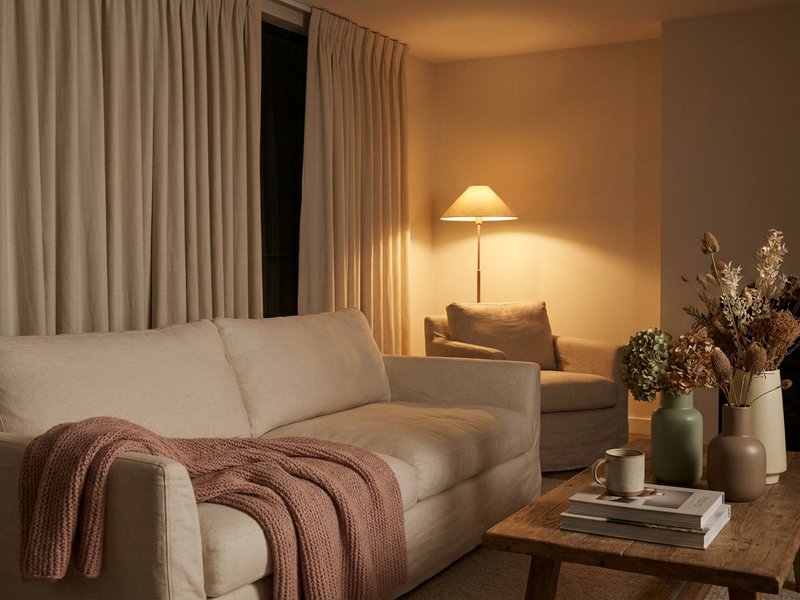
- Dim overhead lighting after 6pm. Bright overhead light keeps the nervous system in an alert state well into the evening, which stacks on top of a full day’s sensory load instead of letting it settle.
- Cut background screens you are not actively watching. A television playing in another room still counts as input your brain has to filter, even when you think you have tuned it out.
- Schedule 15 minutes of true quiet before any high stimulation event. Starting a busy event already at capacity means it takes far less new input to tip you into overload, so arriving with room to spare changes the whole experience.
What is the difference between calming down and shutting down?
Calming down means your energy lowers while you stay present and able to respond. Shutting down means the system has gone past its limit and stopped responding altogether. It often shows up as blank staring, an inability to speak, or a total loss of motivation for hours. The resets in this guide are built for the calming down stage. Once a shutdown starts, the goal changes from active reset to simple safety. That means a dark, quiet space and time, with no demands placed on you until it passes on its own.
How do you tell which one you are in? Calming down responds to the resets above within a few minutes. A true shutdown does not respond to them at all. It needs rest instead, sometimes 30 minutes, sometimes the rest of the day.
When should overstimulation see a doctor?
Talk to a doctor when overstimulation happens daily, lasts for hours, or keeps you from work, school, or basic tasks like eating and sleeping. Occasional overload after a loud event is common and expected. Overload that has become your default state most days is worth bringing to a professional. The Centers for Disease Control and Prevention lists sensory and emotional regulation support as part of standard ADHD treatment, not a separate issue you have to solve alone.
What if the shutdowns are getting longer or more frequent over time? Mention that pattern too. It usually means the daily baseline needs to change, not just the in the moment response.
I found a community of women who get it, not moms of kids with ADHD, but moms with ADHD. I cried a little reading the first few posts. Being seen by the right people is its own kind of regulation.
Pin this so the 12 resets are here the next moment a room feels like too much. Thinking clearly can feel out of reach right when you need it most.
You do not have to push through overstimulation to prove you can handle it. Naming the state and stepping back from input is not giving up, it is the fastest way through. You’re not behind. You’re just differently wired.
Found this helpful? Pin this guide so you can come back to it anytime.
Frequently Asked Questions
What does ADHD overstimulation feel like?
It feels like rising static, a tight chest, or a sudden urge to leave a room without being able to say why. It is different from anxiety or tiredness, though all three often arrive together. Naming it out loud as overstimulation usually lowers the intensity within a minute or two.
How do you calm an overstimulated ADHD brain fast?
Cut sensory input rather than pushing through it. Leave the room for even 90 seconds, cover your eyes, run cold water over your wrists, or name the state out loud. All 4 work in under 2 minutes and need no equipment.
Is overstimulation the same as an ADHD meltdown?
Overstimulation is the buildup, and a shutdown or meltdown is what happens if it goes unaddressed. Calming down means you stay present and respond to resets within minutes. A true shutdown stops responding to input entirely and needs rest instead, sometimes for hours.
What triggers ADHD sensory overload the most?
Repetitive noise is one of the strongest triggers, since a sound that repeats gives the brain no natural stopping point. Bright overhead lighting, crowded rooms, and background screens you are not actively watching also add to the same load.
Should I see a doctor about ADHD overstimulation?
See a doctor if overstimulation happens daily, lasts for hours, or interferes with work, school, or basic care like eating and sleeping. Occasional overload after a loud event is common. A rising pattern of longer or more frequent shutdowns is worth bringing to a professional.