I’m not a doctor or therapist. This is based on personal ADHD experience and is for informational purposes only. Please consult a qualified healthcare provider before making health decisions. This post also contains affiliate links, and I may earn a small commission at no extra cost to you.
Breathing is the one part of the stress response you can operate on purpose, which is what makes breathwork for ADHD useful at the exact moments when nothing else is available. One woman found yoga in her twenties and was surprised that so much of it was simply paying attention to the breath. Doing that, she realised she had been holding her breath without noticing for most of the day, shoulders up by her ears, bracing for nothing. This guide covers what the breath actually changes, why the exhale carries the work, 12 techniques sorted by whether you are wired or flat, and what breathwork does not fix.
Breathwork helps an ADHD nervous system because a longer exhale than inhale slows the heart rate, and that shift is the one lever you can pull deliberately. Start with the physiological sigh: two short inhales through the nose, then one long exhale through the mouth. Three rounds take 30 seconds and need no practice.

Save this for later
You will want this again. Pin it to your planning board so it is one tap away when you need it.
Pin it for laterWhat does breathwork do for an ADHD nervous system?
It gives you deliberate access to a system that usually runs without you. Heart rate, muscle tension, and alertness are mostly automatic, and the breath is the one input you can change on command, which is why a 30 second technique reaches further than 30 seconds of trying to calm down.
Is this a treatment for ADHD? No, and framing it that way sets it up to fail. Breathwork changes what your body is doing in the next 2 minutes. It does not change attention regulation, and the National Center for Complementary and Integrative Health is clear that relaxation techniques work as a complement rather than a replacement for treatment.
Why does the exhale matter more than the inhale?
Because heart rate rises slightly on the in breath and falls on the out breath, so lengthening the exhale shifts the balance toward settling. That is the whole mechanism behind almost every technique below, and it is why the count matters more than the posture.
What happens when you get the ratio backwards? You get more alert, not less. Fast, shallow, top of the chest breathing with a short exhale is what a stressed body does on its own, and repeating it deliberately keeps the alarm running. If you only remember one rule, make the out breath longer than the in breath.
You cannot decide to have a slower heart rate. You can decide to breathe out for twice as long, and the heart rate follows.
6 breathwork ideas for when you are wired
Use these when the body is switched on: jaw tight, thoughts racing, hands busy. Which one should you learn first? The sigh, because it works in public and needs no counting.
- The physiological sigh. Two short inhales through the nose, then one long slow exhale through the mouth. Three rounds. The double inhale reopens collapsed air sacs, and the long exhale does the settling.
- 4 in, 8 out. In through the nose for 4, out through the mouth for 8, for 6 rounds. The simplest version of the ratio rule.
- Box breathing. In for 4, hold for 4, out for 4, hold for 4. The holds give a busy brain something to track, which is why this one suits people who find plain breathing boring.
- Humming exhale. Breathe in normally, then hum the whole way out. The vibration adds a physical sensation to focus on and doubles the length of most people’s exhale without any counting.
- Straw breathing. Exhale through pursed lips as if through a narrow straw. Useful in a meeting, a car, or a supermarket queue, because nobody can see it.
- Cold water plus one slow breath. Splash cold water on your face, then take one long exhale. Cold on the face slows the heart rate on its own, and the breath extends the effect.
6 breathwork ideas for when you are flat or frozen
These fit the other end, where you are not anxious so much as switched off. Does calming breathing help here? Not usually, and that is the mistake most guides make by offering the same 4 techniques for both states.
- Two quick inhales, ordinary exhale. The reverse of the sigh, done 5 times. This one wakes a system up rather than settling it down.
- One breath per step. Walk 20 steps, in for 2 steps, out for 2 steps. Movement plus rhythm reaches a frozen body faster than stillness does.
- Sigh out loud on purpose. Five audible sighs, no elegance required. Sound gives the exhale a shape when concentration is gone.
- Breathe into the back of the ribs. Hands on your lower ribs at the sides, aim the breath sideways into your palms. It changes the sensation enough to be noticeable when the front of the body has gone numb.
- Count breaths backwards from 20. Losing count is expected. Starting again at 20 is the practice, and it gives a stalled brain a job small enough to accept.
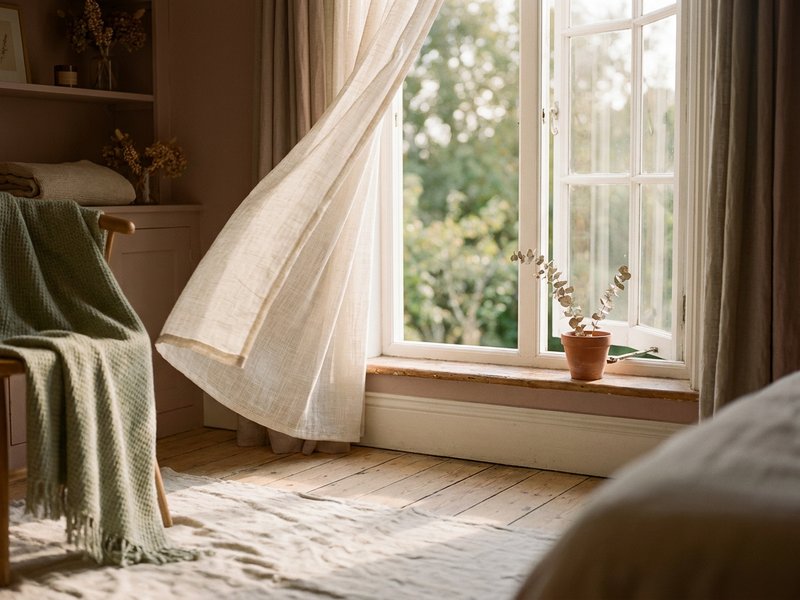
- Breathe with an object. A candle flame, a pinwheel, or steam off a mug. Something external to track beats internal instruction on a day when instructions are not landing.
How do you actually remember to do it?
Leave the cue somewhere you cannot avoid it, because a technique you have to remember competes with everything else you are already forgetting.
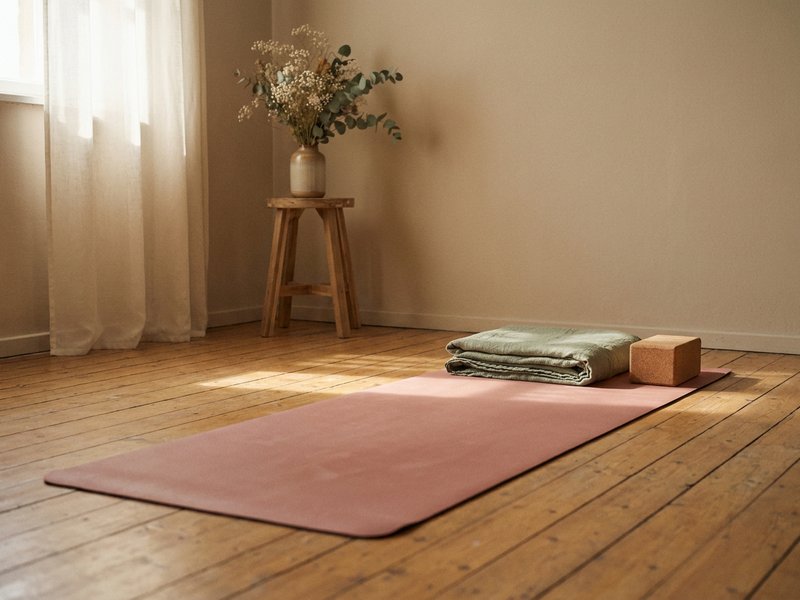
One woman found the gentlest version of this for movement. She leaves her yoga mat out on the floor instead of rolling it away into a closet, and when it is right there, already waiting, she actually steps onto it. The second it becomes a 5 step project to dig it out, it never happens. Out of sight really is out of mind, so she lets the mat stay visible and lets that do the work. A mat you like the look of earns its place on the floor, which matters more than the thickness rating. For the racing thoughts that arrive the moment you stop moving, my ADHD journal prompts give those thoughts somewhere to land.
What if breathing makes you more anxious?
Stop the technique and switch to something with an external focus. Paying close attention to your own breathing raises anxiety for some people rather than lowering it, and that reaction is a known response rather than a sign you are doing it wrong.
Three adjustments cover most cases: drop the counting and hum instead, shorten the practice to 3 breaths rather than 3 minutes, or pair the breath with an object so your attention sits on the candle rather than on your chest. If the panic rises the moment you turn inward at all, breathwork is not the tool for you today, and the honest version of this article says so rather than telling you to push through.
How long before it does anything?
The immediate effect arrives inside 60 seconds, and the durable one takes weeks of short daily practice. Both are real, and confusing them is why people quit at day 4.
What does a realistic dose look like? Two minutes, twice a day, attached to something you already do: after brushing your teeth, and after parking the car. Longer sessions are not better if they do not happen, and 30 seconds of the physiological sigh at the moment of a spike is worth more than a 20 minute session you keep postponing.
What breathwork does not fix
The emotional weight that arrives with a late diagnosis, for one, and it is worth being blunt about the size of that. A 2025 mixed methods study surveyed 28 women with late diagnosed ADHD and reports that the psychological and emotional impact was discussed by all participants. Not most of them. All.
The same study in Scientific Reports found 8 participants describing symptoms masked specifically to meet gendered expectations of behaviour, which places part of the load in social demand rather than in the diagnosis alone. Breathing does not touch that. Nor does it touch the hormonal question that women themselves rank highest. A 2024 survey of 1,350 women placed hormonal symptoms and their effect on ADHD at the top of what remains poorly understood. That ranking came from patients rather than from a funding committee.
When should you talk to a doctor?
When the spikes arrive without a trigger, when they last past a night of sleep, or when breathing exercises have become the only thing holding the day together. Chest pain, fainting, and a resting heart rate that stays high are reasons to be seen rather than reasons to breathe better.
Be careful about drawing conclusions from a single medication trial too. In a 2025 interview study, one late diagnosed woman described trying an antidepressant before pursuing an ADHD specific assessment, hoping it would resolve years of distress. Instead it left her unable to drive her children to school, so she stopped it and kept looking for answers. One drug trial cannot rule ADHD in or out. The National Institute of Mental Health sets out how ADHD presents in adults, and taking 2 described weeks to an appointment works better than taking a symptom list.

Save this for the next spike
Pin this so the 12 techniques are here at the moment your chest goes tight, rather than tomorrow when you are calm and could have looked them up anyway.
One woman counted her small win as getting through a full week at work without the collapse she usually carried home. She changed nothing dramatic. She started treating her breathing during the day as something that belonged to her, rather than only as something to reach for in a crisis. The week was the same. What changed was that she had something left at the end of it. You are not behind. You are just differently wired.
Found this helpful? Pin this guide so you can come back to it anytime.
Frequently Asked Questions
Does breathwork help ADHD?
Breathwork helps with the nervous system side of ADHD rather than with attention itself. A longer exhale than inhale slows the heart rate within about a minute, which lowers the intensity of a spike. It works alongside treatment rather than as a replacement for it.
What is the best breathing technique for ADHD overwhelm?
The physiological sigh. Take two short inhales through the nose, then one long slow exhale through the mouth, and repeat 3 times. It takes 30 seconds, needs no counting, and works in a meeting or a car without anyone noticing.
Why does breathing exercise make me more anxious?
Turning attention inward raises anxiety for some people, which is a known response rather than a mistake. Drop the counting and hum instead, shorten it to 3 breaths, or breathe with a candle or a mug of tea so your focus sits outside your body.
How often should I do breathwork for ADHD?
Two minutes twice a day, attached to something you already do, plus 30 seconds at the moment of a spike. The immediate effect arrives inside a minute and the steadier one builds over weeks. Short and repeated beats long and postponed.
Should I see a doctor about ADHD and anxiety symptoms?
Yes if spikes arrive without a trigger, last past a night of sleep, or come with chest pain, fainting, or a resting heart rate that stays high. One medication trial cannot rule ADHD in or out, so keep looking if a first prescription does not fit.