
A sunrise alarm clock is worth it for ADHD when light is the wake up signal your mornings are missing, and 6 models are compared below from $31 to $180. It brightens the room over 15 to 45 minutes before any sound plays. One woman has used a Philips model for 5 years and says its light has often decided whether she slept through the morning or got up on time.

A sunrise alarm is worth it if light is your missing wake up signal and you set it once. A $35 model reaches 545 lux at one foot. Spend $139 to $180 only for longer ramps and sturdier build. Skip anything that needs a subscription or constant wifi.

Save this for later
You will want this again. Pin it to your planning board so it is one tap away when you need it.
Pin it for laterWhat Does a Sunrise Alarm Clock Actually Do for ADHD?
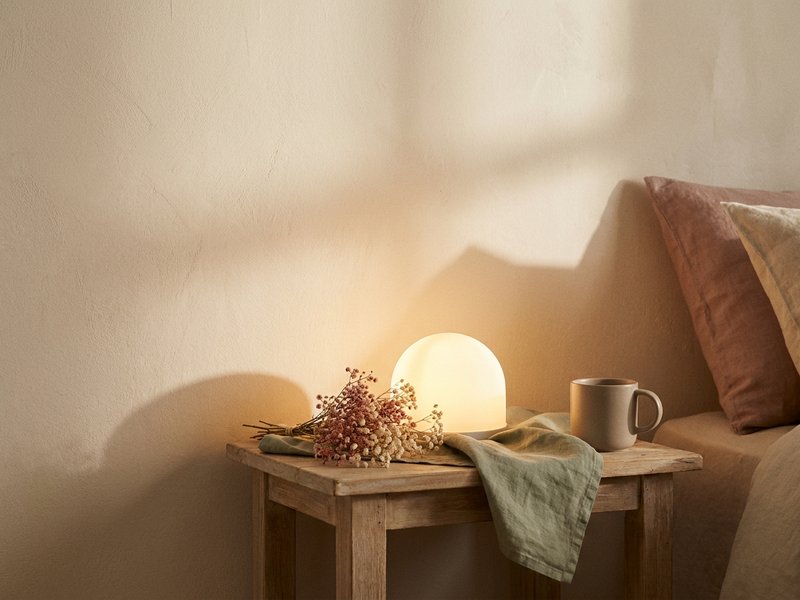
A sunrise alarm clock raises light slowly before your wake time, so your eyes get a signal before your ears do. Most models also add a sound at full brightness, and the better ones run a sunset ramp at night.
Why does that matter for an ADHD brain? Sudden sound is the failure point for many women. One woman describes tremendous difficulty waking up, anger at regular phone alarms, and a radio that starts about 15 minutes early working better because sound reaches her slowly. She needs blackout curtains to sleep, so she never sees daylight in her room, even at 11AM, and she wonders whether a sunrise setting could ease the transition. That is the exact problem a sunrise clock targets.
Is a Sunrise Alarm Clock Worth It for ADHD Adults?
Yes, as a gentle wake up tool and no, as a treatment. A sunrise alarm costs $31 to $180, changes how a morning starts, and does not fix a delayed body clock on its own. I would buy one before buying a louder alarm.
The honest answer splits by person. If you wake in a dark room to a blaring phone, a sunrise clock removes the shock. If you wake naturally and then stay in bed anyway, it will not do much. One woman invested in a sunrise lamp after hearing that it helps, and it has sat on her nightstand, used 0 times. She still falls back asleep after waking around 7, feels worse, and suspects she hates mornings no matter what.
What Does the Research Say About Light and ADHD Sleep?
Research on light and ADHD sleep is promising but small. A review of sleep in adults with ADHD describes a pilot of 16 adults who used 30 minutes of morning light at 10,000 lux for 2 weeks. Their melatonin onset moved 31 minutes earlier and their mid sleep point moved 57 minutes earlier.
A second source tempers the excitement. A systematic review of light therapy for delayed sleep phase found 5 randomized trials with 140 participants, using 225 to 10,000 lux for 20 to 45 minutes shortly after waking. Sleep time moved earlier in every trial, but not significantly more than control, and the benefit did not last.
Wake up lights are far dimmer than the 10,000 lux used in those studies, and that review studied delayed sleep phase, not ADHD alone. Treat a sunrise clock as a comfort tool with a plausible mechanism, not a proven fix. If sleep problems affect your days, talk to your doctor.
How Bright Does a Sunrise Alarm Need to Be?
Brighter and longer is better, up to the point you will still use it. How do you know a clock is bright enough? Read the lux at one foot, not the box claims. Budget models often sit near 100 to 200 lux, while the clocks below measure or claim 545 to 730 lux at one foot. Distance matters, because the JALL drops from 545 lux at one foot to 275 lux at 18 inches.
- Ramp length: 15 to 45 minutes is the useful range. A 30 minute ramp is the default most people keep.
- Lux at one foot: look for 500 or more. Under 200, you are buying a bedside lamp that happens to be on a timer.
- Distance to your face: the closer the better. Light has to reach closed eyelids.
Which Sunrise Alarm Clocks Are Best for ADHD in 2026?
Six options cover every budget, from a $31 clock to a $180 Philips. The table sorts them by what each is best at, using current United States prices that shift with sales.
| Product | Best For | Price Range | My Take |
|---|---|---|---|
| hOmeLabs sunrise alarm clock | The lowest price that still sunrises | $30.98 | Fine for a first try, but expect a dimmer glow. |
| JALL Wake Up Light | Best value overall | $34.95 | 545 lux at one foot, 2 alarms, 7 tones, and a radio. |
| Philips Hue White Ambiance bulbs | A sunrise from a lamp you own | $48.99 for 2 | Dims down to 0.2%. Set the ramp once and leave it. |
| Lumie Bodyclock Glow 150 | Longer ramps with a simple dial | $139 | 20, 30, or 45 minute sunrise. Worth it only if you will use all three. |
| Lumie Bodyclock Shine 300 | Brightest and most adjustable | $169 | 730 lux at one foot with a 15 to 90 minute ramp. |
| Philips HF3650 | The classic with long support | $179.95 | 650 lux at one foot and a long record of reliability. |
Which Budget Sunrise Alarm Is Enough?
The $34.95 JALL is enough for most bedrooms, and a $48.99 pair of smart bulbs is enough if you already own a lamp. Both cost less than a single month of many subscription gadgets. Does paying $120 more buy better sleep? Not by itself.
A woman who bought a Philips second hand on eBay and used it for years tried a cheaper Amazon model when it gave out. She says it has worked just as well for nearly 3 years, though the Philips was slightly better at getting gradually lighter. Her nightstand sits lower than her bed, so she mounted the clock on a shelf a few feet above the bed and sets it with an app. Placement did more for her than price did.

When Is a Premium Philips or Lumie Worth the Money?
A premium clock is worth $139 to $180 when you want 20 settings, longer ramps, and a sunset mode, and you plan to keep it for years. The Lumie Shine 300 at $169 gives the widest ramp range, and the Philips HF3650 at $179.95 lists at $199.99 and gives 650 lux at one foot.
Years of use is the real argument. One woman has run a Philips HF3520 for about 5 years and says it still does everything it promises. It has 20 brightness settings, so she also uses it as a lamp, and it runs a coloured sunset as well as a sunrise. She keeps it about 5 metres from the bed so she has to get up to reach it, and pairs it with 2 radio alarms and her phone. For a head to head of Hatch, Philips, and Lumie, read Hatch vs sunrise alarm.
Which Sunrise Alarm Should You Skip?
Skip any model that locks features behind a subscription or needs constant wifi. A Hatch Restore 3 costs $169.99, and one owner loves its white noise ending and bright light, which wake her better than phone alarms alone.
What she dislikes is the subscription, the need for constant wifi, and the fact that without the subscription she can keep only one alarm at a time. During a 6 week hospital stay the guest wifi kept logging her out every hour, which turned the Hatch into what she calls a very expensive brick. Would you remember a login at 6 AM on a bad day? A clock that depends on an account is a poor fit for a brain that forgets logins.
Why Do Some People Still Sleep Through a Sunrise Alarm?
Sunrise alarms fail when they are the only layer, because a brain adapts to any single signal. Light starts the wake up, but a second and third alarm finish it. Is that a defect in the clock? Not really, since the clock only does the first job.
One woman’s system begins at 5:45 AM, when her sunrise lamp starts getting lighter. A bathroom alarm at 6:00 makes her leave the bed, a second at 6:15 finds the lamp at full brightness, and a phone alarm and an app alarm follow at 6:30 and 7:00, plus 4 more at 15 minute intervals as a failsafe. She has to be at work by 8:30, usually leaves by 8:10, and calls it her best system in years, built from a lamp, 3 alarm clocks, and a hungry cat.
How Do You Set Up a Sunrise Alarm So It Works?
Set it up once, in this order, and leave the settings alone for 14 days. Where should it sit, and how far from your face? Most sunrise alarms fail through setup, not through hardware.
- Aim it at your face. Put it within 2 feet of your pillow, or mount it on a shelf a few feet above the bed.
- Start with a 30 minute ramp. Lengthen it only if 30 feels abrupt.
- Add a quiet sound at full brightness. Pick a tone you do not hate, so you do not learn to resent the clock.
- Keep one backup alarm across the room. Standing up is the second half of the job.
- Judge it after 2 weeks. Not after one bad morning.
For what to do in the first 30 minutes after the light comes on, read how to build a morning routine that works with your ADHD brain.

Does a Sunrise Alarm Work Better With a Wind Down Routine?
Yes, because a sunrise alarm moves the morning end of your body clock while a wind down moves the evening end. On r/adhdwomen, a commenter who spent years as an extreme night owl listed the sequence that finally moved her bedtime earlier: thick blackout curtains, a sunrise alarm clock, hot chamomile tea, and 30 screen free minutes before lights out.
It was not instant. She reports that after forcing herself to do it for 2 weeks, she now actually gets tired at 11 pm. The credit goes to repetition, not to one item on the list. For the evening half, see an ADHD evening wind down in 30 minutes, and for a gentler start to the day, slow morning routine ideas for ADHD women.
Which Sunrise Alarm Should You Buy First?
Buy the $34.95 JALL if you want a clock, or $48.99 smart bulbs if you already have a lamp, and upgrade only after 2 weeks of real use. A cheap clock you set every night beats a $180 clock you never touch.
Pair it with one loud backup across the room and keep your phone out of reach. You’re not behind. You’re just differently wired.
Found this helpful? Pin this guide so you can come back to it anytime.
Frequently Asked Questions
Are sunrise alarm clocks good for ADHD?
They can be, as a gentle wake up tool. Light reaches your eyes before sound does, which many women with ADHD find easier than a blaring phone. They are not a treatment, and research on light and sleep timing is small, so pair the clock with a backup alarm.
What is the best sunrise alarm clock for ADHD on a budget?
The JALL Wake Up Light at $34.95 is the best value, with 545 lux at one foot, 2 alarms, 7 tones, and a radio. A pair of Philips Hue White Ambiance bulbs at $48.99 works if you already own a lamp. Both avoid subscriptions.
How bright should a sunrise alarm clock be?
Look for 500 lux or more at one foot. The Philips HF3650 reaches 650 lux and the Lumie Bodyclock Shine 300 reaches 730 lux. Budget models often sit near 100 to 200 lux, and brightness falls quickly with distance, so keep the clock within 2 feet of your pillow.
Is a Hatch worth it for ADHD?
Only if you are comfortable with its subscription and wifi needs. One owner loves the light and white noise but can keep only one alarm without the subscription, and the clock stopped working during a 6 week hospital stay with unreliable wifi. A simple clock avoids that risk.
Do I still need a regular alarm with a sunrise clock?
Yes. Light starts the wake up but standing up is a separate job. Keep one backup alarm across the room, and judge the clock after 2 weeks of steady use before changing your setup.