This post contains affiliate links. I may earn a small commission at no extra cost to you. I only recommend things I genuinely use.
Aesthetic fidget tools for ADHD adults are quiet, pretty picks in brass, wood, and linen built for hands that need to move without announcing it. Most fidget tools on the market still look like they belong in a kindergarten toy bin, all neon plastic and clicking noise, which makes them hard to reach for at a desk or a dinner table. One woman described exactly why that gap matters: what did not work for her was a fidget cube she ordered to keep her hands busy while she worked, her favorite of the bunch for about 3 days, then it simply broke, arriving with a sharp edge and adding one more small frustration to a tool meant to soothe. The 12 picks below solve for both problems at once: something that actually holds up, and something you would not mind leaving out on your desk.
Aesthetic fidget tools work by giving ADHD hands a quiet, durable outlet instead of a flimsy toy that breaks within days. Materials like brass, wood, and linen hold up to daily use and blend into a desk or a bag without drawing attention. Picking by material and by your specific fidget style, spinning, squeezing, or rubbing, matters more than picking by price.

Save this for later
You will want this again. Pin it to your planning board so it is one tap away when you need it.
Pin it for laterWhat Makes a Fidget Tool “Aesthetic” Instead of a Toy?
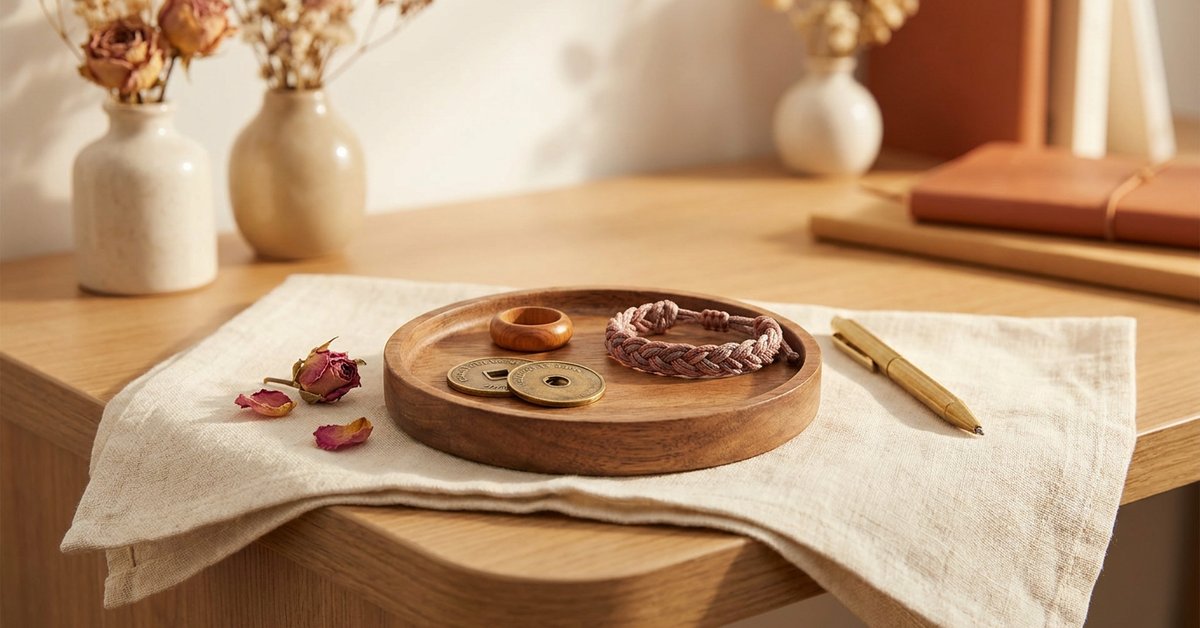
An aesthetic fidget tool is one built from materials and shapes that read as jewelry or a desk object, not a toy, so it fits into an adult workspace without comment. Does that mean it has to be expensive? Not necessarily. Price does not determine whether something looks like a toy. Material and shape do. A smooth brass coin or a wood ring reads completely differently from a bright plastic cube, even at a similar price point. The goal is a tool your hands can reach for anywhere without a second thought.
Why Do ADHD Hands Need Something to Do?
ADHD hands need something to do because movement genuinely supports attention instead of competing with it. Research on adults with ADHD found that elevated motor activity connects directly to working memory demands, meaning some of the fidgeting is the brain actively managing a cognitively demanding task, not just restlessness. A separate study found that more intense physical activity was linked to better cognitive control performance in ADHD specifically. Why does this matter here specifically? Because a fidget tool is not a distraction from focus. For many ADHD hands, it is part of how focus actually gets built.

What Brass and Metal Fidget Tools Work Best for ADHD Hands?
Brass and metal fidget tools work best when they offer smooth, repeatable motion: a spin, a click, or a slide. A brass worry coin, weighted and cool to the touch, gives a rubbing motion that fits in a coat pocket. Try a spinner ring with a second rotating band for meetings, since the movement stays silent and low profile. A click pen with a satisfying, quiet mechanism doubles as an actual pen, so it never looks out of place on a desk. For something worn instead of held, a small chain bracelet with interlocking links gives a hand something to slide back and forth without anyone noticing. All 4 hold up far longer than a plastic equivalent, since metal does not crack or scratch the way cheap plastic does.
What Wood and Natural Material Fidget Tools Feel the Calmest?
Wood and natural material fidget tools tend to feel warmer and calmer in hand than metal or plastic, which makes them a good pick for evening or wind down use. A smooth worry stone in polished wood gives a repetitive thumb motion similar to the brass coin, just softer. For hands that like solving something, a wooden puzzle ring with interlocking pieces gives you a small problem to return to throughout the day. Anyone who fidgets with flat surfaces tends to prefer a textured wood coaster, run under a thumb during a call. Rhythmic counters tend to reach for a set of wooden worry beads on a short cord instead, since the motion mimics counting. Natural material also means these age well instead of yellowing or cracking the way plastic does after a year of daily use.

What Fabric and Linen Fidget Tools Are the Most Discreet?
Fabric and linen fidget tools are the most discreet option, since they can be worn or carried without looking like a fidget tool at all. A woven cord bracelet with a textured knot gives a subtle rubbing motion right on your wrist. For something pocket sized, a small linen pouch filled with rice or beads gives a squeezable weight. A soft braided keychain adds a textural fidget to something you already carry daily. Desk workers tend to like a quilted fabric coaster instead, kept nearby for a low profile surface to rub or press during a long call. These 4 options work especially well for settings where a visible fidget tool tends to draw questions you do not want to answer.
Which Fidget Tools Work Best When You Are Meeting People?
The fidget tools that work best in social settings are the ones that double as something else entirely. On r/adhdwomen, one account described a related move at a loud restaurant: instead of leaving early, she quietly turned down the socially expected option and picked the accommodation that actually helped, rather than the one that looked normal. The same logic applies here. A spinner ring, a click pen, or a woven bracelet all pass as ordinary accessories, which means you get the regulation benefit without having to explain yourself to anyone at the table.
How Do You Pick the Right Fidget Tool for Your Specific Fidget Style?
Pick by matching the tool to how you already fidget, not by what looks nicest in a photo. Twisting your hair or clicking a pen already? A spinner ring or click pen will feel immediately familiar. Rubbing your thumb against a surface is more your habit? A worry stone or coin fits that motion exactly. And if you fidget with your wrists or jewelry already, a textured bracelet adds function to something you would wear anyway. What if you are not sure which style fits you? Watch your own hands for a day. Most people already have a default motion, they just have not named it yet.

What Should You Avoid When Buying Aesthetic Fidget Tools?
Avoid tools that prioritize looks over how they actually hold up to daily handling. One woman’s experience with a cheap fidget cube is the exact pattern to watch for: it was her favorite of the bunch for about 3 days, then it simply broke, arriving with a sharp edge that turned a soothing tool into one more small frustration. Skip anything with thin plastic joints or moving parts that feel loose out of the box. A tool meant to be handled dozens of times a day needs to survive that handling, not just look good in a single photo.
How Do You Know a Fidget Tool Is Actually Helping?
You know a fidget tool is helping when you reach for it without thinking and it lowers restlessness instead of becoming a new distraction. Track 1 thing over 2 weeks: whether you are reaching for your phone less during focused work when the tool is nearby. Our roundup of ADHD tools used daily by a late diagnosed woman covers how tools like this fit into a broader daily setup. If a tool starts collecting dust in a drawer within a week, it was the wrong style match, not a failure on your part.
Save this before your next online cart fills up with fidget toys you will not actually use.
My own small win was returning over a hundred and fifty dollars of purchases before the deadline, for once. I usually avoid online shopping entirely, because returning things on time is so hard that I just eat the cost. This time I walked every item back to the store myself, and getting that money back felt almost unreal. You’re not behind. You’re just differently wired.
Found this helpful? Pin this guide so you can come back to it anytime.
Frequently Asked Questions
What are aesthetic fidget tools for ADHD adults?
Aesthetic fidget tools are quiet, durable fidget objects made from materials like brass, wood, and linen instead of bright plastic. They read as jewelry or desk objects, so they fit into an adult workspace without drawing attention.
Why do ADHD hands need a fidget tool?
Research on adults with ADHD links elevated motor activity to working memory demands, meaning fidgeting is often the brain actively managing a cognitively demanding task rather than simple restlessness. A separate study found more intense movement linked to better cognitive control in ADHD specifically.
What is the most discreet fidget tool for meetings?
A spinner ring, a click pen, or a textured bracelet all pass as ordinary accessories, so you get the regulation benefit without anyone noticing or asking about it. Tools that double as something else entirely work best in social or professional settings.
Aesthetic fidget tool ideas that actually hold up to daily use?
Look for brass, wood, or linen over thin plastic, since plastic joints tend to crack within days of regular handling. A brass worry coin, a wooden puzzle ring, and a woven cord bracelet all survive daily use far longer than a plastic fidget cube.
How do I know if a fidget tool is actually helping my ADHD?
You know it is helping when you reach for it without thinking and it lowers restlessness instead of becoming a new distraction. Track whether you reach for your phone less during focused work when the tool is nearby over about 2 weeks.