Dopamine decor means choosing a few deliberate bursts of color, texture, or personal meaning in a room instead of either bare minimalism or a cluttered wall of everything you own. The goal is stimulation your brain actually wants, placed with enough restraint that the room still feels calm to sit in. One woman put this into words after staring at a $250 electric kettle for weeks: a thing you touch every single day, in a spot you look at constantly, is allowed to be the lovely version. That is the whole logic behind dopamine decor without the chaos.

Dopamine decor for ADHD works best in a few high contact zones, such as a mug shelf or a reading chair, styled with color and texture you love, instead of spread thin across a whole home. Fewer, bolder choices read as calm. Too many small choices read as chaos.

Save this for later
You will want this again. Pin it to your planning board so it is one tap away when you need it.
Pin it for laterWhat Is Dopamine Decor, and Why Does an ADHD Brain Need It?
Dopamine decor is a room styled around a few strong, personal sources of visual pleasure instead of an evenly distributed neutral palette. The National Institute of Mental Health describes ADHD brains as running on differences in dopamine regulated attention and reward circuits, which is part of why plain beige walls and matching throw pillows read as flat rather than restful to you. A saturated color, a textured throw, or a shelf of objects that mean something to you gives your reward system a small, steady hit of novelty every time you walk past. That is the mechanism: color and texture act as low grade dopamine cues, the same circuitry that makes a new song or a fresh notebook feel disproportionately good. But what happens if you love color everywhere, not just in one spot? Your brain still needs somewhere to land. Even one quiet wall, ceiling, or floor gives your eyes a place to rest between the bright zones. The trap is doing this everywhere at once. When every surface competes for attention, your brain cannot rest anywhere, and the room starts to feel loud instead of alive. Dopamine decor works when the stimulation is concentrated, not spread evenly, so your eyes have obvious places to land and obvious places to rest.
Why Do Curated Pinterest Rooms Actually Make This Harder?
Most decor advice assumes a minimalist, neutral room is the safest choice for anyone with a busy brain. Forum discussion among ADHD women pushes back on that assumption directly. In an r/femalelivingspace thread on neurodivergent living spaces, one commenter described plain, stripped down rooms as unworkable for her focus rather than calming, writing that she finds the sterility distracting. Another commenter in the same thread, who has AuDHD, organized a 17 by 11 foot room into two clearly defined zones instead of stripping it down, and found that a maximalist, zoned layout worked better for her concentration than a minimal one. So which approach is right for you? Neither one is universally right. What matters is whether the room gives your brain enough to look at without giving it too much to sort through at once. A curated wall of collected objects can be just as calming as an empty one, as long as the objects are grouped with intention instead of scattered.
Idea 1: Claim One Color Zone Instead of a Whole Palette
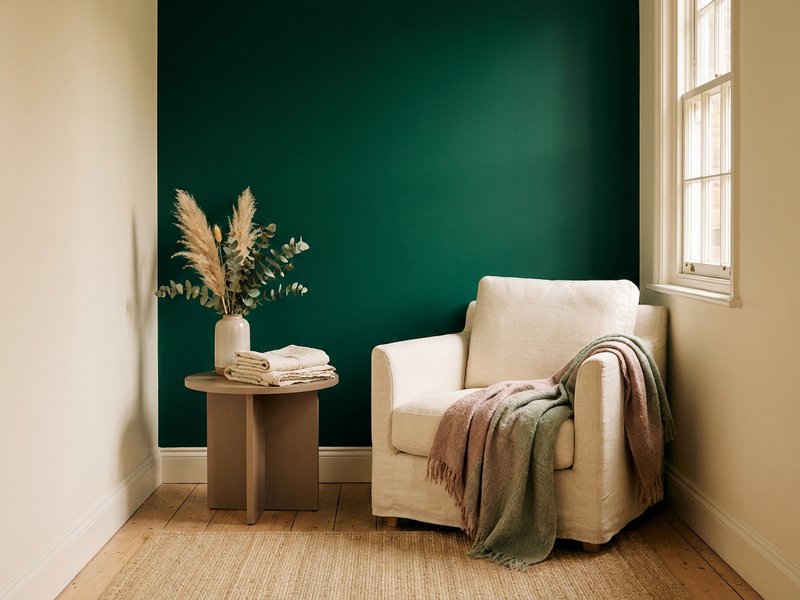
Pick one wall, one shelf, or one corner and let it carry the boldest color in the room. Everything outside that zone stays quiet: a neutral wall color, plain bedding, simple curtains. Your eye gets a clear place to land, so the color reads as intentional instead of chaotic. What if you cannot pick just one favorite color? Choose a family of two or three shades that already sit near each other, like rust, mustard, and deep green, so the zone still reads as one cohesive burst instead of three separate ones. Good candidates for a single color zone include a reading nook painted in a deep jewel tone, a gallery of framed art in one corner, or a bookshelf styled with color coded spines. The rule that keeps this from sliding into visual chaos: if you can point to the loudest thing in the room in under three seconds, the zone is working. If your eye keeps bouncing between three or four competing focal points, pull two of them back to neutral.
Idea 2: Let One Bold Wall Do the Work
An accent wall gives you a big dopamine hit for one afternoon of effort, and it contains the boldness to a single plane instead of letting it creep across every surface. Peel and stick wallpaper is the lowest commitment version: no drying time, no fumes, and it comes off clean if the pattern stops working for you in six months. A saturated paint color works the same way if you would rather commit. The same instinct that makes a bold accent wall satisfying is behind a full room refresh done in small, contained passes rather than all at once, the same approach covered in this room refresh guide for ADHD brains, which walks through doing one zone at a time instead of overhauling a whole space in a weekend.
Idea 3: Build a Texture Corner You Can Touch
Visual stimulation is only half the picture. A chunky knit throw, a sheepskin on a reading chair, a woven basket, or a ribbed ceramic vase gives your hands something to do while your eyes are resting. Texture corners work especially well next to a spot where you already sit still for a while, like a reading chair or the foot of your bed, because the tactile input gives your nervous system something to regulate on without needing a screen. But what if certain textures bother you more than they soothe you? Skip them. Texture is meant to regulate you, not test you, so a smooth ceramic mug can do the same job as a chunky knit throw if wool makes your skin crawl. Three or four different textures grouped together read as cozy. Ten different textures scattered across a whole room read as clutter, so keep the texture concentrated in the same one or two zones as your color.
Idea 4: Rotate a Small Object Shelf Instead of Redecorating
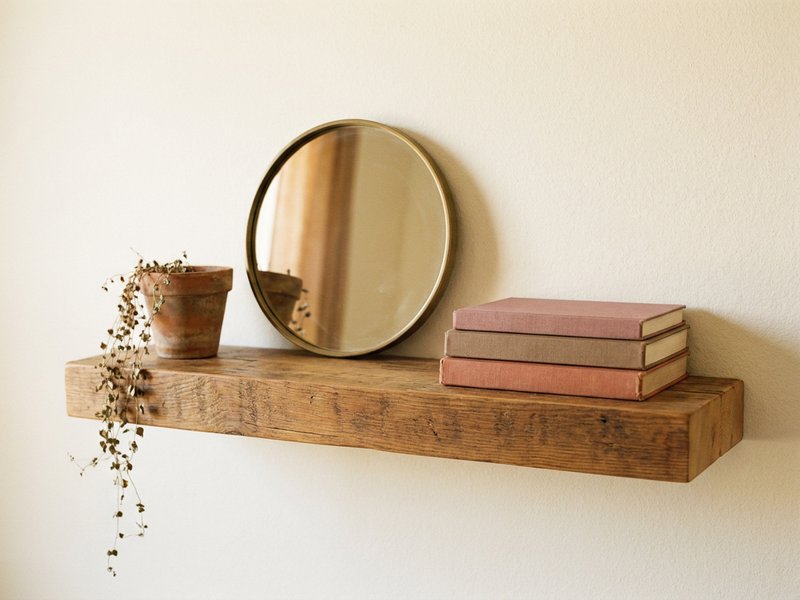
A single open shelf, dedicated to objects you swap on a whim, gives you novelty without a full redecorate every time you get bored of a room. Stock it with a small rotating cast: a plant, a candle, a favorite mug, a postcard, a small framed photo. When the shelf starts to feel stale, you change four objects instead of repainting a wall or buying new furniture. This is a lower cost, lower effort version of the same idea behind picture ledge shelves, which let you lean frames and art against the wall instead of nailing them in, so the whole arrangement can change in minutes.
What If the Mess Is Actually a Style Problem, Not a Character Flaw?
One woman, an interior designer with a degree who works at an architecture firm, says she still cannot hold a clear picture of her own rooms in her head. She loves loud color and pattern and flinches at beige, and her own spaces end up looking, in her words, like a 12 year old decorated them on a sugar high. The feeling that follows her around is embarrassment: her house stays messy, she does not invite people over, and a voice keeps telling her that a professional should be better at this. So why does this happen even to someone trained in the subject? Her story is a useful check for anyone assuming a messy room means low effort. A trained designer with the exact same brain wiring struggles with the same clutter, which suggests the problem is a style mismatch, not a character flaw. If neutral minimalism has never once made your space feel calmer, the fix is not trying harder at minimalism. It is switching to a style your brain actually processes as restful.
Idea 5: Give Yourself One Yes Pile Zone
A yes pile zone is one basket, tray, or shelf where things can land without a decision attached to them yet: the mail you have not opened, the book you are between finishing, the jacket you wore twice this week. Every other surface in the room stays clear, but this one zone is allowed to hold whatever needs a temporary home. Giving clutter one approved landing spot, instead of pretending every surface should stay empty, is often the difference between a room that spirals and a room that stays livable. Empty the yes pile once a week, not once a day, so it does not become one more task you fail at.
Idea 6: Layer Your Lighting Instead of Using One Overhead Bulb
A single ceiling light throws flat, even light across the whole room, which makes every object compete for attention at the same brightness. Layering in a floor lamp, a string of warm LED puck lights, and a small table lamp lets you light your color zone brighter than the rest of the room, which pulls your eye there on purpose instead of by accident. What if you rent and cannot rewire anything? Plug in lamps and battery powered puck lights need no electrician and no landlord approval, so renters get the same layered effect as anyone else. Warm white bulbs, around 2700 kelvin, read as cozy. Cool white bulbs read as clinical and tend to make a room feel busier than it is, even when nothing else has changed. The CDC’s overview of ADHD notes that sensory environment is one of several everyday factors that can make attention and mood harder to regulate, which is part of why small environmental changes like lighting temperature are worth adjusting deliberately instead of leaving to whatever bulb came with the fixture.
Idea 7: Pick a Scent as a Fifth Sense Anchor
Decor does not have to be visual. A single signature candle or reed diffuser gives your space a sensory identity that does not add to the visual load at all. Pick one scent and stick with it for a season so your brain starts associating that smell with your calmest room, the same way a familiar playlist can shortcut you into a familiar mood. This is one of the lowest effort dopamine decor ideas on this list: it costs one purchase and no wall space, and it works on days when you do not have the energy to look at, let alone rearrange, anything.
Idea 8: Let One Piece of Furniture Be Loud
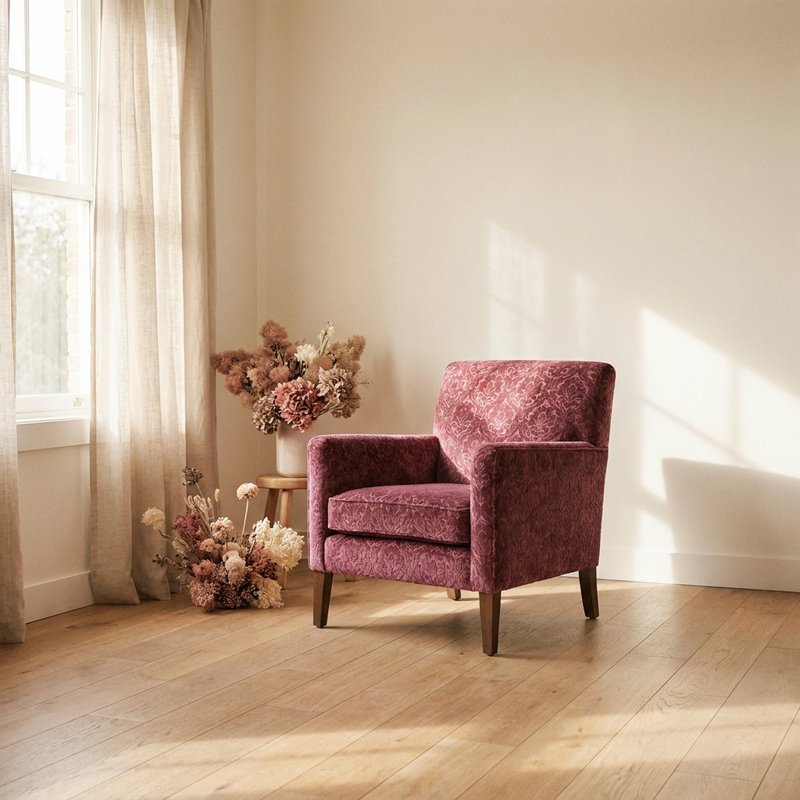
Instead of spreading pattern and color across every piece of furniture in a room, put it all into one statement chair, headboard, or ottoman, and keep everything else around it plain. A single bold chair in an otherwise neutral room reads as a deliberate design choice. Three or four competing patterns in the same room read as visual noise, even if each piece is beautiful on its own. This idea pairs naturally with the single color zone from earlier: your loud furniture piece and your color zone can share the same wall, so your whole dopamine hit lives in one contained area instead of fighting for space with the rest of the room.
Idea 9: Hang One Thing That Means Something at Eye Level
Pick one object with a story attached to it and hang it where your eyes already land. A framed ticket stub, a print that has moved flats with you three times, or a photo nobody else would recognize all work better than anything bought in a single online order, because the pull comes from the memory rather than the color. Height decides whether it lands: hang it so the center sits at your own standing eye level, roughly 57 to 59 inches (145 to 150 cm) from the floor, instead of floating it near the ceiling the way most people do. Personal meaning is the one ingredient in dopamine decor that a shopping list cannot supply, and it costs nothing if the object is already in a drawer.
Idea 10: Let a Rug Carry the Color at Floor Level
Put the boldest pattern in the room on the floor and the walls get to stay quiet. A rug holds a lot of color without competing for attention all day, because you look down at it on purpose rather than catching it in your peripheral vision every time you walk past. It is also the fastest way to change a room in an afternoon: roll the old one up, put the new one down, and nothing gets patched, painted, or drilled. Three things make a rug work as your color anchor. It sits under the furniture instead of floating in the middle of the floor, it repeats one color already in the room, and it is washable if this is a room you actually live in.
How Do You Know When a Room Has Too Much Going On?
A room has crossed from dopamine decor into visual chaos when your eyes cannot find a resting spot anywhere in it. Try this quick check: stand in the doorway and count how many different colors, patterns, or textures compete for attention at first glance. Three or fewer usually reads as intentional. Five or more usually reads as overwhelming, even to a brain that craves stimulation. What if the count comes back high and you still love the room? Trust that over the rule. This checklist is a tool for rooms that feel bad, not a verdict on rooms that already feel good. If a room fails that check, the fix is rarely removing everything. It is picking your one or two favorite elements, giving them the color zone and the lighting layer described above, and returning everything else to something quieter so those favorites can actually be seen.
Save this guide so you can come back to it one idea at a time. There is no need to do all ten this weekend.
One woman found that making her bed and clearing a single surface was enough to make her room feel like hers again. She did not deep clean it or redecorate it. Two small changes shifted the whole space, and she is learning that two small things is often the entire win. You do not need all ten ideas on this list to feel the difference. Pick the one that sounds the least like work today, and start there. You’re not behind. You’re just differently wired.
Found this helpful? Pin this guide so you can come back to it anytime.
Frequently Asked Questions
What is dopamine decor?
Dopamine decor is styling a room around a few concentrated bursts of color, texture, or personal meaning instead of an evenly neutral palette. It gives your brain small, steady novelty cues without overwhelming your eyes, which is why it tends to feel calmer for ADHD brains than either bare minimalism or unrestrained clutter.
How do I add dopamine decor without it looking cluttered?
Concentrate your boldest color, texture, and pattern into one or two zones, such as a single wall or a reading chair, and keep every other surface quiet and neutral. A quick check: stand in the doorway and count competing focal points. Three or fewer usually reads as calm; five or more usually reads as chaos.
Is minimalism the best decor style for ADHD?
Not always. Some ADHD women find bare, neutral rooms distracting rather than calming, while a maximalist room with clearly zoned areas works better for their focus. The right style is the one your own brain reads as restful, which is a personal test, not a universal rule about minimalism being safer.
What are cheap dopamine decor ideas for ADHD women?
A rotating small object shelf, a single signature candle scent, warm layered lighting instead of one overhead bulb, and a peel and stick accent wall are all low cost ways to add dopamine decor. Each one concentrates novelty into a small, contained zone instead of requiring a full room overhaul.
Why does my room feel messy even when it is not that full?
A room can feel messy from too many competing colors, patterns, or textures spread evenly across it, even without much actual clutter. Concentrating your visual interest into one or two zones, instead of scattering it everywhere, often fixes the overwhelmed feeling faster than removing objects does.