I’m not a doctor or therapist. This is based on my personal ADHD experience and is for informational purposes only. Please consult a qualified healthcare provider before making health decisions.
Yoga poses for ADHD anxiety work by giving a racing mind one physical job to focus on, which settles an overstimulated nervous system faster than trying to think your way calm. None of the 10 poses here need flexibility or a studio, and none of them are the pretzel shapes that make yoga feel like one more thing you will fail at. Here is the trap I used to fall into: I could not relax in a space that felt cluttered, so most of my adult life vanished into errands and catch up cleaning. Rest was always something I would earn once everything was done, and everything was never quite done.
Yoga poses for ADHD anxiety work best when they combine gentle movement with a clear breath count, since movement alone leaves your mind free to wander and stillness alone often feels unbearable. Start with one seated pose and one restorative pose held for 60 to 90 seconds each, not a full class.

Save this for later
You will want this again. Pin it to your planning board so it is one tap away when you need it.
Pin it for laterWhat Are the Best Yoga Poses for ADHD Anxiety?
The best yoga poses for ADHD anxiety are simple, grounded shapes held for under two minutes each: seated twists, standing forward folds, and restorative poses that use gravity instead of muscle effort. Three groups cover most of what an overstimulated ADHD nervous system needs.
- Seated poses for a racing mind that needs a small, contained task.
- Standing poses for restless energy that needs somewhere to go before it can settle.
- Restorative poses for a body that is done and just needs to be held.
Why Does Yoga Help an Overwhelmed ADHD Nervous System?
Yoga helps an overwhelmed ADHD nervous system because slow, controlled breathing activates the vagus nerve, which shifts your body out of fight or flight and into a calmer state. According to the National Center for Complementary and Integrative Health, yoga that pairs movement with breath control shows measurable effects on stress and anxiety symptoms, not just a general sense of relaxation.
But why does gentle yoga specifically help an ADHD brain, not just an anxious one? According to the National Institute of Mental Health, ADHD involves differences in the brain systems that regulate attention and self control, and a held pose with a counted breath gives those systems one clear target instead of the usual dozen competing ones.
What If Slow Yoga Does Not Work for You?
If slow yoga does not work for you, the problem is usually the pace, not yoga itself. Yoga reaches most ADHD women as gentle and slow, which is exactly the version a lot of people report failing at. One woman explained why hot yoga worked where a quiet class never did: she was so busy concentrating on breathing that her brain finally shut up for 45 minutes. The heat and the faster pace occupy the same attention a slow class leaves free to wander.
If that sounds like you, try a faster style first and let the poses in this guide become your cool down, not your whole practice. There is no single correct entry point, only the one that actually holds your attention long enough to work.
What Seated Poses Calm a Racing ADHD Mind?
Seated poses calm a racing ADHD mind by giving your spine a specific job while your breath does the actual settling work. These three take under 5 minutes combined.
- Easy Seated Twist. Sit cross legged, place one hand behind you, and twist toward it for 5 slow breaths, then switch sides. The twist wrings tension out of the mid back where anxiety often sits.
- Seated Cat Cow. Hands on knees, round your spine on the exhale and arch it on the inhale, for 8 to 10 rounds. The rhythm gives your brain a beat to follow instead of a thought to chase.
- Seated Forward Fold. Fold gently over crossed legs or a chair edge, letting your head hang for 60 seconds. The mild inversion slows your heart rate within a minute for most people.
What Standing Poses Help With Restless Energy?
Standing poses help with restless energy by giving your body somewhere to move before it is asked to sit still, which matters when stillness itself feels unbearable.
- Standing Forward Fold. Hinge from your hips with soft knees and let your arms hang for 8 breaths. Blood flow to your head slows racing thoughts faster than most seated poses.
- Mountain Pose With Arm Sweeps. Stand tall, sweep your arms overhead on the inhale and down on the exhale, for 6 rounds. It gives restless arms a job instead of asking them to stay still.
- Standing Side Bend. Reach one arm overhead and lean sideways for 4 breaths, then switch. The stretch along your ribs deepens your breath automatically, without you having to think about it.
What Restorative Poses Settle Overstimulation?
Restorative poses settle overstimulation by using gravity and support instead of effort, so your body can stop performing and just be held.
- Child’s Pose. Kneel and fold forward with arms extended or tucked by your sides, for 1 to 2 minutes. The forehead resting on the floor is oddly effective at quieting mental noise.
- Reclined Butterfly. Lie back with the soles of your feet together and knees dropped open, supported by cushions if your hips are tight, for 2 minutes. This one opens the chest, which counters the closed, braced posture anxiety tends to create.
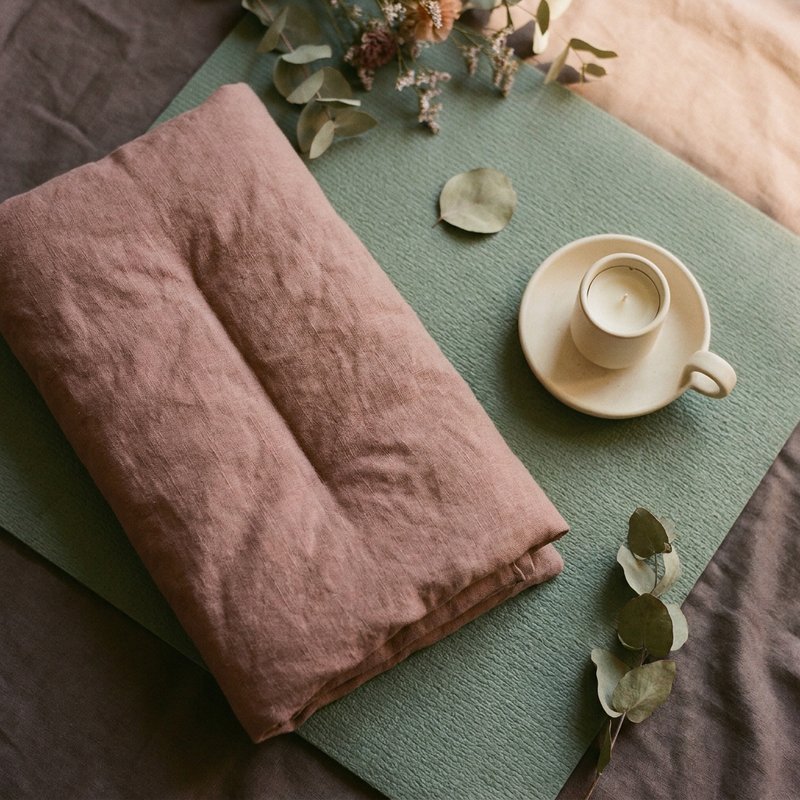
- Weighted Savasana. Lie flat with a weighted blanket or lap pad across your hips and chest for 3 to 5 minutes. I have made peace with the fact that I do not like most exercise, and I am not going to force a gym I dread. What I actually do is simpler than any of this, a plain walk around the block with no plan and no pace, and it has done more for my symptoms than anything I ever pushed myself into. This pose works on the same logic: the version you will actually repeat beats the version that looks impressive.
What Is the One Pose Worth Doing Every Day?
The one pose worth doing every day is Legs Up the Wall. Sit sideways next to a wall, swing your legs up it, and lie back with your arms open for 5 minutes. It needs no flexibility, no mat even, and it reliably lowers heart rate by shifting blood flow and easing pressure on your nervous system. If you only add one thing from this whole list, add this one.
How Long Should Each Pose Last for an ADHD Brain?
Each pose should last 30 seconds to 2 minutes for an ADHD brain, since anything longer usually turns into fidgeting instead of stillness. Count breaths instead of watching a timer, because a number climbing on a screen adds a second task your brain now has to track.
But what if even 30 seconds feels impossible some days? Skip the pose entirely and do 3 rounds of Mountain Pose with Arm Sweeps instead. Movement is easier to sustain than stillness on a hard day, and a shorter practice you finish beats a longer one you abandon halfway through.
What Should You Avoid When Using Yoga for ADHD Anxiety?
Avoid treating yoga as a replacement for medication, therapy, or an actual diagnosis. A thread of ADHD women online describes exactly this dismissal: one woman was told by her own psychiatrist to just try yoga instead of approving her sick leave, and the reply that followed drew the line plainly: yoga does not fix a chemical imbalance in the brain. The same women who pushed back on that framing also describe movement as truly useful, which is exactly why offering it as a substitute for care reads as dismissal instead of support.
- Do not skip your medication or therapy on days you did yoga instead. The two are not interchangeable.
- Do not force a pose that hurts. A stretch that pulls is normal. A stretch that pinches or burns is not.
- Do not compare your 60 second version to a 90 minute class. This works for me. It might not for everyone, and shorter is not a lesser version.
When Should You See a Doctor About ADHD Anxiety?
See a doctor about ADHD anxiety when it disrupts your sleep, work, or relationships most weeks, not just on occasional hard days, or when yoga and other self care tools stop making a noticeable difference. Anxiety and ADHD overlap often enough that a provider familiar with both can tell whether you are managing one condition or two, and that distinction changes what actually helps. For more on how our guide connects the two systems, our piece on breathwork for ADHD to reset your nervous system covers the breathing side of this same toolkit in more depth.
My small win was cleaning when I truly had nothing left to clean with. I had been deep in burnout for a couple of hard years and I do not bounce back the way I used to. My partner left me a list of chores while he was away, and I had been too tired to touch any of it, even on a day off. I told myself one thing, then did it. One done is still done. You’re not behind. You’re just differently wired.
Want this sequence somewhere you can find it again? Save this guide to your ADHD nervous system board on Pinterest for the next overwhelmed afternoon.
Found this helpful? Pin this guide so you can come back to it anytime.
Frequently Asked Questions
What are the best yoga poses for ADHD anxiety?
The best yoga poses for ADHD anxiety are simple, gravity based shapes like Legs Up the Wall, Child’s Pose, and Seated Cat Cow, held for 30 seconds to 2 minutes each. They work by giving a racing mind one physical job instead of asking it to sit still and think calm.
How do I start a yoga practice with ADHD anxiety?
Start with one seated pose and one restorative pose, not a full class. Count breaths instead of watching a timer, and if a slow pace does not hold your attention, try a faster style first and use these poses as your cool down instead.
Is yoga worth trying for ADHD anxiety?
Yes, for most women a short daily practice is worth trying, since it costs nothing and research links breath focused movement to measurable drops in stress and anxiety symptoms. It works best paired with, not instead of, any medication or therapy already in place.
What yoga poses help an overstimulated ADHD brain calm down fast?
Legs Up the Wall and Standing Forward Fold work fastest, since both use gravity to shift blood flow and slow heart rate within a minute or two. Both need no flexibility and no mat, just a wall or a flat floor.
Should I see a doctor if yoga is not helping my ADHD anxiety?
See a doctor if anxiety disrupts your sleep, work, or relationships most weeks, or if yoga and other self care tools stop making a noticeable difference. Anxiety and ADHD overlap often enough that a provider can tell whether one condition or two is driving what you feel.