
This post contains affiliate links. I may earn a small commission at no extra cost to you. I only recommend things I genuinely use.
Most closet systems fail because they ask for upkeep, and upkeep is the part an ADHD brain drops first. ADHD closet organization works when it removes steps and keeps the daily 20 percent in sight, rather than when it looks tidy on day one. One woman described starting the laundry, noticing the dishes, seeing a mess in the living room, and reaching evening having been busy all day with nothing finished. She called it a character flaw for years. It is not. It is a brain answering every visible cue at once, which needs fewer cues in the room rather than more willpower. This guide covers 15 ideas grouped by what they fix, the visible versus hidden question, and what to do about the pile on the floor.
ADHD closet organization holds when it cuts steps rather than adds a system. Keep this week on an open rail, swap deep drawers for open baskets, and put hooks where the pile already forms. Then protect it with a 5 minute tidy attached to something you already do, not with a weekly overhaul.


Save this for later
You will want this again. Pin it to your planning board so it is one tap away when you need it.
Pin it for laterWhy does closet organization keep failing?
Because the system was designed for the day you built it, not for a Tuesday when you have nothing left. Every step between taking a jumper off and it being away is a chance to stop: open the door, find the hanger, match the hanger, hang it, close the door. Five steps is four too many at 9pm.
Is that a tidiness problem? No, it is a step count problem. A closet that survives an ADHD week has fewer moves in it, not better labels, and the honest test is whether you can put something away while holding a cup of tea in the other hand.
Visible or hidden: which one actually works?
Visible for anything you wear weekly, hidden for everything else. Why not just remember where things are? Because for a lot of ADHD brains that is not a memory task at all, it is an object permanence one. The reason is blunt, and one woman on r/femalelivingspace put it as plainly as it gets: “If I put something in a drawer my brain deletes it from existence”. Her workaround was not memory but labels, applied in at least 4 separate places around the home including boxes, drawer edges, and the fridge.
So why not make everything visible? Because total visibility has its own cost, and for some women constant visual input from open storage tips into overload rather than helping recall. The workable middle is a split: a short open rail carrying the current week, and closed boxes for the rest with labels detailed enough that you never have to open one to check. If deciding what belongs in that week is the harder question, my ADHD capsule wardrobe guide handles that side and this one handles the storage.
Ideas 1 to 5: make the daily 20 percent visible
You wear about a fifth of what you own in any given month. These 5 put that fifth where your eyes already go. Why start here rather than with a clear out? Because a clear out is a project and this is an afternoon.
- One open rail for this week. Six to 10 pieces, at eye level, nothing behind a door. Everything else can live anywhere.
- Swap deep drawers for open baskets. One basket per category, on a shelf, no lids. You see the contents from the doorway.
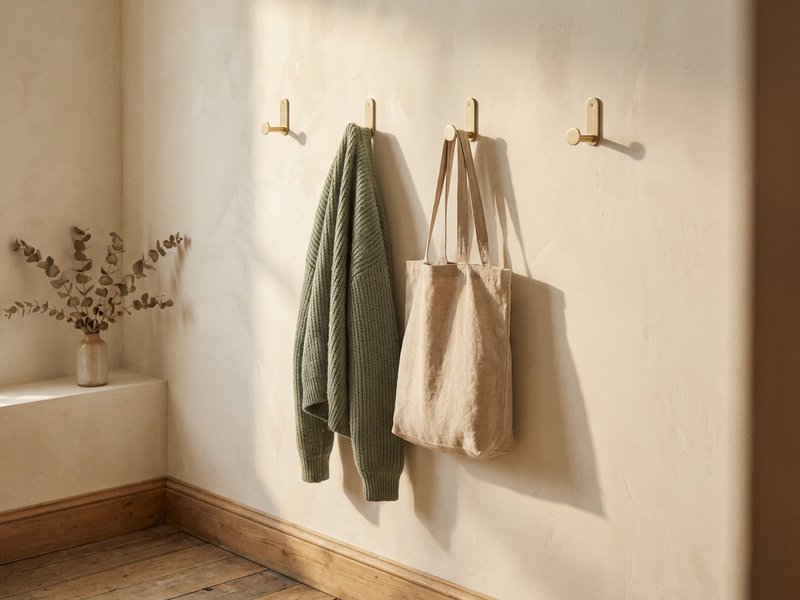
- Put hooks where the pile already forms. The chair, the door back, the end of the bed. Do not move the pile. Give it a fixture.
- Label closed storage in detail. Not winter. Jumpers, long sleeve tops, 2 scarves. A vague label is the same as a closed box.
- Give the worn once pile a named home. One hook or one basket for clothes that are not dirty and not clean. That pile exists in every ADHD home and pretending otherwise is why it lands on the floor.

Ideas 6 to 10: cut steps out of putting things away
Every removed step buys you a day the system survives. One woman went further than most and got rid of the dresser entirely, using open baskets on shelves instead. She could see everything, grab anything, and never wrestle a drawer once her brain had already moved on. Her principle was one line long: visibility over neatness is the only storage rule that ever stuck for her.
- Stop folding what nobody sees. Socks, underwear, gym kit go from dryer to basket in one handful. Nobody has ever noticed.
- One hanger type only. Mixed hangers make a rail read as clutter even when the clothes are in order. Slim matching hangers also give back about a third of the rail.
- Move the laundry basket to where you undress. Usually the bedroom, not the bathroom. The basket goes to the clothes, not the clothes to the basket.
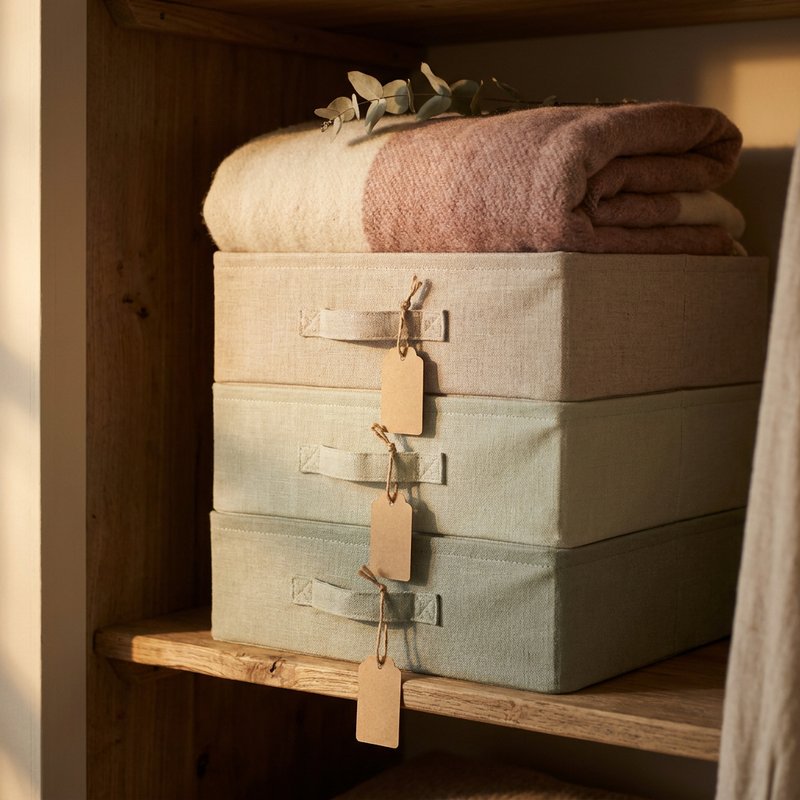
- Box the season you are not in. Closed, labelled, high shelf. Out of the daily field of view means fewer competing cues every morning.
- Keep an outbound bag on the rail. Anything you tried and disliked goes straight in. When it is full it goes to the car, not by the door where it lingers for a month.
Judge a closet by how it survives a bad Tuesday, not by how it photographs on the Sunday you built it.
Ideas 11 to 15: keep it from sliding back
Building is the interesting part and maintaining is not, which is where almost every system dies. What does maintenance have to look like to survive? Small enough that it does not feel like a decision.
Standard tidying advice makes this worse. It tells you to pick up one item, decide where it belongs, and put it back before touching anything else. Advocates for ADHD specific systems push back hard on that method, calling it about the least suitable strategy available, with “endless opportunity for rabbit holes, distraction and loss of motivation”. What they offer instead is a tiny tidy of 1 to 5 minutes, attached to an activity that already has you standing up, such as walking to the kitchen.
- The tiny tidy. Five minutes, hands only, no decisions. Attach it to the walk to the kitchen so it never needs remembering.
- A 10 minute Sunday reset. Put the week back on the rail. Same slot every week, timer on, stop when it goes.
- One in, one out, but only where it overflows. Usually tops. Applying the rule everywhere makes it a rule you drop.
- Do not buy storage before the edit. New bins on an unsorted closet just add a layer. Buy after, and buy for the category that failed.
- Photograph it on a good day. Not for anyone else. It is the reference for what putting it back means, and it settles the argument on the day you cannot tell.
Do you have to go minimal for this to work?
No, and the assumption that you do puts a lot of women off starting. Most design content treats bare rooms as the ADHD friendly default, while women in neurodivergent living space threads say the opposite about themselves. One pushed back directly on plain rooms, describing them as unworkable rather than calming: “I find the sterility distracting”.
Another woman in the same discussion organised a room of roughly 17 by 11 feet into 2 defined zones instead of stripping it back, which worked for her brain better than emptiness would have. Applied to a closet, that means the target is not fewer things on show. It is fewer things competing for the same glance, which you get through zones and grouping rather than through emptiness.
What do you do about the pile on the floor?
Sort it by destination, not by item, and give yourself 3 piles only: back on the rail, into the wash, out of the house. Does the pile mean the system failed? No. Every closet in this article still produces one, and the fix is where it lands rather than whether it exists. Deciding item by item is what turned the pile into a monument in the first place.
How long should that take? Twenty minutes with a timer, standing, music on, and whatever is left when it rings goes into a basket rather than back on the floor. The floor is the one surface worth defending, because a clear floor is what makes the room read as done even when the rest is imperfect. Then put a hook where the pile was, because it will try to come back to the same spot.
How do you set the whole thing up in one afternoon?
Work in one pass with a 90 minute timer, and stop when it rings whether or not you have finished. Stopping and restarting is what turns this into a 3 week project with a pile on the bed.
- Empty only the rail, not the whole closet. The floor pile you create is the thing that makes people quit.
- Pull the last 8 weeks of wear onto the open rail. That is your visible fifth, decided by evidence rather than by intention.
- Bag anything you have not worn in a year without trying it on. Trying on is a different afternoon.
- Box and label the off season, then put it above eye level where it stops competing for attention.
- Install 2 hooks before you finish: one where the pile forms, one for the worn once clothes.
When is it not really a closet problem?
When the same room defeats you across months and the cost lands on your health or your work. Not opening post, avoiding your own bedroom, and cancelling plans because getting dressed is too much are signals about capacity rather than about storage.
The National Institute of Mental Health lists difficulty with organisation and follow through among the core adult features of ADHD in adults. Adult treatment options are set out by the Centers for Disease Control and Prevention. Take a described week to that appointment rather than a tidy list of symptoms. Say what the mornings look like in front of the closet.
Save this for the afternoon you start
Pin this so the 15 ideas and the 90 minute plan are here on the day you decide to do it, rather than 3 weeks later when the pile has grown a second pile.
One woman counted her small win as putting all her laundry away for the first time in over a year. The piles had taken over the dresser, the bench, even the spare room. She could always get clothes washed and dried, and folding and putting away was the wall she hit every time. That day she cleared it, and the room felt less chaotic. She wanted to tell people who would understand why that was huge. You are not behind. You are just differently wired.
Found this helpful? Pin this guide so you can come back to it anytime.
Frequently Asked Questions
How do I organise a closet with ADHD?
Cut steps rather than add a system. Keep the week you actually wear on an open rail at eye level, swap deep drawers for open baskets, and put hooks where the pile already lands. Then protect it with a 5 minute tidy attached to something you already do daily.
Should ADHD storage be open or closed?
Open for anything worn weekly, closed for the rest. Items in drawers stop existing for many ADHD brains, but total visibility can tip into overload. The split works: a short open rail for now, labelled closed boxes for everything else, with labels detailed enough that you never open one to check.
Why do I always end up with clothes on the floor?
Because the worn once pile has no home. Clothes that are not dirty and not clean exist in every ADHD bedroom, and with nowhere to go they land on the nearest surface. Give that category one named hook or basket and the floor clears on its own.
Do I need to be a minimalist for this to work?
No. Women with ADHD often report bare rooms feel harder rather than calmer, with one describing plain spaces as distracting rather than restful. The goal is fewer things competing for the same glance, which comes from zoning and grouping rather than from owning less.
How do I keep an ADHD closet organised long term?
Keep maintenance under 10 minutes and attach it to an existing habit. A 5 minute tidy on the way to the kitchen and one 10 minute Sunday reset hold more than a monthly overhaul, because the overhaul needs a decision and the small version does not.