
This reflects my personal experience with ADHD. What works for me may not work for everyone. This post also contains affiliate links, and I may earn a small commission at no extra cost to you.
Getting dressed costs more than it should when every item in the wardrobe is still a live question. An ADHD capsule wardrobe removes the question by cutting the number of choices down to almost nothing, which protects the morning rather than improving your style. One woman described working full time, commuting, trying to eat well, build friendships, and exercise, all while running late most mornings, until somebody asked her how much of what she was doing actually restored her. She had no answer. This guide covers why the choice is expensive, how many pieces you need, what to cut first, why most capsule wardrobes collapse by month 2, and how long getting dressed really takes.
An ADHD capsule wardrobe helps with decision fatigue by turning dozens of morning micro decisions into one. Keep 25 to 30 pieces that all work together, remove anything that fails on texture or waistband, and store the week in view. The saving is not time. It is the mental fuel you were spending before 9am.


Save this for later
You will want this again. Pin it to your planning board so it is one tap away when you need it.
Pin it for laterWhat is an ADHD capsule wardrobe?
It is a small set of clothes chosen so that any 2 items go together, which means getting dressed no longer requires a decision. The standard version optimises for style. This version optimises for the number of choices, and everything else is secondary.
Does that mean wearing a uniform? Close, and that is the point rather than the compromise. A repeatable outfit removes the daily negotiation, and nobody notices the repetition nearly as much as the person wearing it.
Why does choosing an outfit cost so much?
Because each small choice runs on the same limited fuel as the rest of the day, and clothes come first thing while the price is still full. One woman described exactly how that lands. Decision fatigue arrives fast, habits do not form easily, and her brain takes in every bit of stimulus at once while running constant small calculations in the background.
By midday, she said, the small choices had drained her more than the hard work ever did: what to wear, what to eat, what to do first. So she started cutting the number of choices down to almost nothing. That is the whole strategy, applied to the drawer that greets you before you are properly awake.
The wardrobe is not a style problem. It is the first 12 decisions of your day, and you are making them before you have had anything to drink.
How many pieces do you actually need?
Between 25 and 30 for one season, excluding underwear, socks, and gym kit. Fewer than 20 gets tight on laundry weeks, and more than 35 brings the deciding back. Does the exact number matter? Less than the rule behind it, which is that every top has to work with every bottom without you checking.
- 2 or 3 bottoms you would wear on a bad day. One dark, one mid, one that stretches. If a waistband makes you notice it by 11am, it does not count.
- 7 to 9 tops in the same 3 or 4 colours. Every top has to work with every bottom, which is the whole mechanic.
- 2 layers. One cardigan and one jacket, both neutral, both able to go over anything in the pile.
- 2 dresses or 1 dress and 1 jumpsuit. A single item outfit is the emergency option for a morning that has already gone wrong.
- 2 pairs of shoes you can walk in. Plus 1 pair for occasions, kept somewhere separate so they never enter the daily decision.
How do you build one in an afternoon?
Work in one pass, standing up, with a timer. The stopping and restarting is what turns this into a 3 week project that ends in a pile on the chair. How long should you give it? Ninety minutes, and stop when the timer goes whether or not you have finished.
- Pull out only what you have worn in the last 8 weeks. Not what you like. What you actually put on your body.
- Pick the 3 or 4 colours that repeat in that pile. Your capsule palette already exists, and this step just reads it back to you.
- Remove anything outside those colours into a separate bag, unworn or not.
- Try the awkward ones on once. Only the items you are unsure about, for 30 seconds each, standing in front of a mirror.
- Hang the keepers on matching hangers. Slim velvet hangers take up half the rail space and stop the visual noise of 6 different hanger types.
- Put the bag in the boot of the car with a date. If nothing comes back out within 6 weeks, it goes to the charity shop unopened.

What should you cut first?
Anything that fails on sensory grounds, before anything that fails on looks. A top you love and never wear is almost always a texture problem wearing a style disguise.
Which signals count? Three of them cover most cases: a waistband you become aware of during the day, a label or seam you keep touching, and a fabric that changes how it feels once you are warm. Each one takes a small amount of attention all day, and that attention is the same supply you needed for everything else. Cutting 4 uncomfortable items does more for a morning than adding 4 good ones.
Why do capsule wardrobes fail by month 2?
Because building one is interesting and maintaining one is not. Late diagnosed women on r/adhdwomen describe childhoods spent constantly inventing new ways to order a desk and schoolwork, and then immediately failing to maintain those systems.
Building the system was never the difficulty, and it produced its own burst of interest. Maintenance, with no novelty left in it, is where it collapsed. So recommending a fifth system to someone with 4 abandoned ones addresses the part that was already working. For a wardrobe, the maintenance is exactly 2 things: one laundry day that always happens, and a 10 minute reset on a Sunday to put the week back in view. Anything more elaborate will not survive October.
Should the clothes be visible or hidden?
Visible for this week, hidden for everything else. Out of sight really is out of mind, and total visibility brings its own cost. Is that not a contradiction? Only if visibility is treated as free, and for a lot of ADHD women it is not.
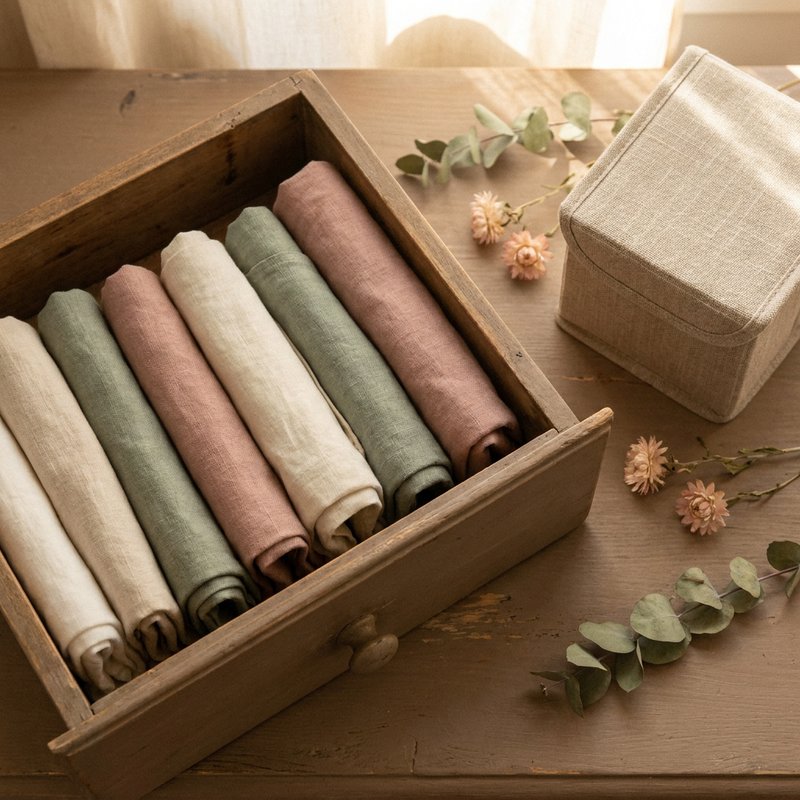
One detailed account on r/adhdwomen documents the failure mode nobody warns about. Clear and open storage bins are recommended as the default ADHD friendly solution, on the logic that visible items are less likely to be forgotten, and for her the constant visual input caused sensory overload instead. She summarised the tradeoff directly: open and clear storage equals visual overstimulation. Her fix swapped in fully opaque containers labelled in detail, sometimes with a painted picture of the contents rather than text. Applied to a wardrobe, that means a short open rail for the current week and closed drawers or boxes for the rest.
How long does getting dressed actually take?
Longer than the number in your head, and the gap is measurable rather than moral. One ADHD morning routine guide recommends a week long self timing experiment: estimate each step, then clock the real duration against the estimate.
The guide reports the typical result plainly. Getting dressed takes 7 minutes, not 3, and locating a bag adds roughly 4 more minutes on top of the plan. That reframes time blindness as a closeable gap rather than a character flaw, and it argues for building the morning around tracked timings instead of optimistic ones. Time your own version once. What do you do with the number? Build the morning around it instead of around the optimistic one, since an alarm set for a 3 minute version of getting dressed guarantees a late start whatever else you fix. A capsule wardrobe usually pulls the 7 minutes back toward 3, and it does it by removing the standing and staring rather than by making you faster.
What about the clothes you cannot let go of?
Keep them, and move them out of the daily line of sight. Forcing a decision on a sentimental item at the same moment you are deciding what to wear is how the whole afternoon stalls.
What about the smaller size you are keeping? Put those in the same box. A garment that carries a verdict about your body should not be part of a system built to remove verdicts from your mornings. If the wider version of this is what you need, my soft autumn self care ideas for ADHD women cover the same principle applied past the wardrobe.
When is a capsule wardrobe not the answer?
When the mornings are hard for reasons the wardrobe never touched. Sleeping through 3 alarms, dreading the day before it starts, and freezing at the front door are not solved by fewer jumpers.
A peer reviewed review of qualitative research on undiagnosed ADHD in women describes decades of women reading these traits as personal failings rather than as a treatable condition, and the National Institute of Mental Health sets out how ADHD presents in adults. A tidy wardrobe is a good accommodation. It is not a substitute for an assessment.
Save this for a Monday morning
Pin this so the piece counts and the cut first list are here on the afternoon you decide to do it, rather than 3 weeks later when the pile is still on the chair.
One woman counted her small win as ending a lifelong dread of showering, at 39. For her it was never about being dirty. It was the whole mountain of undressing, planning fresh clothes, then washing and drying long hair. She found a way to make it small enough to start, and now it is not the battle it used to be. Years of dreading it, and it finally loosened its grip. That is what removing choices buys you. You are not behind. You are just differently wired.
Found this helpful? Pin this guide so you can come back to it anytime.
Frequently Asked Questions
How does a capsule wardrobe help with ADHD decision fatigue?
It turns a dozen morning micro decisions into one. When every top works with every bottom, getting dressed stops drawing on the same limited fuel you need for the rest of the day. The saving is mental rather than measured in minutes, which is why it lands hardest before 9am.
How many pieces should an ADHD capsule wardrobe have?
Between 25 and 30 per season, not counting underwear, socks, or gym kit. Aim for 2 or 3 bottoms, 7 to 9 tops in 3 or 4 repeating colours, 2 layers, 2 single item outfits, and 2 pairs of shoes you can walk in. Fewer than 20 gets tight on laundry weeks.
What should I get rid of first?
Anything that fails on texture before anything that fails on looks. A waistband you notice by 11am, a label you keep touching, and a fabric that changes once you are warm all cost attention all day. Cutting 4 uncomfortable items helps more than adding 4 good ones.
Why do my organising systems always fall apart?
Building a system is interesting and maintaining one is not, which is where most collapse. Women describe inventing new systems constantly and then failing to keep them going. Keep the maintenance to 2 things: one reliable laundry day and a 10 minute weekly reset.
Is a capsule wardrobe good for ADHD women with sensory issues?
Yes, because it lets you filter for comfort once rather than every morning. Keep this week on a short open rail and everything else behind closed doors, since constant visual input from clear storage causes overload for some women rather than helping them remember.