
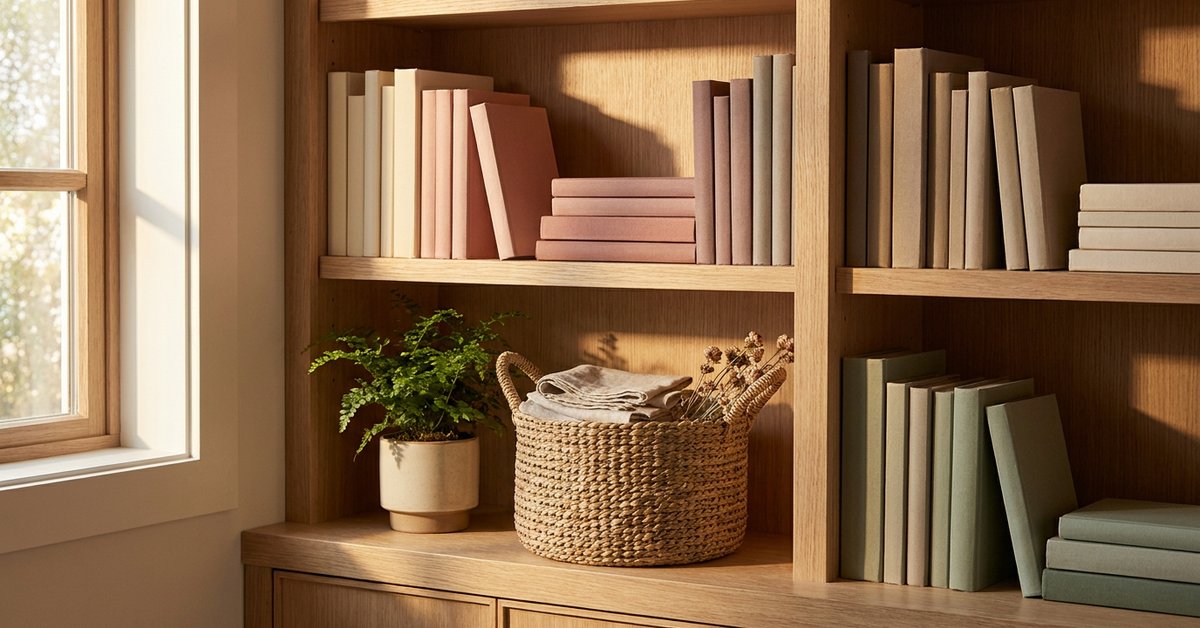
An aesthetic bookshelf for ADHD works by editing what stays visible, not by adding more decor to look at. A shelf that feels calm is not the same as a shelf that is empty. It is a shelf where every object still on it earns its spot, so your eyes have somewhere to land instead of somewhere to scan. The 11 ideas below stay small on purpose, since a full shelf overhaul is the kind of project that stalls after one afternoon.
A calm bookshelf works by keeping fewer things out, not by hiding everything away. Soft feminine aesthetics is not decoration for its own sake here. It is the reason a shelf you actually look at twice a day gets edited instead of ignored. Pick 1 shelf below and start there today.

Save this for later
You will want this again. Pin it to your planning board so it is one tap away when you need it.
Pin it for laterWhy Does an Overstuffed Bookshelf Overwhelm an ADHD Brain?

An overstuffed bookshelf overwhelms an ADHD brain because every object crammed onto it competes for the same limited visual attention at once. The National Institute of Mental Health describes inattention as difficulty paying attention, keeping on task, or staying organized, which is part of why a shelf packed with books, frames, and knickknacks in no particular order can feel loud in a way a neurotypical brain rarely registers. Storage advice for ADHD spaces often assumes visibility alone solves forgetfulness, but forum discussion suggests the effect is stronger and more literal than that framing implies. One commenter described total object permanence failure once an item leaves sight, writing that putting something in a drawer deletes it from existence in her own head. She relies on labels in at least 4 separate spots around her home, including boxes, drawer edges, and the fridge, instead of trusting memory to compensate for anything closed.
Does this mean every book and object needs to stay out where you can see it? No. It means the things you actually use or love need to stay visible, while everything else can be edited down or moved somewhere else entirely.
What Do 11 Aesthetic Bookshelf Ideas Actually Look Like?
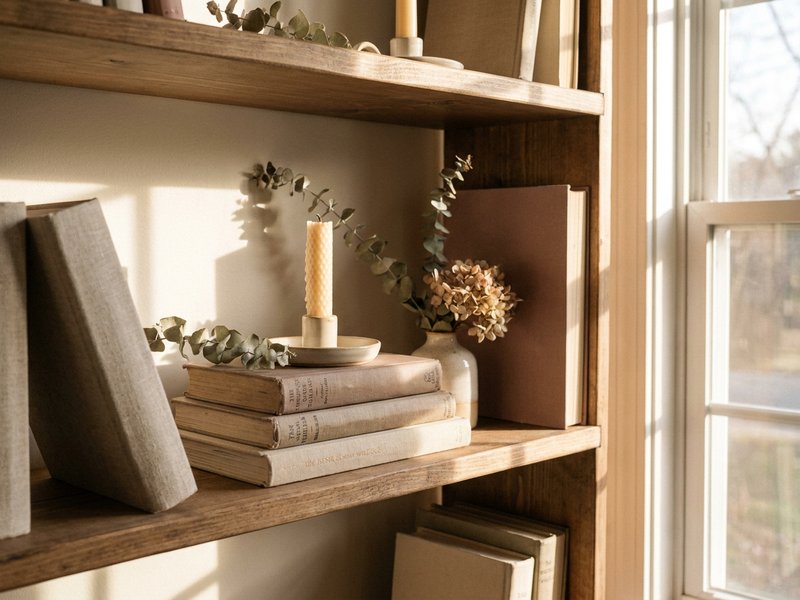
These 11 ideas share 1 rule: less on the shelf, styled with intention, beats more on the shelf styled at random. One woman named the exact bind a lot of ADHD brains live in with a shelf like this: she does not want everything out because it looks messy and raises her anxiety, but if it is not out she cannot find it. She ends up doing a 35 minute loop between 3 different hiding spots before she finally locates whatever she was looking for, no closer to solving either problem than when she started. A styled shelf is the way out of that loop, since it keeps the visible things you actually use in view without turning the whole shelf into a wall of noise.
- Group books by color, not subject: a fast visual system a distracted brain can scan in 1 second.
- Leave 1 full shelf empty: an intentional gap gives the eye somewhere to rest between busy shelves.
- Stack some books flat, some upright: height variation reads as styled instead of a straight row.
- Add 1 small plant per 2 shelves: a living object softens straight lines without adding clutter.
- Use bookends only where books actually fall over: decorative bookends on a tight, full shelf are wasted.
- Keep 1 shelf for daily reads: the books you are actually in the middle of, out and reachable.
- Box up the rest of a series: display 1 spine from a series, box the other 5 or 6 out of sight.
- Add 1 woven basket for loose items: bookmarks, reading glasses, and receipts get a contained home.
- Turn 1 or 2 books spine in: a plain linen or cloth spine facing out breaks up a busy color row.
- Frame 1 small print instead of many: a single leaned frame reads calmer than a cluster of 4 or 5.
- Dust and reset every 2 weeks: a shelf that never gets touched slowly refills itself with clutter.
Do all 11 ideas need to happen on the same shelf? No. Picking 2 or 3 that solve your actual daily annoyance works better than trying to restyle every shelf in 1 sitting.
Does the shelf need to match a specific color palette to look styled? No. Grouping by color and leaving 1 empty shelf does more visual work than any specific palette choice.
How Does This Connect to a Full Room Refresh?
A styled bookshelf is 1 corner of a fuller room refresh, not the whole project. Does it cover the rest of a reading corner too? Not on its own. This guide to 15 reading nook ideas for ADHD hyperfocus sessions covers the fuller space once your shelf is already working for you.
What Does Progress With Your Bookshelf Actually Look Like?
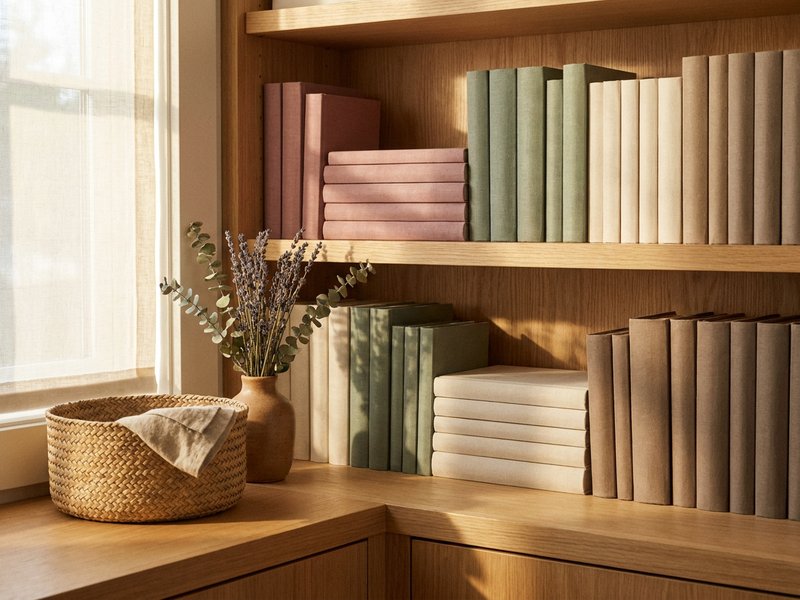
Does a small win here have to mean the whole bookcase gets finished? No. One woman cleared and restyled 1 shelf, just the one, instead of the whole room. It took 20 minutes. Now every time she walks past it her shoulders drop a little. That 1 finished corner did more for her than the big plan she never started. Progress with your bookshelf looks the same way. It rarely looks like a finished bookcase. 1 shelf that finally feels calm to look at is exactly what it looks like. You’re not behind. You’re just differently wired.
Save this before your next glance at that shelf turns into another thing you avoid looking at.
Found this helpful? Pin this guide so you can come back to it anytime.
Frequently Asked Questions
Why does a messy bookshelf bother an ADHD brain more than other clutter?
Every object on a packed shelf competes for the same limited visual attention at once, which can make a bookshelf feel louder than clutter tucked out of sight. A styled shelf lowers that competing visual noise.
Do I have to get rid of most of my books to style a shelf?
No. Grouping books by color, boxing up extra copies from a series, and leaving 1 shelf empty does more visual work than removing books entirely.
Why should I keep some things visible instead of storing everything in bins?
Items that leave sight can stop existing for an ADHD brain, so hiding everything away often means it gets forgotten and rebought. Keeping daily reads and used items visible is what actually gets used.
How many of these 11 bookshelf ideas should I start with?
2 or 3 is enough to start. Trying to restyle every shelf in 1 sitting usually means the project stalls before it finishes.
How do I know if my bookshelf styling is actually working?
Progress rarely looks like a fully finished bookcase. 1 shelf that finally feels calm to look at, even if the rest still needs work, is a real sign it is working.