Soft aesthetic ADHD organization means 12 ideas where the prettiness is not decoration on top of a system, it is the system, doing real cognitive work while it looks good. One woman described finding a small stash of reusable grocery bags while cleaning, more in her office, more in another basket, all right by the door under her car keys, and still buying a new one on every single shop. Her brain could not hold onto the fact that she already had these. Aesthetic organization works by making what you own impossible to forget, not by hiding it behind a matching lid.
Soft aesthetic ADHD organization works because visible, categorized systems reduce the mental effort of tracking your own belongings, so a pretty color coded basket is not vanity, it is doing the same job a label would. The 12 ideas below cover color systems, texture, display pieces, and space that belongs to you specifically. None require a full home renovation.

Save this for later
You will want this again. Pin it to your planning board so it is one tap away when you need it.
Pin it for laterWhat Makes ADHD Organization “Soft Aesthetic” Instead of Just Pretty?
Soft aesthetic ADHD organization means the visible parts of a system, color, texture, open display, are chosen to also carry information your brain needs, not chosen for looks alone. A matching set of opaque boxes is pretty. Open, color coded baskets are pretty and functional at the same time. What separates the 2? Whether you can identify contents and category without opening anything. Does every item in a room need this treatment? No, just the spots where things go missing most.
Why Does Aesthetic Organization Actually Work Better for ADHD Brains?
Aesthetic organization works better for ADHD brains because categorical, visual information is easier to hold in mind than plain memory. A pupillometry study on visual working memory found that categorizing information, sorting it into visual groups instead of tracking each item separately, measurably reduced mental effort, especially as memory load increased. Why does this matter for a junk drawer or a closet? Because an ADHD brain is already carrying a heavier memory load most days. A color coded, visible system offloads some of that load onto the room itself instead of your head.
Which Color System Ideas Bring Function and Softness Together?
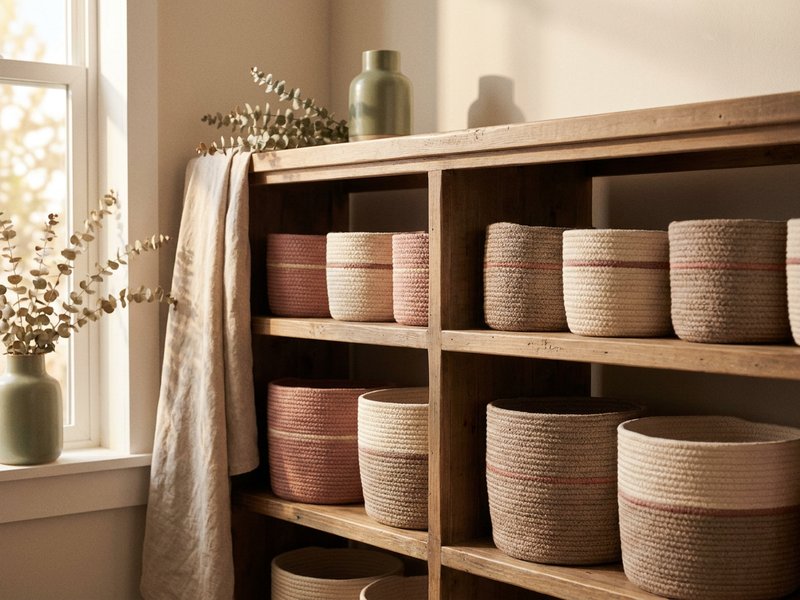
Color system ideas work by giving each category a distinct, repeated shade instead of a written label you have to stop and read. One woman described exactly this: color coding everything is not just aesthetic, it is how her brain keeps track of things it cannot hold onto invisibly, 1 color per person, 1 color per category. What looks like decoration is actually doing real cognitive work. Try color coded baskets by household member instead of 1 shared bin. Color coded file folders for household paperwork cut the search time for the 1 document you need. A closet sectioned by color for workwear versus loungewear turns getting dressed into a glance instead of a search.
Which Textural Choices Make Storage Feel Calm Instead of Clinical?
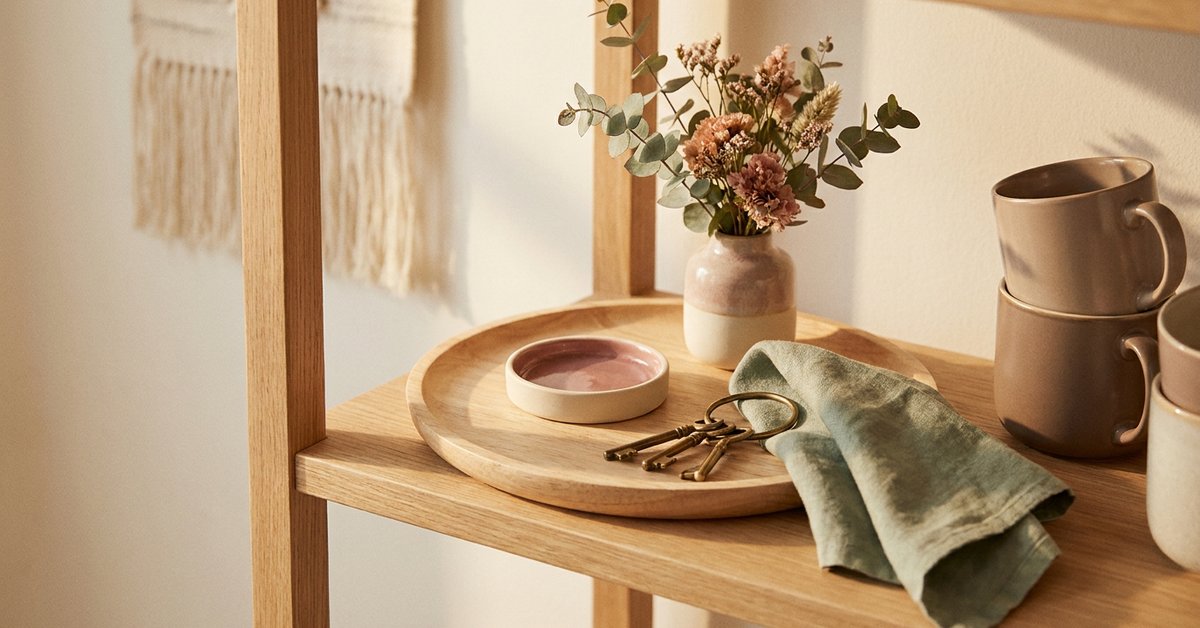
Textural choices make storage feel calm by swapping hard plastic for materials that feel warm to the hand and eye. Woven baskets instead of plastic bins hold the exact same items but soften an entire shelf at a glance. A linen liner inside a drawer turns opening it into a small pleasant moment instead of a chore. For a catch all surface, keys, mail, sunglasses, a wood tray reads as a styled vignette rather than a pile, even though it is doing the exact same job. Does texture actually change whether you use a system? For many ADHD brains, yes. A space that feels calming gets used more than one that feels sterile.
Which Display Worthy Pieces Are Actually Functional?
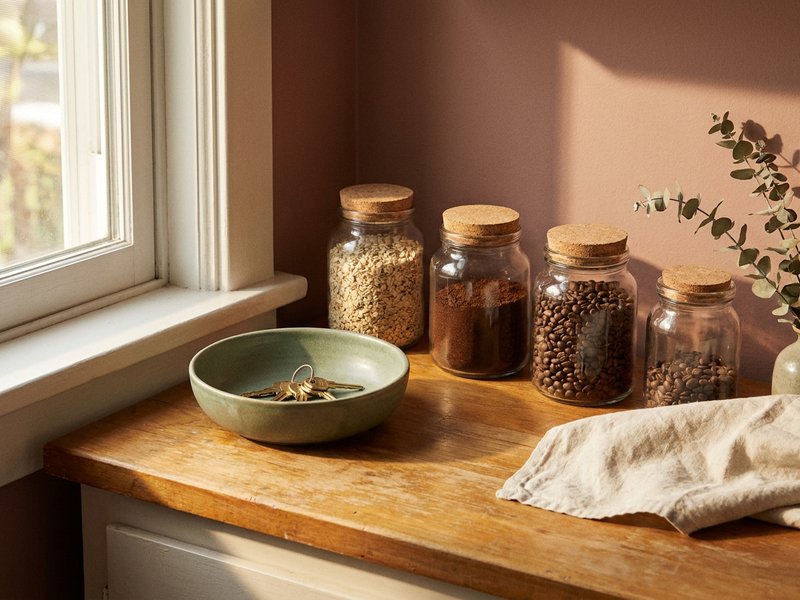
Display worthy pieces earn their spot on a counter or shelf by doing a real job, not just sitting there. A decorative bowl by the door becomes the actual catch all for keys and mail, so the item you always lose has 1 fixed, visible spot. Labeled glass jars for pantry staples, flour, oats, coffee, let you see when you are running low without opening anything. An open shelf styled with both function and beauty, a few books, a plant, the bins you actually use daily, proves organization does not have to hide to look intentional. Does an open shelf just collect more clutter? Only if nothing on it has a job. Every item earns its spot by being something you actually reach for.
How Do You Make Space for Yourself, Not Just Everyone Else?
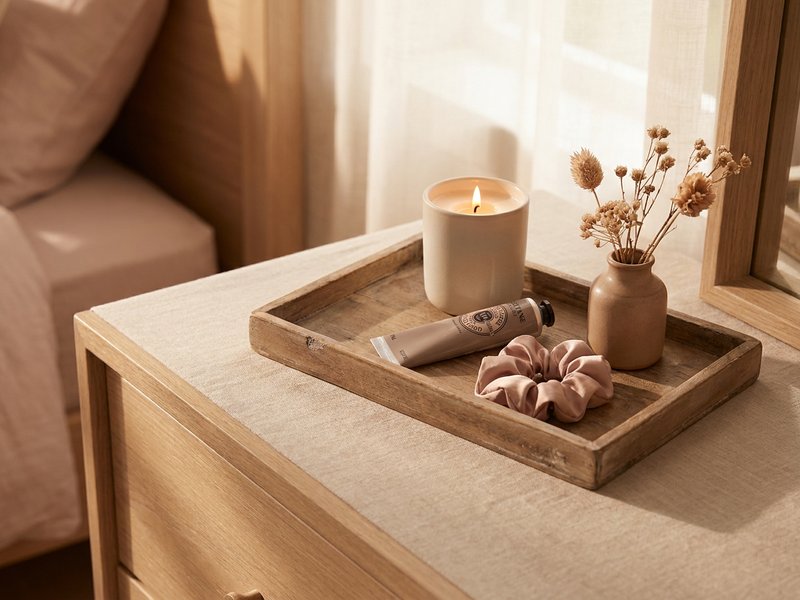
Make space for yourself by giving 1 small area the same care you give the shared rooms in your home. On r/adhdwomen, a mother of 4 described keeping a spotless 3,500 square foot home while her own bedroom and bathroom stayed cluttered, and a commenter asked her directly why everyone else was worth the effort except her. A small vanity tray just for you, holding only what you actually use daily, is a start. For a corner that stays only yours, a basket in a reading nook holding just your book and a blanket does the same job. Even a single “just for me” drawer, no shared items allowed, sends the same message: your comfort counts too.
What Should You Skip When Going for Aesthetic Organization?
Skip any system where the aesthetic hides the contents, matching opaque boxes with no visible label, a basket with a lid you have to lift every time. Our guide to ADHD minimalism covers the related principle of choosing less over more, which pairs well with the ideas above. If a pretty system takes longer to use than the messy version it replaced, it will get abandoned no matter how good it looks in a photo. Is a slower system ever worth keeping for looks alone? Rarely. Function has to come first, softness second.
How Do You Know Soft Aesthetic Organization Is Actually Working?
Soft aesthetic organization is working when you keep the system up without thinking about it, not when a single photo looks good. Track 1 sign over a few weeks: whether items go back to their color coded or labeled spot on their own, without a reminder. If a pretty bin sits untouched while clutter piles up beside it, the look was not the problem, the placement or the category probably was.
Save this before your next organizing trip turns into more clutter that just looks nicer.
My own small win was someone walking into my home and calling it clean, with good vibes. Living rurally with dogs means dirt and clutter are a constant battle, and I never quite know if my space feels okay to be in. I had done a panic tidy that week, and hearing that it actually landed as calm meant more than they will ever know. You’re not behind. You’re just differently wired.
Found this helpful? Pin this guide so you can come back to it anytime.
Frequently Asked Questions
What is soft aesthetic ADHD organization?
Soft aesthetic ADHD organization means visible, categorized systems where the pretty parts, color, texture, open display, also carry information your brain needs. It is prettiness doing real cognitive work, not decoration hiding the contents.
How do you organize an ADHD home so it actually looks good?
Start with color coded, open storage instead of matching closed boxes, since visibility matters more than a uniform look. Woven baskets, labeled jars, and a styled open shelf all stay functional while looking intentional.
Is aesthetic organization actually better than plain functional storage for ADHD?
It can be, when the aesthetic choice stays visible and categorized. A calming, textured space tends to get used more consistently than a sterile one, but only if the pretty version still lets you identify contents at a glance.
Soft girl aesthetic organization ideas for ADHD women on a budget?
Swap plastic bins for woven baskets you already own or find secondhand, and add a linen liner to just 1 drawer to start. The visible, color coded system matters more than spending money on new furniture.
How do you know if an aesthetic organization system is actually working?
It is working when items return to their spot without a reminder, not when a single photo looks styled. If a pretty bin sits unused while clutter piles up nearby, move it or recategorize it instead of blaming yourself.