Soft productivity rituals for a slow ADHD workday are small, repeatable habits that pace your energy instead of forcing a fast day out of a low one. The 8 below cover a full day, from how you start to how you close out, without adding a new system to maintain. One woman described believing for years that being slower than her coworkers meant something was wrong with her, until she learned her brain cannot switch between resting and working the way most brains do. Both fire at once, or neither does. That is not a character flaw.
Soft productivity rituals work by pacing effort across a slow day instead of pushing through it, using small cues like breathing, visible progress, and a real end point to signal safety to a nervous system that cannot force speed. Each ritual takes under 5 minutes and needs no new app or planner. The goal is enough finished, not everything finished.


Save this for later
You will want this again. Pin it to your planning board so it is one tap away when you need it.
Pin it for laterWhat Are Soft Productivity Rituals for a Slow ADHD Workday?
Soft productivity rituals are small, repeated actions that match your effort to the energy you actually have, instead of a fixed daily output target. A slow day is not a failed day, it is a different starting condition that needs a different approach. Where standard productivity advice asks you to push harder, a soft ritual asks you to shift how you start, sustain, and close a task instead. What makes a ritual soft rather than just a habit? Repetition without pressure. You do it the same way every time, and nothing bad happens if you skip it once. The 8 rituals below are ordered through a workday, from the first hour to the last.
Why Do Standard Productivity Systems Fail on a Slow Day?
Standard productivity systems fail on a slow day because they assume you can switch from rest mode into task mode on command, and an ADHD brain often cannot do that cleanly. A study on attentional control in ADHD found reduced separation between the brain’s resting network and its task focused network, meaning the 2 compete instead of trading off smoothly the way they do in most brains. Why does this matter for a to do list? Because forcing a hard switch when the networks will not cooperate burns energy the task itself has not even started using yet. A soft ritual works with that switch instead of demanding it happen instantly.

How Do You Start a Slow Workday Without Forcing Momentum?
Start a slow workday with a task adjacent motion instead of the task itself, something physically close to work that does not require the brain to commit yet. Open the laptop and do nothing else for 2 minutes. Lay out the 1 thing you will touch first, without touching it. The motion signals to your body that work is starting without demanding the harder switch all at once. For a wider look at pacing a whole ADHD routine around gentleness instead of speed, our guide to gentle productivity tips covers the philosophy behind this shift in more depth. What if 2 minutes still feels like too much? Sit at the desk with the laptop closed. The chair is the ritual on the hardest days.
What Does a Breathing Regulation Ritual Look Like During Work?
A breathing regulation ritual during work means slowing your exhale for a minute at set points in the day, not only when you already feel overwhelmed. One woman described what finally stopped her anxiety fuel cycle: 12 months of regulating her nervous system throughout the day, slowing her breathing while things were still calm instead of only as a rescue. Her output did not collapse the way she feared. It steadied instead. A systematic review and meta analysis of voluntary slow breathing found consistent increases in heart rate variability, a marker of a calmer autonomic nervous system, across the studies reviewed. Set it before a task starts, not after it stalls.

How Do You Make Progress Visible Without Overworking?
Make progress visible with a done list instead of a to do list, a running note of what you actually finished today, however small. ADHD memory tends to erase effort the moment a task is over, so a slow day can feel like nothing happened even when several things did. Write 1 line the second something is done, not at the end of the day when half of it is already forgotten. Does the list need to be organized? No. A single running line under today’s date is enough. The point is a record you can see, not a system you have to maintain.
Why Does Energy Based Task Batching Work Better Than Time Blocks?
Energy based task batching works better than time blocks because a slow day does not distribute focus evenly across the hours the way a calendar assumes it will. Group tasks by how much they ask of you, not by which hour they are scheduled for. Put low demand tasks, replying to a short email, filing a document, in the window when your energy is already thin. Save the 1 task that needs real focus for whatever window feels clearest, even if that window shows up at an unusual time. A time block treats every hour as equal. Energy based batching does not, and a slow day is exactly when that difference matters most.
How Do You Protect One Task at a Time on a Scattered Day?
Protect 1 task at a time by physically closing every other tab and putting the phone in another room, not just silencing notifications. A scattered day makes switching costs worse than usual, so removing the option to switch matters more than usual too. Set a visible marker, a single sticky note with the 1 task name, somewhere you have to look at to look away from the work. What if something urgent needs a reply? Give yourself 1 scheduled check in instead of leaving the door open the whole day. The boundary protects the task, not the inbox.
What Does a Proactive Rest Ritual Look Like Before You Are Empty?
A proactive rest ritual means stepping away before you feel depleted, on a timer, instead of waiting for a full crash to force the break. Set a repeat alarm every 90 minutes for a 3 minute stand and stretch, whether or not you feel like you need it yet. Waiting until exhaustion hits means the rest that follows has to undo a much deeper deficit. A small break taken early costs almost nothing and prevents the version of tired that takes the rest of the day to recover from. The habit is scheduling the pause before the body demands it.
How Do You Close Out a Slow Workday So It Actually Ends?
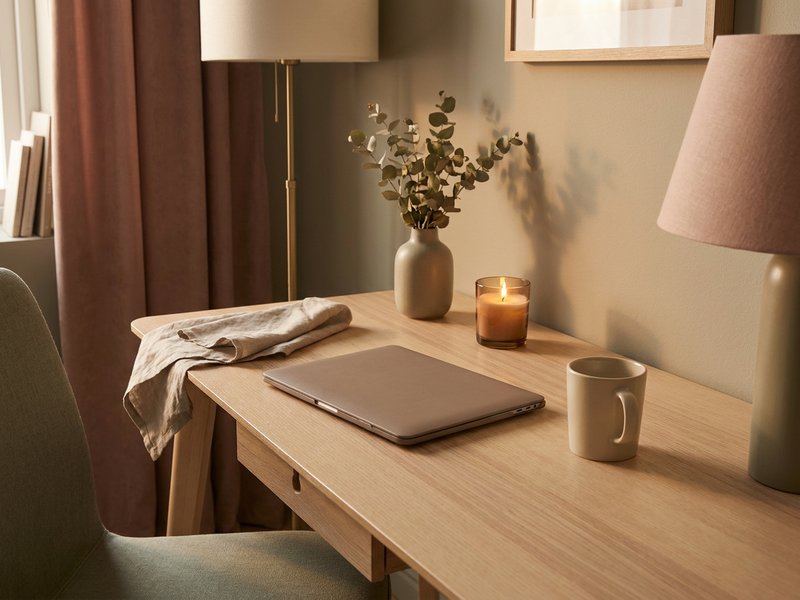
Close out a slow workday with 1 repeated physical action, closing the laptop lid, moving a specific object to a specific spot, that your brain has learned means the day is over. Without a clear end signal, a slow day tends to bleed into evening guilt about what did not get finished. The action does not need to be elaborate. It needs to be the same every time so it becomes a real cue instead of just another task. Read the done list from earlier before closing, even if it is only 2 lines. Ending on what happened, not what did not, changes how the evening feels.
Do You Need a New Planner or System to Make This Work?
You do not need a new planner or system to make soft productivity rituals work, and buying one is often the trap that delays starting. On r/adhdwomen, one account described buying a designer planner on impulse, then admitting it sat unopened for an entire year because the appealing design had done nothing to solve the underlying task initiation problem it was bought to fix. The rituals above run on a sticky note, a phone timer, and a closed laptop. If a system change actually helps later, add it after the rituals are already working, not instead of them.
Save this before your next slow day turns into a guilt spiral about what did not get done.
My own small win came from treating breathing during the day as something that belongs to me, not only something I reach for in a crisis. Nothing about the work itself changed. I made it through a full week without the end of day collapse I usually carry home, and what was different was not the work. It was that I had something left at the end of it. You’re not behind. You’re just differently wired.
Found this helpful? Pin this guide so you can come back to it anytime.
Frequently Asked Questions
What are soft productivity rituals for ADHD?
Soft productivity rituals are small, repeated actions that match your effort to the energy you actually have on a given day, instead of forcing a fixed output target. They cover starting, sustaining, and closing out a workday without a new system to maintain.
How do you stay productive on a low energy ADHD workday?
Match the task to the energy you have instead of pushing through it: start with a task adjacent motion, batch low demand tasks into your thinnest energy windows, and take a scheduled rest before you feel depleted rather than after.
What is the difference between a rest ritual and avoidance for ADHD?
A rest ritual is scheduled before you feel depleted and lasts a few minutes on a timer, while avoidance has no time limit and delays the task indefinitely. If the break has a clear start and end, it is regulation, not avoidance.
Soft productivity rituals for ADHD women who feel behind on slow days?
Start with 1 ritual, not all 8 at once: a breathing pause before a task and a done list instead of a to do list cover most of the gap between feeling behind and seeing real progress on a slow day.
How do you know a productivity ritual is actually working?
A ritual is working when you keep doing it without being reminded and the end of day collapse gets a little smaller, not when you suddenly finish everything. Track how depleted you feel at day’s end over 2 weeks, not your task count.