Open shelving versus closed cabinets for ADHD brains comes down to 1 core tradeoff: visibility versus visual calm. Open shelving keeps everything in plain sight, which fixes the out of sight, out of mind pattern that leaves things forgotten and expired at the back of a cabinet. Closed cabinets remove that visual clutter, which some ADHD brains need to avoid feeling overstimulated by a room full of visible objects. The National Institute of Mental Health lists disorganization and frequently losing things among the everyday problems adults with ADHD describe, which is part of why storage style affects daily function so directly. Neither option is universally right. The correct answer depends on which failure mode your own brain runs into more often.
Open shelving works better for ADHD brains that forget items the moment they are out of sight, while closed cabinets work better for brains that get visually overstimulated by too many objects in view at once. Open shelving fixes the object permanence problem. Closed cabinets fix the sensory overload problem. Pick based on which 1 costs you more, not on which option looks nicer.

Save this for later
You will want this again. Pin it to your planning board so it is one tap away when you need it.
Pin it for laterWhat’s the Real Difference Between Open Shelving and Closed Cabinets for ADHD?
The real difference is what each option does to your visual field, not how either one looks. Open shelving puts every item on constant display, so nothing has to be remembered to be found. Closed cabinets hide items behind a door, trading visibility for a calmer looking room. The National Institute of Mental Health lists trouble remembering daily tasks and poor organization among the everyday problems adults with ADHD describe, which is exactly the problem both storage styles are competing to solve in opposite directions.
Does 1 option objectively organize a home better than the other? No. Each one solves a different failure mode, and most homes end up needing both in different rooms.
Why Does Open Shelving Work So Well for Some ADHD Brains?

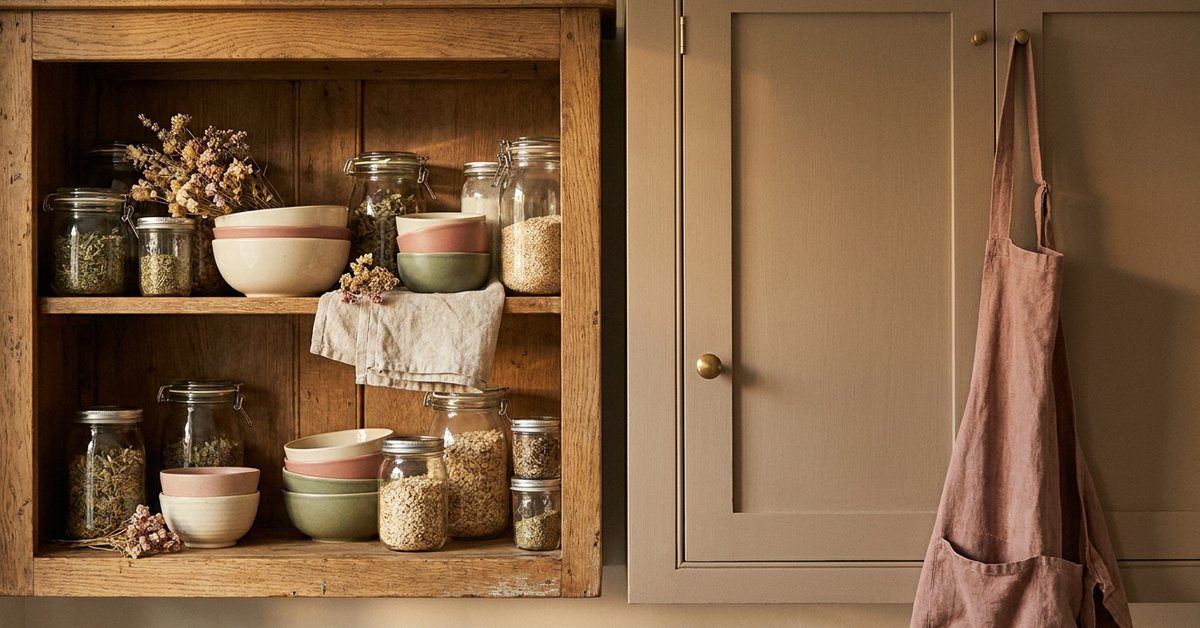
Open shelving works well for ADHD brains that lose track of items the moment they disappear behind a door. One woman described swapping closed cabinets for open shelving in her kitchen: snacks, ramen, and chocolate all moved out of a drawer and onto a shelf in plain sight, along with rice, lentils, spices, and vegetables, 4 categories in total. The point was never decoration. Keeping food visible fixed the out of sight, out of mind pattern that kept leaving things forgotten and expired at the back of a cabinet, until the whole pantry started running on visibility instead of memory.
Another woman found the same principle worked outside the kitchen. Picture ledge shelves changed her main living space more than anything else she had tried. Instead of committing to frames nailed into the wall, she could put whatever photos, art, or plants she liked on the ledge and swap them any day, with fewer holes to patch. It took 1 online purchase and a handy person hired for a couple of hours. Her honest timeline: the idea sat for 3 to 4 months before she bought anything, and the shelves waited another 2 to 3 months to go up. For her, that still counted as fast.
Does open shelving mean everything has to stay messy and visible forever? No. It means the default state is visible, which is different from being unable to tidy at all.
Why Does Open Storage Backfire for Other ADHD Brains?
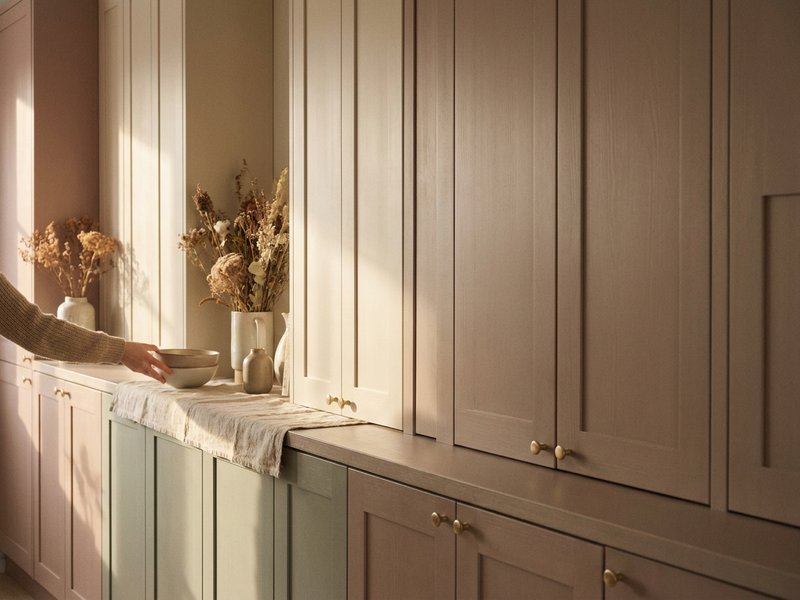
Clear and open storage bins are widely recommended as the default ADHD friendly solution, on the logic that visible items are less likely to be forgotten. 1 detailed account documented the opposite failure mode: constant visual input from see through bins caused sensory overload rather than helping recall. The summary was direct: open and clear storage meant visual overstimulation. The fix was swapping in fully opaque containers labeled in detail, sometimes with a painted picture of the contents instead of text, which restored calm without reintroducing the forgetting problem clear bins were meant to solve.
How do you know which failure mode applies to you? Notice which feeling hits first when you walk into a cluttered visible space: relief at seeing everything, or a small flinch at how much there is to look at. That reaction is usually the answer.
How Do Open Shelving and Closed Cabinets Compare Side by Side?
| Storage Style | Best For | Typical Setup Cost | My Take |
|---|---|---|---|
| Open Shelving | Brains that forget items once they are out of sight; kitchens, pantries, entryways | Low to moderate (brackets + boards, or premade shelf units) | Fixes forgetting fast, but only works if you can tolerate visual clutter day to day |
| Closed Cabinets | Brains that get visually overstimulated by too many visible objects; bathrooms, home offices | Moderate to higher (cabinet units or doors added to existing shelving) | Restores calm fast, but needs labels or a set routine to avoid the forgetting problem returning |
| Opaque Labeled Bins | A middle option for brains that need both: no visual noise, but still a memory anchor | Low (bins plus a label maker or marker) | The compromise most women land on after trying 1 extreme first |
How Does This Connect to a Full ADHD Home Organization System?
Choosing between open shelving and closed cabinets solves 1 piece of a bigger system. Does it cover the rest of a home that stays livable long term? Not on its own. This guide to 20 ADHD friendly home organization ideas that actually stick covers the fuller system once the storage style for each room is already decided.
How Do You Decide Between the Two for Your Own Home?
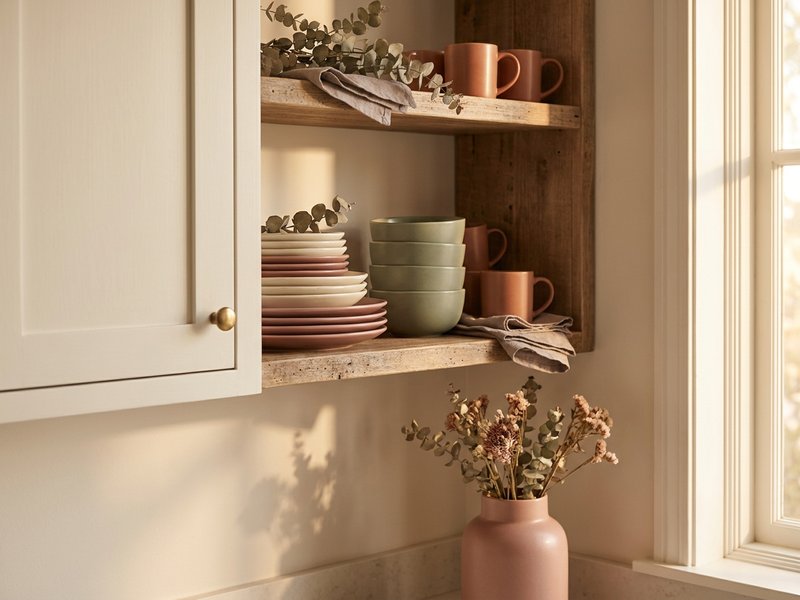
Deciding between the 2 works best room by room instead of all at once. A kitchen you use several times a day usually benefits more from open shelving, since forgetting is the more expensive problem there. A bathroom or office you glance at briefly often benefits more from closed cabinets, since visual calm matters more than constant access. Most homes end up mixing both, not committing fully to 1 side.
Do you have to pick 1 style for the whole house? No. Testing 1 shelf or 1 cabinet swap in your highest traffic room first tells you more than reading about either option ever will.
What Does Progress With a New Storage System Actually Look Like?
One woman felt truly proud of finally getting her pantry organized around how she actually cooks day to day. It had taken 2.5 years in the same house to get there, with snacks on the lower shelves, spices kept at eye level, and dry goods and cereal pushed up to the higher shelves where they are less tempting to grab first. She still does a check every few months in case something has gone bad, but the system itself has held. Progress with a new storage system looks the same way. It rarely looks like a finished, flawless kitchen. 1 shelf that still makes sense 6 months later is exactly what it looks like. You’re not behind. You’re just differently wired.
Save this before your next storage decision turns into another abandoned Pinterest board.
Found this helpful? Pin this guide so you can come back to it anytime.
Frequently Asked Questions
Is open shelving or closed cabinets better for ADHD?
Neither is universally better. Open shelving works best for brains that forget items once they are out of sight, while closed cabinets work best for brains that get visually overstimulated by too many visible objects at once.
Can open shelving cause sensory overload with ADHD?
Yes, for some people. Constant visual input from open or clear storage can cause overstimulation rather than helping recall. Opaque, clearly labeled containers can restore calm without reintroducing the forgetting problem.
Do I have to choose only 1 storage style for my whole home?
No. Most ADHD-friendly homes mix both styles by room, using open shelving in high-traffic spaces like kitchens and closed cabinets in spaces where visual calm matters more, like bathrooms or offices.
How much does it cost to switch from cabinets to open shelving?
Cost ranges from low to moderate depending on whether you install simple brackets and boards or buy premade shelf units. A middle option, opaque labeled bins inside existing cabinets, usually costs the least of all 3 approaches.
How do I know which storage style fits my own ADHD brain?
Notice your first reaction when you see a cluttered, visible space: relief at being able to see everything, or a small flinch at how much there is to look at. That reaction usually points to the right style, and testing 1 shelf or cabinet in your busiest room confirms it.