
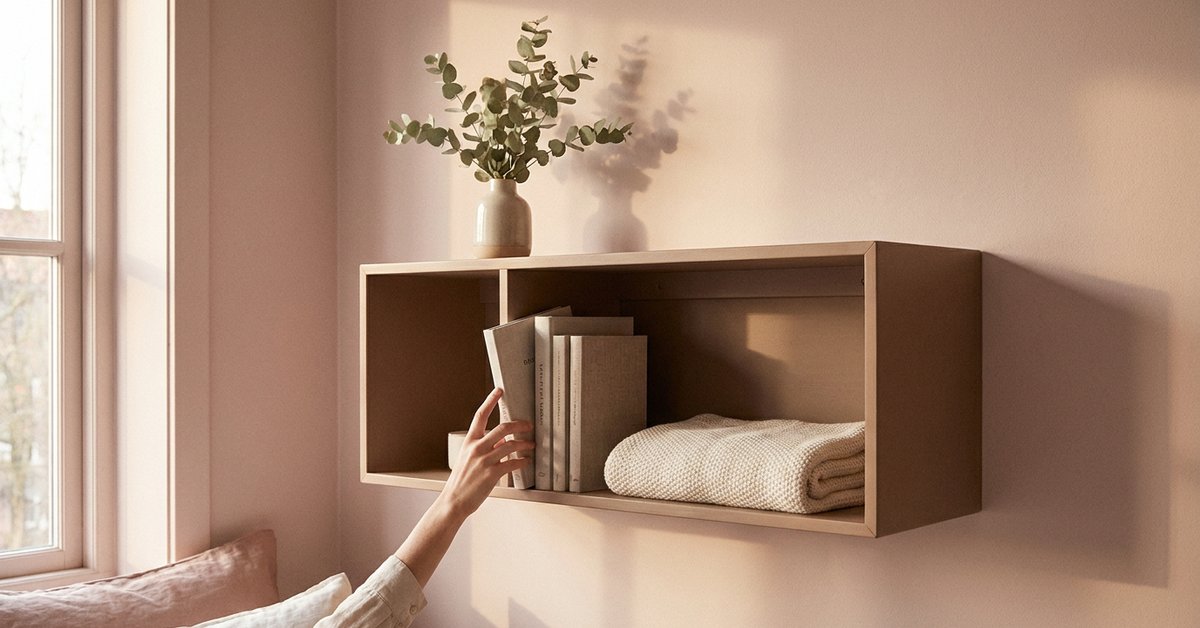
Decor mistakes that overstimulate ADHD brains rarely look like mistakes in a photo. A room can look calm and curated in a single frame and still fight a scattered brain every time you actually live in it. One woman on r/adhdwomen named the exact bind this creates: she does not want everything out because it looks ugly and gives her anxiety, but if it is not out she cannot find it. Six specific decor choices explain why a Pinterest-pretty room and an ADHD-friendly room are not automatically the same room.
Decor mistakes that overstimulate ADHD brains usually come down to visual noise competing for attention the brain cannot afford to spend. The six biggest: closed storage that hides items an ADHD brain forgets exist, too many colors and patterns fighting for the eye at once, harsh overhead lighting with no softer option, chasing an aesthetic that photographs well over one that actually calms the nervous system, leaving zero visual rest spots anywhere in the room, and treating the whole redo as one big project instead of one fixable choice at a time. Fixing even one of the six changes how the room feels to be in, not just how it photographs.

Save this for later
You will want this again. Pin it to your planning board so it is one tap away when you need it.
Pin it for laterWhat Makes Home Decor Overstimulating for an ADHD Brain?
Decor becomes overstimulating when a room asks the eyes to process more than they can absorb at once, competing directly with whatever else the brain is trying to do. The National Institute of Mental Health describes ADHD as involving ongoing difficulty filtering competing input, and a visually busy room is exactly the kind of competing input a calmer palette removes. Bright colors, busy patterns, and harsh light all add to that load the same way background noise does. A room does not have to be messy to overstimulate. It only has to be visually loud.
Does that mean a calm room has to be empty? No. An empty room removes visual triggers along with visual interest, and a bare space can end up just as hard to settle in as a cluttered one, only for a different reason. The goal is lowering visual noise, not lowering the number of objects in the room.
One woman on r/adhdwomen described what a visually loud environment does to her nervous system in physical terms rather than just annoyance: the moment she sits down, her body switches off and the overwhelm about everything left undone starts spiraling so loudly she cannot move. For her, staying in motion is not a personality trait, it is the only thing keeping that inertia from winning. A room that adds visual noise on top of an already overloaded nervous system makes that spiral more likely, not less.
What Are the 6 Decor Mistakes That Overstimulate ADHD Brains?
The six mistakes below cover most of what quietly turns a pretty room into a hard one to actually live in.
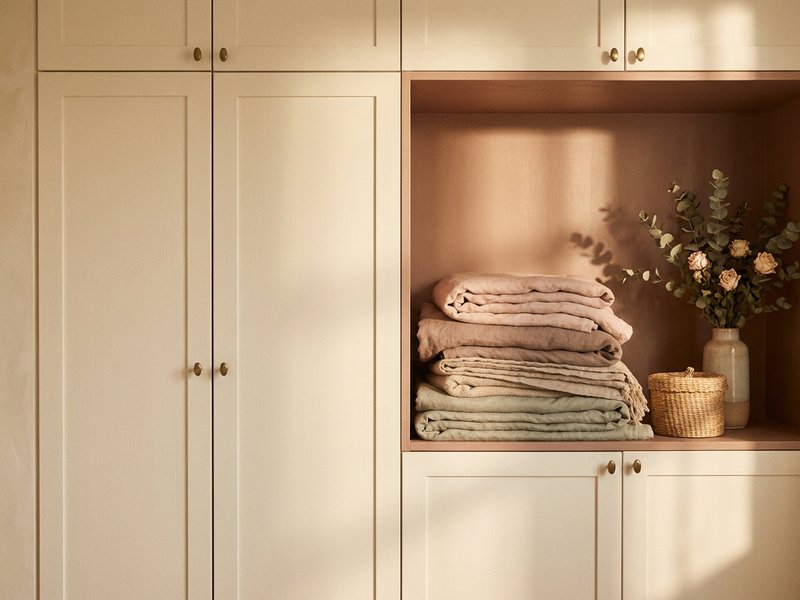
- Closed storage for items you use daily. One woman on r/adhdwomen named the exact bind this creates: she does not want everything out because it looks ugly and gives her anxiety, but if it is not out she cannot find it, so she ends up doing what she calls a 35 minute twirl between three different potential hiding places before she finally locates whatever she was looking for. Out of sight tends to mean out of mind for an ADHD brain, not tidy and forgotten on purpose.
- Too many colors and patterns competing at once. A busy room reads as more decisions per second than a room built around one or two dominant tones, even when every individual piece in it is objectively pretty.
- Harsh overhead lighting with no softer option. A single bright overhead fixture sends the same alertness cue at 9pm that it sends at 9am, working against a room that is supposed to help you wind down rather than stay switched on.
- Chasing the aesthetic that photographs well over the one that calms you. A room styled entirely for how it looks in a photo can still leave the nervous system working overtime once you are actually sitting in it every day.
- Zero visual rest spots anywhere in the room. When every surface holds something to look at, the eyes never get a spot to land that is not asking for attention, and a fully busy room can end up as tiring as a fully cluttered one.
- Treating the whole room as one big project instead of one fixable choice. Waiting for the energy to redo an entire room at once is why so many rooms stay stuck exactly as they are for years.
Is Pinterest-Style Decor Actually Bad for an ADHD Brain?
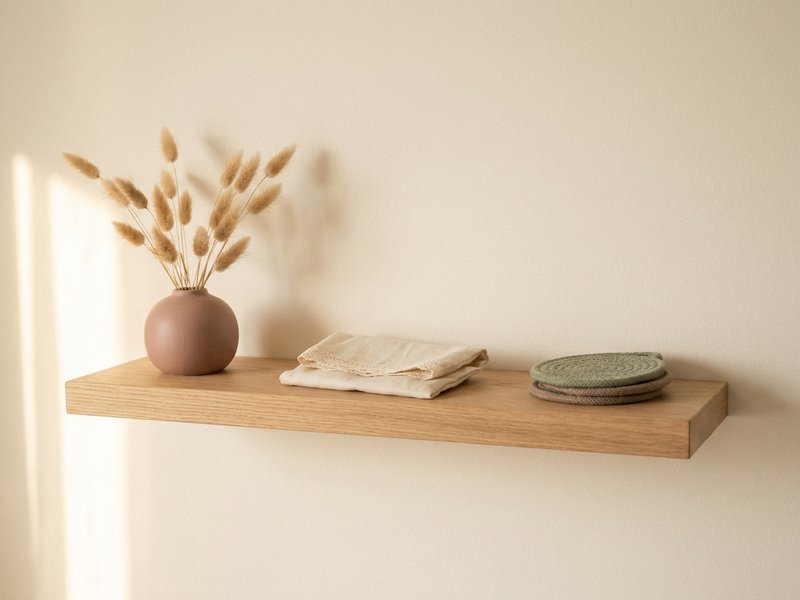
Not automatically, but the gap between inspiration photos and daily reality is a documented pattern, not just one person’s experience. Within ADHD forums, a recurring theme surfaces around Pinterest-style home inspiration: users report that aspirational imagery undermines rather than motivates better systems. One r/adhdwomen commenter explained why she quit browsing the platform after comparing her own space to curated photos: “I had to delete Pinterest because it got too damn depressing.” Elsewhere in the same thread, another commenter described wearing earbuds constantly just to manage auditory overstimulation, showing that aesthetic frustration and sensory regulation get treated as one combined problem inside these communities, not two separate design categories.
Should you stop looking at inspiration photos entirely? Not necessarily. The mistake is treating a still photo as the finish line instead of a starting point, then feeling like a failure when a lived-in room never matches a photo staged to hide exactly the kind of daily-use clutter an ADHD brain actually needs visible.
Which Mistake Should You Fix First?
Fix the one costing you the most daily friction, not the one that would photograph the biggest improvement. Does the most photogenic mistake automatically deserve to go first? Not usually. For a lot of ADHD women the real cost sits with the closed storage problem, since digging through cabinets multiple times a day adds up to real friction that a color palette never will. For others it is the lighting, since a harsh overhead bulb undercuts every wind-down habit built around it.
Is it realistic to fix all six at once? Rarely. Trying to redo a whole room in one weekend usually recreates mistake number six, treating the room as one giant project instead of six small, separate choices. One mistake, fixed and left alone for a few weeks, tends to outlast an ambitious full redo that stalls out halfway through.
What Does a Calmer, Less Overstimulating Room Actually Look Like?
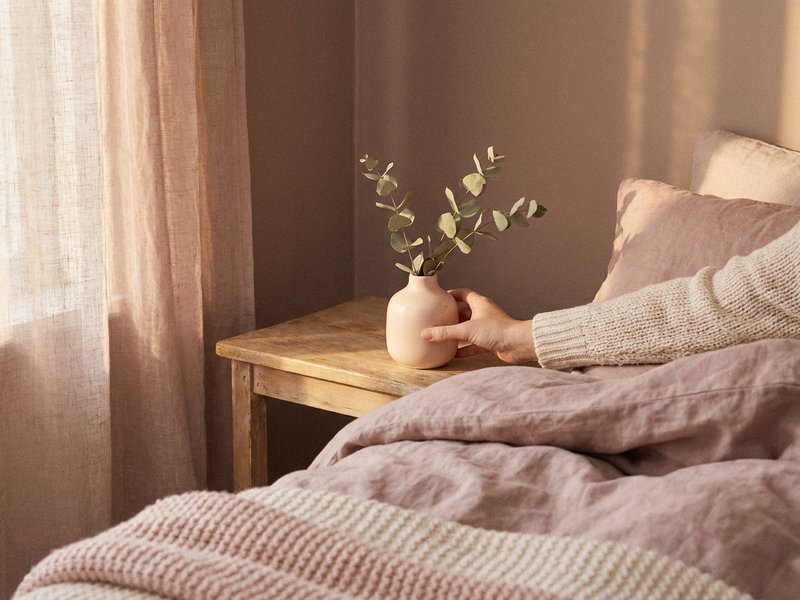
Smaller than a full makeover, and it usually starts with one swap rather than a shopping trip. One woman described the first night her bedroom finally helped her sleep instead of fighting her: she had swapped the overhead light for a dim lamp, moved her phone across the room, and left a notebook by the bed for the late-night idea storm. She was asleep before she usually even started winding down. The room did half the work for her, and the only thing that changed was the lighting.
For more decor ideas built around reducing visual noise instead of hiding it, this guide to dopamine decor ideas without visual chaos covers the color and clutter balance in more depth.
Save this list for the next time a room looks fine in photos but still feels like too much to sit in.
Found this helpful? Pin this guide so you can come back to it anytime.
Frequently Asked Questions
What decor mistakes overstimulate ADHD brains the most?
Closed storage for daily-use items, too many competing colors and patterns, harsh overhead lighting, chasing a photogenic look over a calming one, no visual rest spots, and treating a room as one big project are the six most common. Closed storage and harsh lighting tend to cause the most daily friction.
Is Pinterest-style decor bad for an ADHD brain?
Not automatically, but ADHD forums report a recurring pattern where curated inspiration photos leave people feeling worse about their own space rather than motivated. Treating a photo as a starting point instead of a finish line avoids most of that frustration.
Why does closed storage cause problems for ADHD brains specifically?
Items stored out of sight tend to become out of mind for an ADHD brain, leading to repeated searching through multiple hiding spots. Visible, open storage for daily-use items usually solves this more reliably than a prettier closed system.
Should I redo my whole room at once to fix overstimulating decor?
No. Trying to fix all six mistakes in one weekend usually stalls out and recreates the exact all-or-nothing pattern that keeps a room stuck. Fixing one mistake and leaving it alone for a few weeks tends to hold up better.
Decor mistakes that overstimulate ADHD brains: what is the easiest fix to start with?
Swapping harsh overhead lighting for a dim lamp is one of the fastest, lowest-cost changes, and it directly affects how a room feels at wind-down time rather than only how it looks.