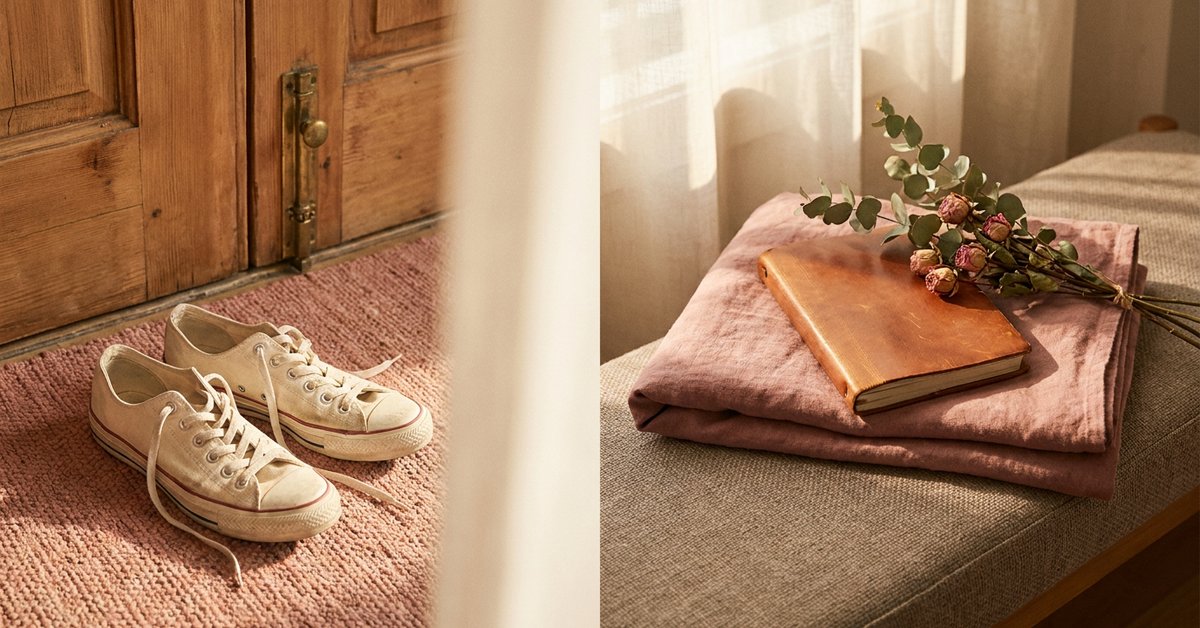
Active vs restful self care for an ADHD brain comes down to reading your actual signal instead of defaulting to whichever one is trendy that week. Active self care, like a swim, a walk, or a workout, discharges built up restlessness and gives a scattered brain something rhythmic to lock onto. Restful self care, like a quiet evening or a closed journal by a warm lamp, refills a tank that active output cannot reach once it is already empty. Most self care checklists list both without saying which one a given day actually calls for, so the choice ends up random instead of useful.
Active vs restful self care depends on whether you are wired and restless or already running on empty. Wired and restless calls for active self care. Running on empty calls for restful self care. Check your own signal before picking either one today.

Save this for later
You will want this again. Pin it to your planning board so it is one tap away when you need it.
Pin it for laterWhat Is the Real Difference Between Active and Restful Self Care?
The real difference between active and restful self care is what each one actually does for your nervous system, not just how much movement is involved. Active self care burns off excess energy and restlessness through movement, giving a brain that struggles to sit still something structured to focus on instead. Restful self care lowers stimulation and lets an overloaded nervous system recover, working best when the problem is depletion rather than restlessness. Reaching for the wrong 1 does not just fail to help. It can make the actual problem worse, like forcing a workout onto a brain that is already running on empty.
| Signal | Active Self Care | Restful Self Care |
|---|---|---|
| Best for | Restlessness, racing thoughts, excess energy | Exhaustion, overwhelm, sensory overload |
| What it does | Discharges built up energy through movement | Lowers stimulation and lets the nervous system recover |
| Examples | Swimming, a brisk walk, dancing in the kitchen | A closed journal, a warm bath, screens off for an hour |
| Wrong fit risk | Adds fatigue on top of exhaustion | Leaves restlessness with nowhere to go |
Does 1 type count as more valuable than the other? No. Neither active nor restful self care outranks the other. A daily self care checklist works best when it treats them as 2 separate tools for 2 separate problems, not a ranked list.
How Do You Know Which One Your Brain Needs Right Now?

Knowing which type your brain needs right now starts with 1 honest check in: are you wired, or are you empty? For years, 1 woman managed by scraping through, gritting her teeth through it, and keeping the plates spinning. Then somewhere around 35, the tank just ran out. Not dramatically. Just quietly, 1 day she did not have the energy to crawl back from a crash the way she always had before. There is only so long a brain can run on compensating before it sends in the bill, and by the time exhaustion sets in that deep, active self care only adds another charge to an account that is already overdrawn.
Does restlessness always mean you need to move? Not necessarily. Restlessness that comes from boredom or excess energy usually responds well to movement. Restlessness that comes from being overstimulated or overwhelmed usually needs restful self care instead, even though the fidgety feeling can look identical from the outside.
What Does Active Self Care Actually Look Like When It Works?
Active self care actually working looks like finding the 1 specific movement that quiets a busy brain instead of just adding another task to a list. Swimming changed something for 1 woman that nothing else could fix. Not the gym, not running, swimming specifically. The rhythm of it, the water blocking out every other input, the way her arms and legs had to work together. Her brain went quiet in a way it almost never did anywhere else. What works for 1 person will not work the same way for everyone, but if you have tried everything else, it is worth 1 try in a lane.
Does active self care have to mean a full workout? No. A brisk 10 minute walk around the block or dancing through 1 song in the kitchen counts as active self care. The goal is discharging energy, not hitting a fitness target.
What Does Restful Self Care Actually Look Like When It Works?

Restful self care actually working looks like recovery, not just a break, and it does not always come from the product marketed for the job. 1 woman wanted an acupressure mat to unwind at home, and the spikes turned out far sharper than a set she had tried before. She could have adjusted to that. What she could not get past was the fabric, which felt thin and cheap over foam that did not hold up. It worked, technically, but it read as a buy it twice kind of product. Restful self care that actually works is usually simpler than a product promise: dim lighting, screens off, and a quiet stretch of time with nothing scheduled into it.
Does restful self care mean doing absolutely nothing? No. Restful self care can include a closed journal, a warm bath, or a slow cup of tea. The goal is lower stimulation, not zero activity.
How Do You Build a Self Care Checklist That Actually Flexes Between the Two?
Building a daily self care checklist that actually flexes between active and restful means designing it around a completion rate, not a flawless streak. Self care checklists rarely define what actually counts as succeeding, and 1 r/adhdwomen commenter replaced an all or nothing standard with a specific target instead, answering someone overwhelmed by daily self care advice with a completion rate rather than flawless execution. “4 days out of 7 is still a majority.” The same reply suggested starting with 1 small, repeatable task, like putting dirty socks in the hamper before bed, and adding a second task only once the first 1 held for a week or 2. A checklist built that way can hold both active and restful options side by side, since the point is choosing correctly, not doing everything every day.
Does a self care checklist need to be the same every single day? No. A flexible checklist offers 2 to 3 active options and 2 to 3 restful options, and you pick based on your actual signal that day instead of following a fixed rotation.
If checking off a full self care routine still feels out of reach most days, these 5 minute self care acts for ADHD women cover options small enough to fit even the emptiest days.
What Does Progress With Reading Your Own Self Care Signal Actually Look Like?
Does progress here mean never picking the wrong 1 again? No. 1 woman’s small win was giving up the fight to keep her bedside table clear and just making a basket to hold the pile instead. She always ended up with stuff next to her in bed, so she stopped shaming herself and contained it. Bonus, she remembers her morning meds far more often now that they live right there within reach. Progress with active vs restful self care looks the same way. It rarely looks like always guessing right on the first try. 1 moment where you correctly read your own signal, and honor it instead of overriding it, is exactly what it looks like. You’re not behind. You’re just differently wired.
Save this before your next low energy day has you reaching for the wrong kind of self care again.
Found this helpful? Pin this guide so you can come back to it anytime.
Frequently Asked Questions
What is the main difference between active and restful self care?
Active self care discharges restlessness and excess energy through movement, while restful self care lowers stimulation and helps an overloaded nervous system recover. The right choice depends on whether you feel wired or empty.
How do I know if I need active or restful self care today?
Check whether you feel wired and restless or already running on empty. Wired and restless usually responds well to active self care, while running on empty needs restful self care instead.
Can active self care make exhaustion worse?
Yes. Forcing active self care onto an already exhausted nervous system adds fatigue on top of exhaustion instead of helping. Restful self care is the better fit when the problem is depletion, not restlessness.
What counts as restful self care besides sleeping?
Restful self care includes a closed journal, a warm bath, screens off for an hour, or a slow cup of tea. The goal is lower stimulation, not doing absolutely nothing.
How do I build a self care checklist that covers both types?
Build a checklist with 2 to 3 active options and 2 to 3 restful options, and pick based on your actual signal each day. Aim for a majority completion rate instead of a flawless streak.