An ADHD home organization system that survives is built to be seen, not remembered. It does not ask your brain to recall a step. One woman put it plainly. She performs being tidy at other people’s houses without even trying. Fear of judgment flips a switch that works fine when it wants to. Her own apartment never got that memo. These 20 ideas work the same way that switch does. Visible, low effort, and not dependent on remembering anything.
An ADHD home organization idea sticks when it meets 3 tests. It stays visible instead of hidden behind a door. No extra step is needed to use it correctly. It still works on the days your brain has nothing left to give. Ideas that fail even 1 of these 3 tests usually collapse within a few weeks.

Save this for later
You will want this again. Pin it to your planning board so it is one tap away when you need it.
Pin it for laterWhat Makes an ADHD Home Organization System Actually Last?
A system lasts when it removes a decision instead of adding one. Open shelving beats a closed cabinet. A labeled bin beats an unlabeled one. Does that mean every closed cabinet has to go? Not every one, but the things you reach for daily belong somewhere your eyes can find. No opening anything required first. The goal is not a prettier home. It is a home that still functions on your worst day, not just your best one.
Why Do So Many Organization Systems Fail Within a Few Weeks?
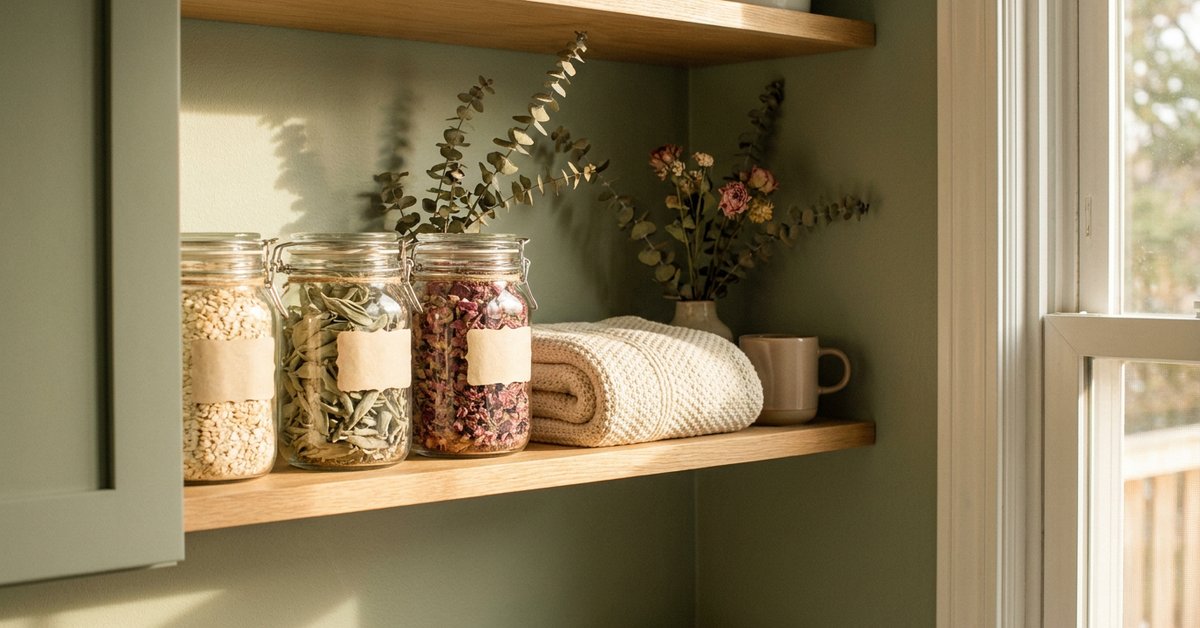
Organization systems fail because most of them hide the very cue your brain needs to use them. There is a real psychology term for this: affordance theory. A perception researcher named J.J. Gibson first described an affordance as a quality an object projects. It signals how to interact with the object, rather than being a fixed property of the object itself. Applied to a home, open shelves and labeled bins reduce the mental cost of remembering where something belongs. Closed, uncued storage raises that cost. Why does a closed cabinet cost more than an open shelf? Behind a door, your brain has to first remember the system exists before it can use it. An open shelf skips that step entirely.
What Are the Best Kitchen and Pantry Organization Ideas?
These 4 ideas keep food visible so nothing goes forgotten at the back of a shelf.
- Clear bins for pantry staples. Transparent containers with no lid to remember mean you can tell what is running low at a glance.
- A first out basket. Put food that is close to its expiry date front and center, at eye level, so it gets used before it gets wasted.
- Open shelving for everyday dishes. Skip the cabinet for plates and bowls you use daily. Reaching for them should take 1 motion, not 2.
- A magnetic strip for utensils. Knives and scissors on a wall strip beat a drawer you have to dig through.

What Are the Best Closet and Laundry Organization Ideas?
These 4 ideas cut the number of steps between wearing clothes and putting them away.
- An open clothing rack. Hang shirts where you can see the whole row instead of behind a closet door. You wear more of what you own when you can see it.
- 1 hamper per zone. A hamper in the bedroom and 1 in the bathroom means dirty clothes never have to travel across the house to get sorted.
- A hook exactly where clothes come off. Clothes that are worn but still clean get 1 landing spot instead of a chair, the floor, or the bed.
- Labeled bins even unfolded. A bin labeled leggings still beats a drawer of tangled clothes, folded or not.
What Are the Best Entryway and Landing Zone Organization Ideas?
These 4 ideas stop the pile that builds up right inside the front door.
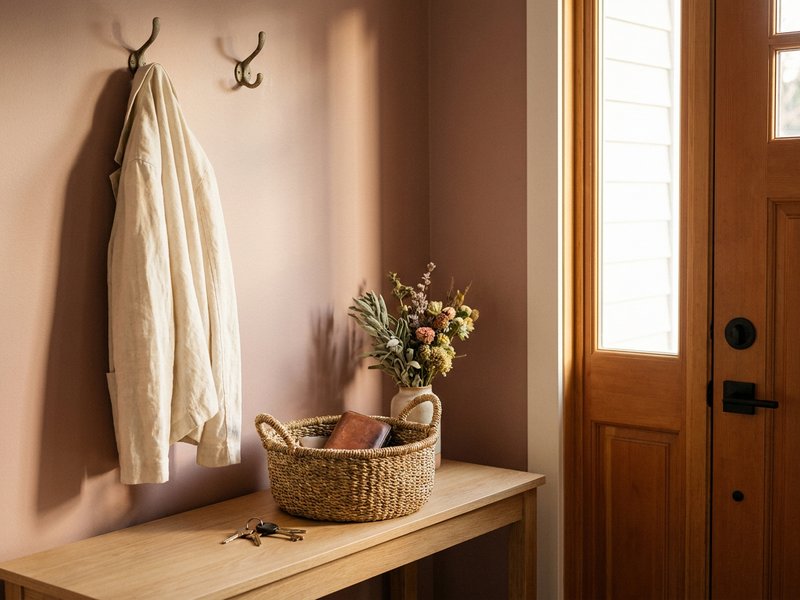
- A landing basket by the door. Keys, wallet, and mail go in 1 basket the second you walk in, not scattered across 3 surfaces.
- Wall hooks at shoulder height. A hook mounted too high gets skipped. Shoulder height means hanging a coat takes less effort than dropping it on a chair.
- A shoe spot right at the door. A tray or a small mat means shoes stop 1 step early instead of trailing through the house.
- A tray for things to return. Library books, borrowed items, and packages to send back get 1 visible spot so they stop drifting from room to room.
What Are the Best Desk and Paper Clutter Organization Ideas?
These 4 ideas stop paper from becoming a pile you have to sort later. What if the pile already exists? Start with the inbox tray below, then work backward through the rest.
- 1 inbox tray for everything. Mail, forms, and receipts go into 1 tray the moment they arrive. No filing decision required on the spot.
- A shredder or recycling bin under the desk. Junk mail gets tossed the second it is sorted, not carried to another room first.
- Scan and toss instead of keeping paper. A photo on your phone replaces most receipts and forms you only need to reference once.
- 1 drawer for supplies, not 5. Pens, tape, and sticky notes live in a single drawer. More drawers just means more places to lose the same 3 items.
What Are the Best Bathroom and Small Space Organization Ideas?
These 4 ideas make the smallest room in the house work harder without adding clutter. Does a small room really need its own system? A cramped space usually reaches its limit fastest, so it needs 1 more than most.
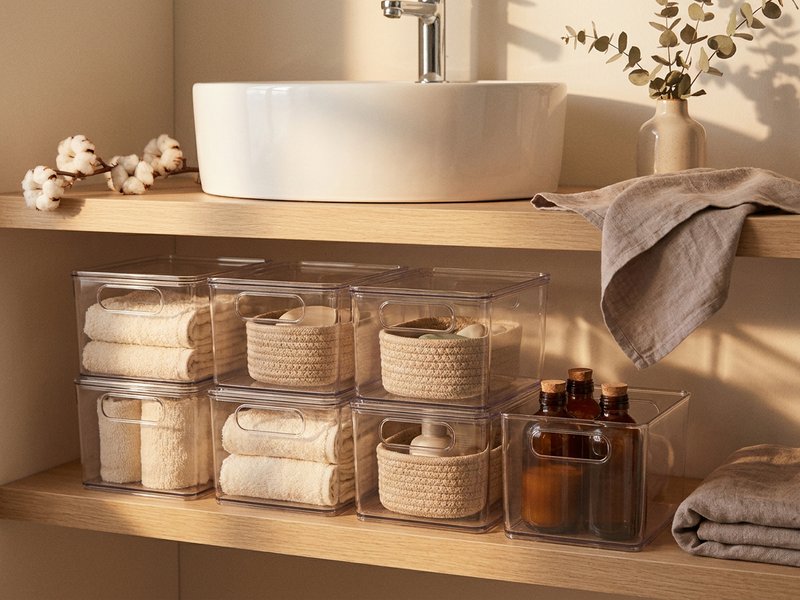
- Clear stackable bins under the sink. Grouped by category, they beat a jumble of loose bottles every time you need to find something fast.
- A shower caddy instead of bottles on the floor. Hanging storage keeps the shower floor clear and everything at eye level.
- A small trash can in every room. Not just the kitchen and bathroom. A trash can within reach means less gets left on a surface to deal with later.
- A 1 in, 1 out rule for products. A new bottle only comes in once an old one is empty, so the shelf never quietly fills up past what fits.
How Do You Keep the System Going Once the Motivation Fades?
You keep a system going by lowering the bar for what counts as maintaining it. One woman was taught that floors come last, after counters and dishes, in 1 exact sequence. So she mopped maybe 4 times a year, because anything less than the full ritual felt pointless. Then a cheap wet mop showed up and did a mediocre job, nowhere near her mother’s standard. Somehow that was what shifted things. She cleans the floor several times a week now, never very well. Better than never turns out to be the whole point. Why does a partial effort beat a full ritual? A full ritual only happens on a good day. Even the smallest version can happen on any day at all.
What if the System Falls Apart After a Bad Week?
Pick 1 zone and reset only that zone, not the whole house at once. A bad week does not erase a good system. It just leaves a pile on top of it. Clearing the entryway basket alone takes 5 minutes. Doing the whole house at once eats an entire afternoon. Small resets keep a system alive far longer than waiting for a free weekend that rarely comes.
When Is It Worth Buying a Few Organization Tools?
It is worth buying tools once you know exactly which of the 20 ideas above you keep reaching for. Buying bins before testing a habit usually means bins sitting empty in a closet. Our roundup of Amazon finds that made an ADHD home functional covers the specific products worth having. Read it once you know your system.
One woman’s small win was decluttering her whole home in a single week, after years of starting and giving up. The usual advice never worked for her, since she could not picture the finished result and would quit halfway through. This time she went room by room and kept the momentum going instead of stopping to admire 1 finished space. She actually saw it through, and the lighter space changed how her days felt. You’re not behind. You’re just differently wired.
Save this for the next time your space feels like it is working against you. Pin it now so all 20 ideas are ready when you need them.
Found this helpful? Pin this guide so you can come back to it anytime.
Frequently Asked Questions
What is the best way to organize a home with ADHD?
The best systems stay visible instead of hidden behind closed doors, since your brain has to remember a system exists before it can use it. Open shelves, clear bins, and labeled storage all reduce that mental step. A system built around your actual habits works better than one built around how a home should look.
Why do organization systems fail for people with ADHD?
Most systems fail because they hide the cue your brain needs to use them, a concept called affordance theory. Closed, uncued storage raises the mental cost of remembering where things belong. Systems that stay visible and need no extra step to use correctly last far longer than ones that look tidy but ask more of your memory.
Is it normal for cleaning systems to fall apart during a bad week?
Yes, that is normal and does not mean the system failed. A bad week leaves a pile on top of a good system, it does not erase it. Resetting 1 zone at a time, like an entryway basket, keeps a system alive far longer than waiting for a free weekend to clear the whole house at once.
What are cheap ADHD organization ideas that actually work?
A landing basket by the door, a hook at shoulder height, and 1 inbox tray for paper all cost little and solve a specific daily friction point. Each one removes a step instead of adding a new habit to maintain, which matters more for lasting change than the price of the bin or basket itself.
Should I buy organization products before starting a new system?
No, test the habit first with what you already own. Buying bins before you know which habit actually sticks usually means bins sitting empty in a closet. Once you notice which of your systems you keep reaching for, that is the moment specific products are worth adding.