ADHD pantry organization works when the system asks less of your memory and less of your motivation than a normal pantry does, not when it looks the most impressive. Clear bins, visible labels, and zones sorted by how you actually cook beat matching containers every time. One woman put it simply after years of trying to keep a tidy home: she can leave a hotel room spotless in ten minutes, beds straightened and towels folded, then walk back into her own apartment and step over the same mess she left four days earlier without a second thought. The gap is not effort. It is a system that only works when someone else is watching.
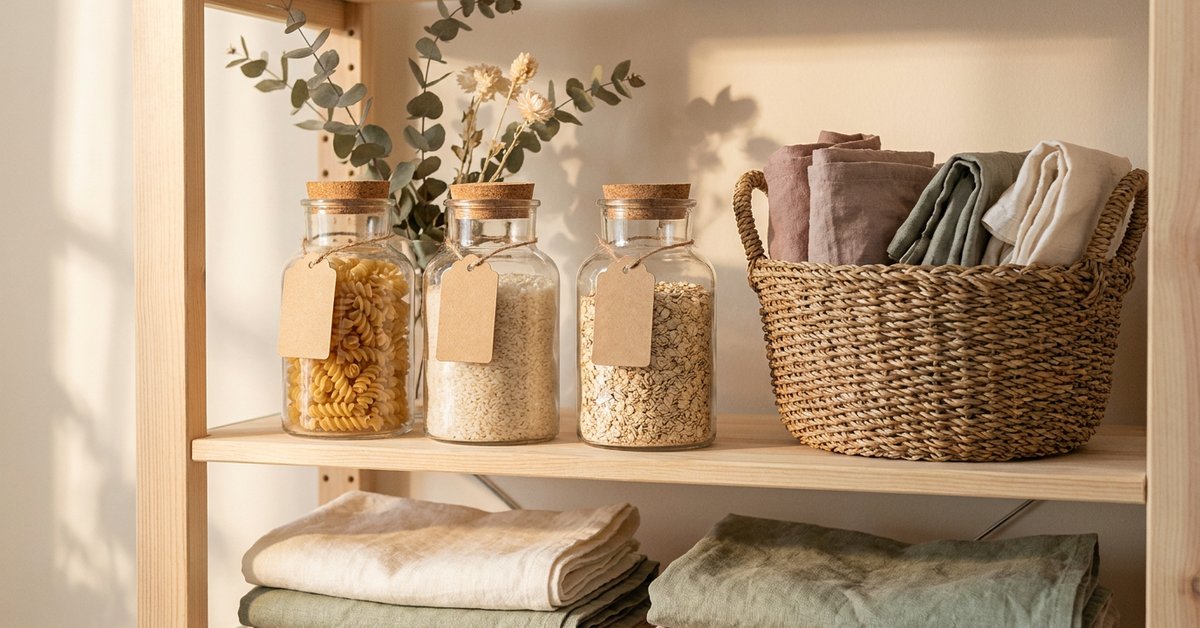
ADHD pantry organization sticks longest when it uses clear containers, big visible labels, and zones grouped by how you actually cook, instead of a color coded system copied from Pinterest. A pantry you can understand in three seconds beats one that only works right after you clean it.

Save this for later
You will want this again. Pin it to your planning board so it is one tap away when you need it.
Pin it for laterWhy Do Most Pantry Systems Fall Apart After a Few Weeks?
Most pantry systems are built for the version of you that just finished organizing it: motivated, rested, and thinking clearly about categories. Two weeks later, the person putting groceries away is tired, distracted, and making decisions in under two seconds per item. If the system requires remembering which of six matching bins holds the pasta, it collapses the moment your brain is not in organizing mode. A book frequently recommended inside ADHD community threads on decluttering reframes this well: the goal is not decluttering, it is matching what you own to the container that holds it, because a cabinet built to hold 12 mugs cannot stretch to fit 30 no matter how you arrange them. The same logic applies to a pantry shelf. If it is built to hold what you actually buy, the system survives a bad week. If it is built to hold an aspirational version of your groceries, it does not.
What Is the ADHD Reason Pantries Get Messy So Fast?
The National Institute of Mental Health describes working memory differences as one of the core features of ADHD, which is part of why an item that is out of sight tends to disappear from your mental inventory entirely, not just from view. But what does that actually mean for a pantry shelf? It means a bag of rice pushed behind a taller box effectively stops existing, so you buy another one at the store. Visibility is not a preference here. It is the actual fix for a real memory gap, which is why clear bins outperform pretty matching ones that hide their contents.
Idea 1: Use Clear Bins Instead of Matching Opaque Ones
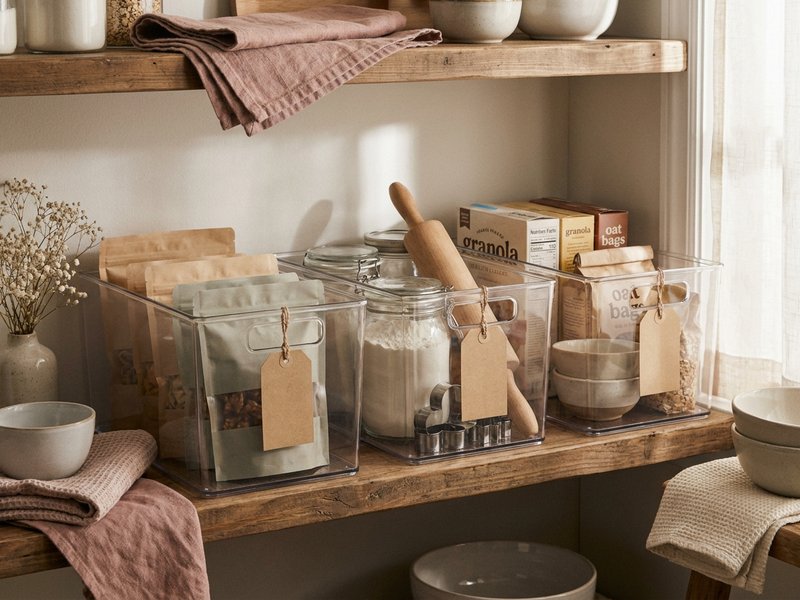
A clear bin lets you see what is inside without opening it, which matters more than whether it matches the bin next to it. Group snacks in one clear bin, baking supplies in another, and breakfast items in a third. What if you only own opaque bins right now? Cluster items by category on an open shelf instead and add a label facing forward, since the visibility problem is solved by seeing the category at a glance, not necessarily by seeing through the container itself.
Idea 2: Label Everything at Eye Level, Not Just the Shelf Edge
A label on the front of a bin, at the height you actually look when scanning a shelf, does more work than a tiny label on the shelf edge that only shows once the bin is empty. Large, simple text beats decorative labels you cannot read from three feet away. This is one of the lowest cost label maker projects you can do in one sitting, and it pays off every single time you are tired and scanning fast instead of reading carefully.
Idea 3: Zone by How You Actually Cook, Not by Food Category
Traditional pantry organizing sorts by category: grains together, canned goods together, snacks together. That works fine until you realize you group ingredients by meal, not by type, when you are actually cooking. Try zoning instead by use: a breakfast zone, a lunchbox zone, a dinner staples zone, and a snack zone. But what if your groceries do not split cleanly into those categories? Mix the two systems. Keep bulk staples like flour and rice sorted by category on a back shelf, and build one or two use based zones at eye level for the items you reach for daily.
Idea 4: Put a Grab and Go Shelf at the Front
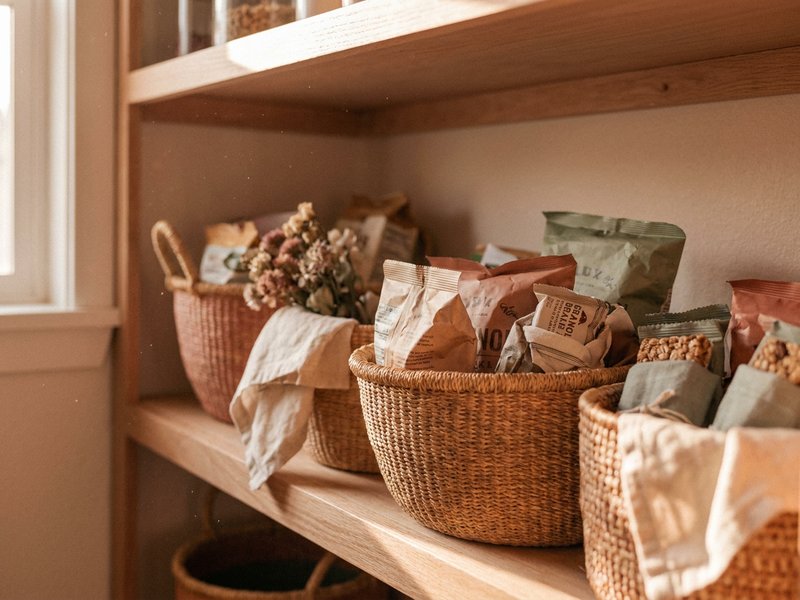
Dedicate the most visible, easiest to reach shelf to whatever you eat on autopilot: granola bars, crackers, the snack you grab without thinking. But what if your favorite snacks keep changing week to week? Treat the shelf as a rotating slot, not a fixed one, and simply restock whatever you are actually reaching for lately instead of whatever you decided six months ago belonged there. Skip the pantry logic entirely for this shelf and stock it purely for speed. Putting your highest frequency items behind a closed door on a lower shelf, next to items you buy once a year, is the single most common design mistake in a standard pantry layout.
Idea 5: Give Yourself Permission to Skip a Step
One woman stopped folding her socks, underwear, and workout clothes entirely. They go straight from the dryer into the drawer in one pile. Nobody can tell, and it saved her a step she was always going to skip anyway. The same permission applies to a pantry: if decanting cereal into a matching container is the step that keeps you from restocking the shelf at all, skip it. Keep the original box, add a label if the brand name is not enough of a cue, and move on. The whole point is making your home work the way you actually live in it, not the way it is supposed to look.
Idea 6: Do a 10 Minute Reset Instead of Waiting for a Free Weekend
A full pantry overhaul can wait for a free weekend that rarely comes. A 10 minute reset does not. Pull anything expired, corral loose items back into their zone, and stop there, even if the shelf still looks messy when you finish. So why does 10 minutes work when a whole afternoon never happens? Momentum from a short session is often enough to fuel another short session later, rather than something you need to feel motivated to start. Ten minutes now beats zero minutes waiting for the free afternoon that keeps getting pushed to next week.
Idea 7: Store Duplicates Together So You Stop Overbuying
If you keep finding three half used bags of the same pasta, the fix is rarely willpower at the store. It is storage that hides what you already own. Keep every open bag or box of the same item in exactly one spot, front to back, so a full glance tells you what you actually have left. What if you already own five backup jars of one spice? Consolidate them into the fewest containers that fit and donate or use up the rest, so the shelf tells the truth about your real supply.
Idea 8: Use a Standing Grocery List Taped Inside the Door
A running list taped to the inside of the pantry door catches items the moment you notice you are low, instead of relying on memory at the store two days later. The CDC’s overview of ADHD notes that difficulty with planning and follow through is a common everyday challenge, which is exactly why offloading the list to paper, right where the gap happens, works better than trying to remember it later. This pairs well with a broader storage overhaul like the one covered in this closet organization guide for ADHD brains, which uses the same visible, low memory approach in a different room.
How Do You Know If a Pantry System Will Actually Last?
A pantry system survives if a tired version of you, restocking groceries at the end of a long day, can still follow it without thinking hard. How do you actually test that before a bad week proves it wrong? Ask whether you could explain the system to a stranger in one sentence per zone. If the answer takes a paragraph, the system is too complicated for the days it actually needs to work. Simplify until it passes that test, even if that means a plainer, less photogenic pantry than the one you pictured.
Save this guide so you can come back to it one shelf at a time.
One woman’s small win was folding a load of laundry the same day she washed it, instead of letting it sit in the basket for a week. That sounds like nothing to most people. For a brain like hers, it was a quiet, real win, and she let it count. A pantry that survives a bad week is the same kind of win. You do not need all eight ideas here at once. Pick the one that sounds the least like work today. You’re not behind. You’re just differently wired.
Found this helpful? Pin this guide so you can come back to it anytime.
Frequently Asked Questions
What is the best way to organize an ADHD pantry?
The best ADHD pantry uses clear bins, large eye level labels, and zones grouped by how you actually cook, not by rigid food categories. A system you can understand at a glance survives tired, distracted days far better than a color coded one that only works right after you clean it.
How do I keep my pantry organized with ADHD?
Keep the system as visible and low effort as possible: clear containers, forward facing labels, a dedicated grab and go shelf, and a short 10 minute reset instead of waiting for a full overhaul. Storing duplicates together also helps you see your real supply and stop overbuying.
Is a labeled pantry worth the effort for ADHD?
Yes, because ADHD often involves working memory differences that make out of sight items disappear from your mental inventory. Labels and visible storage are not about looking organized. They replace the memory step your brain skips, which is why they keep working even on hard days.
What are cheap ADHD pantry organization ideas?
A label maker, a few clear bins for high use categories, and a running grocery list taped inside the door cover most of the benefit for very little cost. Zoning by how you cook and doing a 10 minute reset instead of a full overhaul are both free and often make the biggest difference.
Why does my pantry get messy again so fast?
A pantry usually gets messy again because the system was built for a motivated, well rested version of you instead of the tired version who actually restocks groceries. Simplify the system until you could explain each zone in one sentence, and it will hold up on the days that matter most.