Sensory corner ideas for ADHD work by giving your nervous system one small, predictable spot to land when input piles up faster than you can process it. The best corners use touch, sound, and light together instead of a single fix, and they need zero setup, because a step you have to think through defeats the purpose the moment you are already overloaded. For years I filled every quiet second with noise. Podcasts in the shower, reels at red lights, something always playing so I never had to be alone with my own head. Then my phone died in the car after work and the silence felt almost threatening at first, until a minute later I noticed my breath and understood I had not been avoiding boredom. I had been avoiding myself.
A sensory corner for ADHD works when it needs no setup and no decisions, so you can drop into it the moment your nervous system hits its cap. Layer one texture idea, one sound idea, and one light idea into a single spot in your home, and skip anything that adds a step, a pairing, or a choice.

Save this for later
You will want this again. Pin it to your planning board so it is one tap away when you need it.
Pin it for laterWhat Is a Sensory Corner for ADHD?
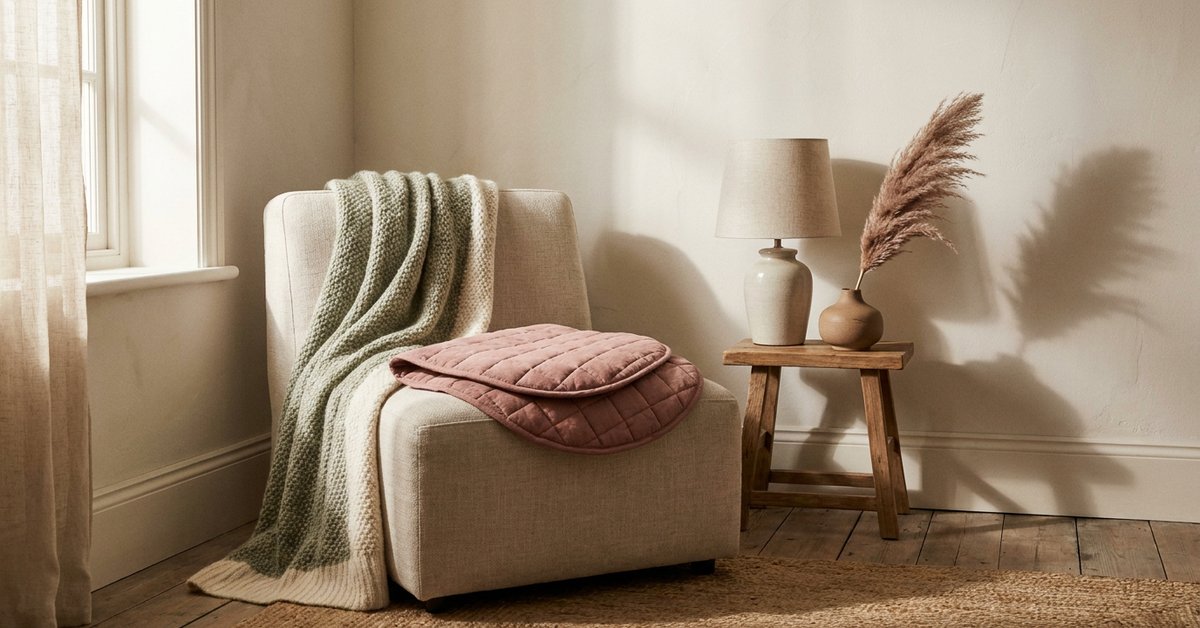
A sensory corner for ADHD is a small, dedicated spot in your home stocked with texture, sound, and light tools you can use the moment you feel overstimulated. It is not a whole room and it does not need a redesign. A closet nook, an unused reading chair, or a cove under the stairs all work, as long as the spot is reachable in under 10 seconds from the room where overload usually hits.
But what makes a corner sensory instead of just cozy? A cozy corner is about looking nice. A sensory corner is about function: every item in it does one specific job for your nervous system, whether that is grounding through weight, softening sound, or dimming light.
Why Does a Sensory Corner Calm an ADHD Nervous System?
A sensory corner calms an ADHD nervous system because it reduces incoming input at the exact moment your brain is struggling to filter it, instead of asking you to power through with willpower you do not have left. According to the National Institute of Mental Health, ADHD involves differences in the brain systems that regulate attention and filtering, which means an ADHD brain often cannot simply tune out a loud room, a bright light, or a scratchy tag the way a neurotypical brain can.
Some afternoons every single input arrives at once, a question, a sound, someone’s elbow on your arm, and something in your system just trips a breaker. It is not that you do not love the people in the room. It is that your nervous system hit its cap, and naming that is often the only reason you can step away for 90 seconds instead of snapping. A sensory corner exists so that stepping away has somewhere specific to go.
Where Should You Put Your Sensory Corner?
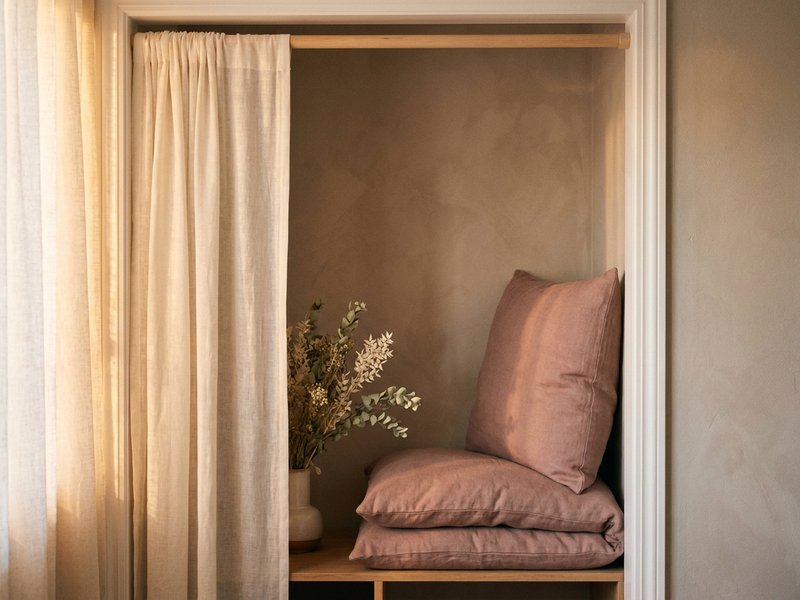
Put your sensory corner in the spot you already pass most often when a room gets loud: a closet you can close, a landing at the top of the stairs, or a corner behind a piece of furniture that already blocks sightlines. Three placement rules keep it usable instead of decorative.
- Choose a spot within 10 seconds of the room where overload usually happens, not the quietest room in the house if that room is upstairs and out of reach.
- Pick a space that can be partly closed off, with a curtain, a door, or simply a chair angled away from the room, so your eyes get a break along with everything else.
- Avoid a spot that doubles as storage. A corner that also holds the ironing board stops being a sensory corner and turns back into a chore reminder.
What Texture and Touch Ideas Work Best?
Texture and touch ideas work best when they give your hands and body something specific to hold, since touch input is often the fastest of the three senses to bring your system back down.
- A weighted lap pad, not a full blanket. A 5 to 7 pound lap pad gives the same deep pressure input as a weighted blanket but stays usable sitting up, mid task, instead of only in bed.
- One fidget tool that lives in the corner and nowhere else. A spinner ring, a putty tin, or a textured stone works, as long as it never migrates to a bag or a drawer, so your hand finds it without looking.
What Sound Ideas Calm an Overstimulated Brain?
Sound ideas calm an overstimulated brain by replacing chaotic, unpredictable noise with steady, predictable noise your brain can stop monitoring. The setup has to require zero decisions, or it fails the exact moment you need it most.
- An old phone left permanently plugged into a small speaker. One woman on r/adhdwomen built a cove under her stairs for herself and her 5 year old on this exact rule: whatever goes in must work with no setup, because these are not the moments where you want to think through Bluetooth pairing. Her list keeps a spare phone wired to a speaker, never needing to connect to anything.
- Loop earplugs or soft foam plugs, pre placed in the corner. Muting the room instead of adding sound works just as well for some people, and having them already sitting there removes the step of hunting for them mid overload.

What Lighting Ideas Work for a Sensory Corner?
Lighting ideas work best in a sensory corner when they replace overhead light entirely, since overhead light is one of the most common overload triggers in a home that otherwise feels calm.
- A single warm lamp on a low setting. Skip the ceiling light in this corner completely. A small lamp at eye level or below softens the whole space more than a dimmer switch on a bright fixture.
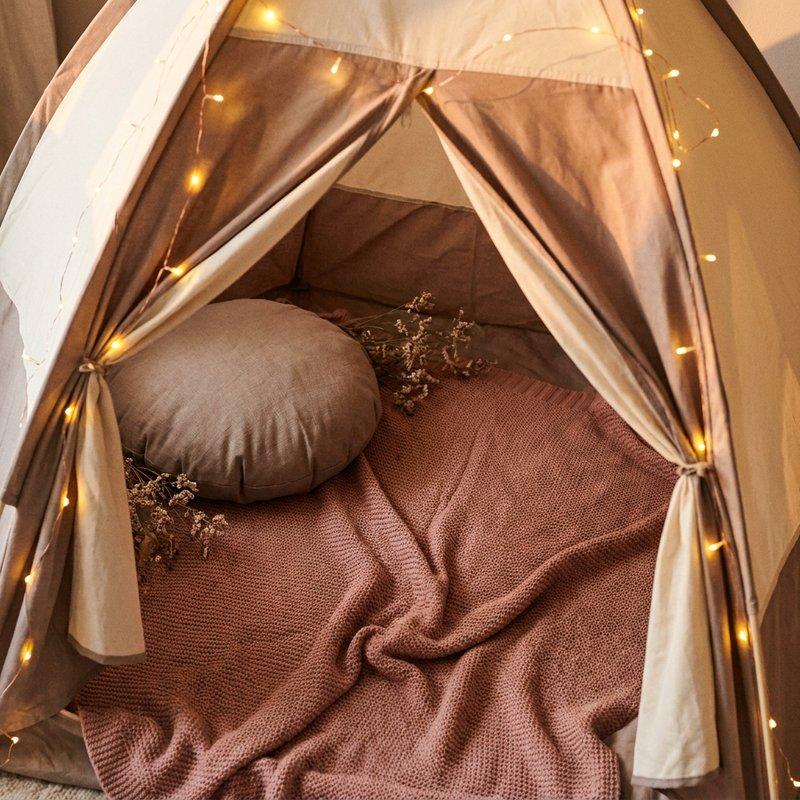
- Battery fairy lights instead of a plug in string. They tuck around a shelf or tent frame with no cord to trip on, and a remote or built in timer means you never touch a bright phone screen to turn them off.
What Movement and Enclosure Ideas Help Regulation?
Movement and enclosure ideas help regulation because pressure and containment tell your nervous system that the day is done making demands of it, at least for these few minutes.
- A pop up tent, the kind made for hostels. One opened on a bed with fairy lights inside and an audiobook running became a full retreat for one woman managing sensory overload. Building an enclosed space mattered more than removing the screen.
- A rocking chair or a chair that swivels. Small, repetitive motion gives your vestibular system steady input the same way weighted pressure gives your touch system steady input, and it needs nothing plugged in or charged.
What Should You Avoid When Building a Sensory Corner?
Avoid anything that adds a decision, a setup step, or a screen that pulls you into scrolling instead of settling. Zero decisions is the actual design rule, not a nice to have.
- Skip devices that need pairing or an app to open. A speaker that has to connect to Bluetooth every time adds exactly the kind of friction the corner is supposed to remove.
- Skip anything you have to charge daily to trust it will work. A dead lamp or a dead speaker turns your one reliable spot into one more thing that let you down.
- Skip letting the corner become general storage. The ironing board, the gift wrap, and the donation pile all belong somewhere else, even if this corner is the only free space in the house.
How Do You Know When to Use Your Sensory Corner?
Use your sensory corner as soon as you notice the early signs of overload, not after you have already snapped or shut down, since a corner used early takes minutes and a corner used late can take an hour. According to the Centers for Disease Control and Prevention, ADHD in adults commonly includes difficulty managing stress and emotional responses, which is exactly the pattern a sensory break interrupts before it escalates.
Early signs worth acting on include a sudden urge to snap at someone you love, noticing your own voice getting louder, or feeling your jaw or shoulders tighten without knowing why. If a break in your corner does not settle things within about 10 minutes, that is useful information too. It can mean a bigger reset is called for, like our guide on calming activities for ADHD adults when your brain will not settle, rather than another minute in the same spot.
I wore my fidget ring through a meeting that used to wreck me. Instead of picking at my skin or drifting somewhere else in my head, I just spun the band quietly under the table. I stayed in the room the whole time. Small, quiet, and a real win. You’re not behind. You’re just differently wired.
Want these 8 ideas somewhere you can find them again? Save this guide to your ADHD nervous system board on Pinterest for the next time a room gets loud.
Found this helpful? Pin this guide so you can come back to it anytime.
Frequently Asked Questions
What is a sensory corner for ADHD?
A sensory corner for ADHD is a small dedicated spot stocked with texture, sound, and light tools you can use the moment you feel overstimulated. It works because it needs no setup or decisions, so it stays usable during the exact moments your nervous system is too overloaded to think through steps.
How do I start building a sensory corner?
Start with one item from each sense: a weighted lap pad for touch, a small speaker or earplugs for sound, and a warm lamp for light. Place all three within 10 seconds of the room where overload usually happens, then add enclosure or movement ideas once the basics are working.
Is a sensory corner worth the space if I have ADHD?
Yes, even a closet shelf or a single chair counts, since the value comes from reliability, not square footage. A small corner you actually use every time beats a large one you have to think about setting up.
What are good sensory corner ideas for ADHD women on a budget?
A rice filled sock for weight, a spare phone plugged into an old speaker, and a clip on lamp cover most of the texture, sound, and light bases for very little money. The zero decision rule matters far more than how much anything costs.