This reflects my personal experience with ADHD. What works for me may not work for everyone. This post also contains affiliate links, and I may earn a small commission at no extra cost to you.
The calming activities that work for ADHD adults start in the body, not in the thoughts. A brain that will not settle is usually carrying more input than it can filter, and talking to it rarely reduces the load. One woman spent 30 years blaming crowds at work for her overwhelm before a grey storm day, 10 degrees outside, with a jumper and a scarf on, turned out to be the calmest day she could remember. She was overheating, and nobody had told her that counted. This guide sorts 27 activities by how overloaded you are right now, covers why calm sometimes feels worse than the noise, and shows how to build the accommodation into the room instead of into your willpower.
Calming activities help ADHD adults regulate by lowering sensory input rather than by adding a task. Cold water on the wrists, a long exhale, one lamp instead of an overhead light, and repetitive work with the hands all reduce load in under a minute. Match the activity to your overload level rather than to the time you have.

Save this for later
You will want this again. Pin it to your planning board so it is one tap away when you need it.
Pin it for laterWhat are the best calming activities for ADHD adults?
The ones that remove input rather than add an activity. Cold on the skin, a longer exhale than inhale, dimmer light, and repetitive movement with the hands all work within a minute, because each takes one channel of incoming signal down rather than asking an overloaded system to concentrate.
Does that mean meditation is useless? Not useless, just badly timed. A practice that asks for stillness and attention costs the most at the exact moment you have the least available, which is why it works on Sunday morning and fails at 6pm on a Wednesday.
Why does your brain refuse to settle?
Because the filter that screens incoming input is doing less screening than it should. Everything arrives at similar volume: the strip light, the fridge hum, the label in your collar, the conversation 2 desks away. The result is not a thought problem, and no amount of reasoning with yourself reduces it.
That distinction matters clinically, not just poetically. A woman on r/adhdwomen describes losing the ability to process one sense at a time at crowded conventions. Tunnel vision, muffled hearing, and dissociation left her needing to be led out. She says plainly that she now knows it is sensory overload. Her earlier label had been social anxiety, and it pointed treatment at the wrong system entirely. Strategies aimed at thoughts do little for a filter that has stopped screening.
How overloaded are you right now?
Answer that first, because the right activity depends on capacity rather than on preference. Three levels cover almost everything, and picking above your level is why calming attempts so often fail. What happens if you pick wrong? The activity itself becomes another demand, and the failure gets filed as more evidence that nothing works for you.
- Level 1, buzzing. Still functioning, jaw tight, everything slightly too loud. You have 30 seconds and you can still make decisions.
- Level 2, fraying. Snapping at people, unable to read a paragraph twice, close to tears or to leaving. You have an hour and very few decisions left.
- Level 3, shut down. Flat, wordless, stuck on the sofa or the floor. Decisions are gone, and anything requiring a plan will not happen.
9 calming activities for a 30 second reset
Use these at level 1, before the fraying starts. Each one takes under a minute and needs nothing you have to fetch. Why bother when you are only buzzing? Because level 1 is the last point where a 30 second fix still costs 30 seconds.
- Cold water on the inside of both wrists for 20 seconds. Cold on thin skin registers fast and needs no technique.
- Breathe out longer than you breathe in. In for 4, out for 8, 3 rounds. The exhale is the part that does the work.
- Press both feet flat into the floor and name 3 things they feel: the seam of a sock, cool tile, the give of a rug.
- Step outside the front door for 30 seconds of different air. No shoes, no plan, no walk.
- Hold something cold. An ice cube, a chilled can, or the inside of the fridge door against your palm.
- Hum one long low note until you feel it in your chest. Low enough to buzz, quiet enough that nobody asks.
- Switch the overhead light off and use one lamp instead. Overhead light is the single cheapest thing to remove.
- Put your back flat against a wall and stay there for 5 breaths. Pressure along the spine gives the body something definite.
- Drink a full glass of water slowly, in one go, without doing anything else.

9 calming activities for a bad hour
These fit level 2, when you are fraying and decisions have got expensive. Each one gives the hands or the body a job and takes a channel of input down. Should you try to work through it instead? Not usually, since an hour spent fraying produces about 20 minutes of usable output and costs the evening.
One woman describes her smallest reset for the days she comes home already fried. She takes her glasses off the second she is through the door and lets the whole room go soft and blurry. Not seeing every detail sharply takes one whole channel of input down, she sits in the blur for a few minutes, and her shoulders drop. This works for her. Your overload might live in a different sense.
- Shower with the light off. Warm water plus darkness removes 2 inputs at once and asks nothing of you.
- Give your hands repetitive work. Folding laundry, peeling vegetables, or sorting a drawer of odds and ends. Rhythm without decisions.
- Walk one lap of the block with no phone and no podcast. The point is the absence of audio, not the exercise.
- Legs up the wall for 10 minutes. Lie on the floor, feet up, phone face down in another room.
- Put on one song and move to it badly, alone. Movement to a beat is hard for a body to hold as a threat.
- Wrap up in something heavy. A weighted blanket works, and so does a folded duvet or a winter coat laid across your lap.
- Change your temperature. Open a window, run cool water over your forearms, or take off a layer. Heat is an input that most people never count.
- Colour, knit, or do a jigsaw for 20 minutes. Low stakes, visible progress, no outcome anyone is waiting for.
- Sit in the parked car without turning the radio on. For many women this is the only room in the house nobody enters.
9 calming activities for a full shutdown
Level 3 needs things that require no plan and no decision. If an activity has steps, it belongs in the previous list. Is lying on the floor really a calming activity? At this level it is the most effective one available, and treating it as legitimate is what stops the shutdown from also becoming a shame spiral.
- Lower the light before anything else. One lamp, a candle, or the light from the hallway. Do this first every time.
- Get horizontal with no expectations. Sofa, bed, or floor. Lying down is allowed to be the entire activity.
- Eat something salty or sour regardless of the hour. A strong taste reaches a system that has stopped registering quieter signals.
- Ask one person to sit nearby without talking. Company with no conversation costs nothing and steadies more than it should.
- Put on the show you have seen 40 times. Familiar input asks nothing. Novelty is what you cannot afford right now.
- Get in the bath even if you do not wash. Warm water, no soap, no task, no time limit.
- Wear noise cancelling headphones with nothing playing. Silence you can put on beats silence you have to arrange.
- Write 3 lines, not a journal entry. Three is short enough to start and long enough to empty the loop.
- Cancel one thing today, on purpose. Say it out loud, then let the relief count as the activity.

What if calm feels worse than the noise?
Then something is arriving that the noise had been covering, and that is common enough to plan for. Quiet removes the distraction, and what surfaces is often anger about years of not knowing.
A woman 6 years past her own diagnosis answered exactly this on r/adhdwomen, telling a newly diagnosed 29 year old that the anger is not a flaw in her thinking: you grieve the neurotypical vision of yourself that you will never become. Naming it as grief rather than negativity changes what the response should be, since grief is not argued out of someone. She added that acceptance arrives in time and still occasionally gives way to anger. On the days that surfaces, pick an activity with the hands rather than one with silence.
Calm is not the absence of input. It is the amount of input your system can carry right now, which is a different number on a different day.
How do you build the calm into the room instead?
Change the setup so fewer resets are needed, and take the accommodation before you are desperate. The smallest version of this is choosing where you sit.
One account on r/adhdwomen documents that move at a loud restaurant. She turned down the socially better seat and took the wall instead, because she needed that wall on her left both to ground her and to cut off one direction of incoming sound. Two functions from a single choice, anchor and shield. The cost was appearing to want the worse seat, which is why the reasoning stayed unspoken until afterwards.
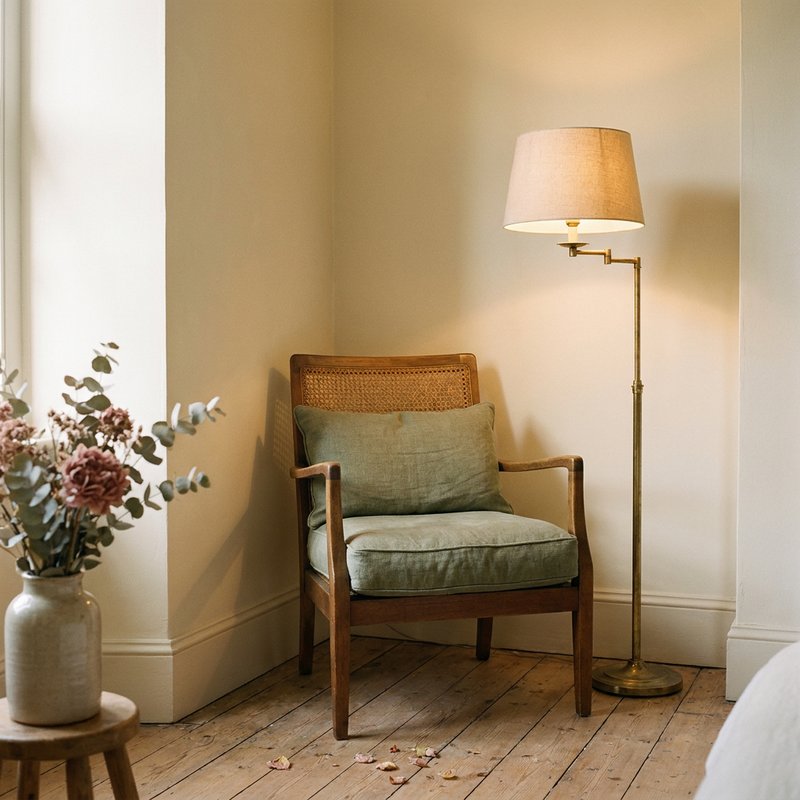
What else can the room do for you? Quite a lot, and none of it needs remembering. A dimmer switch, a lamp on a timer, a basket of soft things by the sofa, and a coat hook that removes the layer at the door all take load off before it accumulates. If a whole afternoon has already gone past resetting into freezing, my guide to getting unstuck from ADHD paralysis picks up where this one stops.
Which of these keep working over months?
The ones attached to something you already do. A reset that needs remembering competes with everything else you are failing to remember, so tie each one to an existing moment.
Which 3 would you actually reach for? Pick those and leave the rest. Cold water goes with washing your hands, the long exhale goes with sitting down in the car, and lowering the light goes with walking through the front door. Written on a card by the kettle, 3 chosen activities beat 27 remembered ones.
When is it more than overstimulation?
When the shutdowns arrive without a trigger, last past a night of sleep, or start costing you work and relationships. Panic with chest pain, a heart rate that stays high while resting, and losing hours you cannot account for are worth an appointment rather than a better reset.
The National Center for Complementary and Integrative Health summarises the evidence behind relaxation techniques and what they do and do not treat, and the National Institute of Mental Health sets out how ADHD presents in adults. Take a described week to that appointment: what triggered each episode, how long it lasted, and what ended it.
Save this for the next hard hour
Pin this so the 27 activities are here at level 3, when reading a long article is exactly the thing you cannot do.
One woman counted her small win as 5 minutes with a warm drink and nothing else. No phone, no list, no plan. It sounds tiny, and it was the first calm 5 minutes she had taken all week, and the whole evening felt softer afterwards. She let it count. You are not behind. You are just differently wired.
Found this helpful? Pin this guide so you can come back to it anytime.
Frequently Asked Questions
What calming activities help ADHD adults regulate their nervous system?
The ones that lower input rather than add a task. Cold water on the wrists, breathing out for longer than you breathe in, switching an overhead light for one lamp, and giving the hands repetitive work all take effect within a minute and need no concentration to start.
Why does meditation not work for my ADHD brain?
Meditation asks for stillness and sustained attention, which cost the most exactly when you have the least. It works better as a Sunday morning practice than as a rescue at 6pm. During overload, choose activities that reduce sensory input instead of ones that require focus.
How do I calm down fast during ADHD overstimulation?
Take one input away and add cold. Switch off the overhead light, run cold water over the inside of both wrists for 20 seconds, then breathe in for 4 and out for 8 three times. Sequence matters less than removing something before adding anything.
Why do I feel worse when things finally go quiet?
Noise can cover feelings that surface once it stops, and after a late diagnosis that is often grief rather than anxiety. One woman described it as grieving the version of yourself you will never become. On those days choose an activity with the hands rather than one with silence.
What are good calming activities for ADHD women at work?
Small and invisible ones. Cold water at the sink, a long exhale before a meeting, a wall or corner seat rather than the open middle of a room, and 5 minutes in a parked car. Choosing where you sit prevents more overload than any reset repairs.