
The best aesthetic yoga mat for ADHD is the one you enjoy looking at and can carry without dread. One woman worked full time, commuted, and tried to fit in eating well, friendships, and exercise. Then someone asked how much of it actually restored her, and she had no answer. A soft workout should answer that question. This guide compares 5 mats and 4 pieces of gear, sorted by how they feel to a busy nervous system.
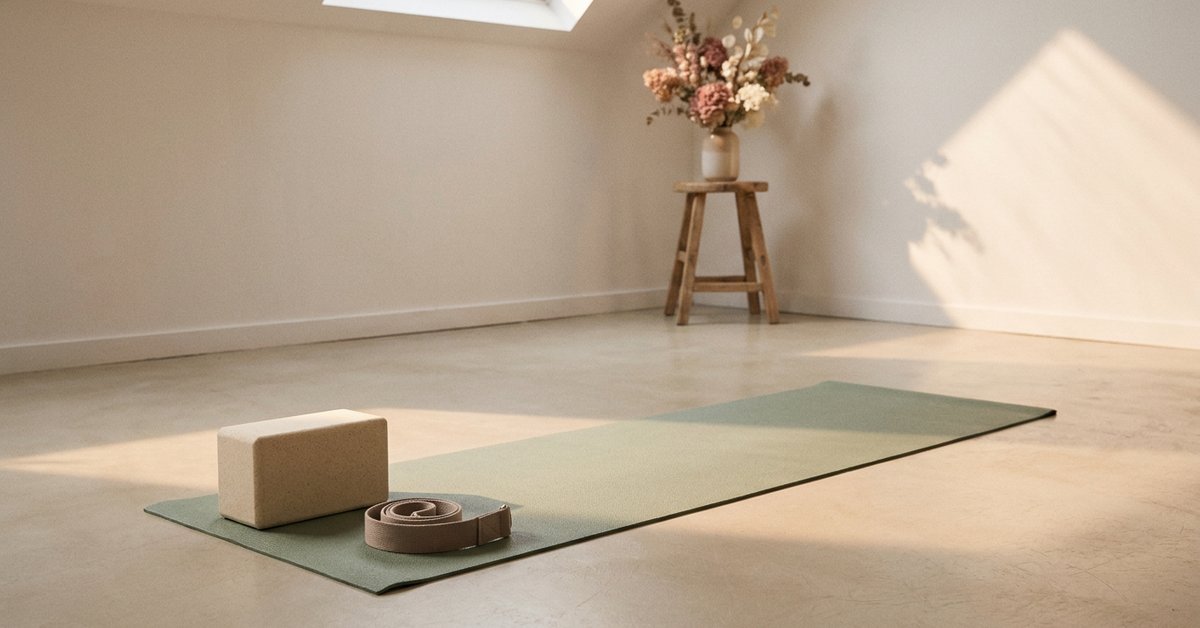
For ADHD women, an aesthetic yoga mat works when it is easy to look at, easy to carry, and easy to unroll. Choose 5 mm for balance or 6 mm for cushion, and pick a weight you can lift with one hand. Add a block and strap, then keep the mat visible.

Save this for later
You will want this again. Pin it to your planning board so it is one tap away when you need it.
Pin it for laterWhy Does an Aesthetic Yoga Mat Matter for ADHD?
An aesthetic yoga mat matters for ADHD because a mat you like looking at is a mat you actually unroll, and unrolling is the hardest part of any home workout. Looks are not vanity here. They are the hook that gets your brain to engage at all.
One woman who tuned out in almost every class started making her notes colorful and nice to look at, and suddenly she wanted to pay attention. People call it just decorating, she said, but the pretty notes were what got her brain to engage. The same logic applies to a mat. This worked for her, and your brain can respond to a different hook.
Does that make style more important than function? No. Function comes first, because a beautiful mat that slides under your hands gets abandoned by week two. Style decides whether you start, and function decides whether you keep going.
What Does Yoga Actually Do for ADHD Nervous System Regulation?
Yoga can lower perceived stress and anxiety, but the research does not show it changes core ADHD symptoms, so treat a soft workout as regulation, not a treatment. The National Center for Complementary and Integrative Health reports that a 2020 review of 12 studies found beneficial effects of yoga on perceived stress in all of them, and a 2019 review of 38 studies found a substantial beneficial effect on anxiety.
ADHD specific trials are smaller. A 2023 randomized trial in Behavioral Sciences gave 82 adults with ADHD and 77 controls either 10 minutes of cycling or 10 minutes of Hatha yoga. Yoga improved temporal impulsivity in the ADHD group only. A 2022 pilot study of 32 women with ADHD symptoms was less encouraging: six weeks of two 90 minute hot yoga classes per week was feasible, with 27 women completing every procedure, but it produced no significant change in executive function or mood.
What should you take from that mix? Short, gentle sessions are worth trying, and long intense ones are not a shortcut. One commenter in an r/adhdwomen thread on nervous system regulation reported ending a stretch of about 10 panic attacks a day over roughly 8 months with a fixed breathing count: 5 seconds in, 5 seconds out, repeated for a couple of minutes at the first sign of a spiral, and practiced daily even outside anxious moments. That is one woman’s account, and it shows the pattern that matters most: small, repeated, and visible beats big and rare.
What Should You Look for in a Yoga Mat With ADHD?
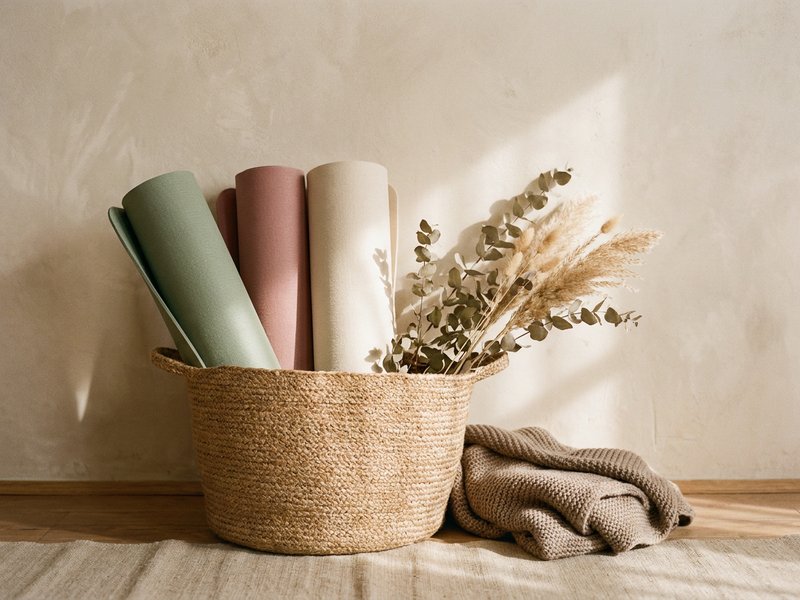
Look for five things: thickness, grip, weight, smell, and how the mat looks in your room. Each one removes a small reason to skip the session.
- Thickness: 4 mm to 6 mm covers most needs. A 6 mm mat cushions knees and wrists, and a thinner mat feels steadier in standing poses.
- Grip: rubber and polyurethane tops hold when your hands get warm, so you do not spend the session sliding.
- Weight: mats run from about 5 to 7.5 pounds. A mat that feels heavy stays in the closet, so pick one you can lift with one hand.
- Smell: natural rubber carries a rubber smell out of the box, and it can bother a sensitive nose for the first weeks. Air the mat out before you use it.
- Look: choose a color you want to see every day, such as sage, blush, or cream, because visibility is the cue that gets you started.
Which Mat Fits Your Sensory Profile?
The right mat depends on which sensation bothers you most: weight, slipperiness, thinness, or smell. Specs below come from each brand’s listing and can change, so check the current page before you buy.
- Manduka PRO, 6 mm: a dense PVC mat that weighs 7.5 pounds and cushions knees and wrists. The brand backs it with a lifetime guarantee. It suits women who want it planted in one spot, not carried.
- Liforme Classic, 4.2 mm: about 5.5 pounds with printed alignment guides. It suits women who like visual lines to follow, and the price is the highest of the five.
- JadeYoga Harmony, 5 mm: natural rubber at about 5 pounds, 24 inches wide, in many colors. It grips even when wet, and it carries the rubber smell described above.
- lululemon The Reversible Mat, 5 mm: 5.24 pounds with a polyurethane top for sweaty practice and a natural rubber base for cushion. It suits warm, restless hands.
- Gaiam 6 mm mat: a budget option that costs a fraction of the others. It is thick, and it wears sooner.
Which one should a first time buyer pick? The lightest mat you still like the look of, at 5 mm, since a mat under 5.5 pounds is one you will carry to the living room without a second thought.
Is a Cheap Yoga Mat Enough for ADHD?
A cheap mat is enough for the first month if it is at least 5 mm thick and does not slide. Upgrade after you have unrolled it three weeks in a row, because novelty fades around then and a $35 mat costs far less to abandon than a $150 one.
Cheap also has a ceiling. An Amazon reviewer wanted an acupressure mat to unwind at home. The spikes were sharper than the set she had tried before, and she could have adjusted to that. What she could not get past was the fabric, which was thin and felt cheap, over foam that does not hold up. It works, she said, but it reads as a buy it twice product.
Her lesson applies to any mat. Press your thumb into a budget mat in the store or read the reviews for the word thin, and skip anything that feels papery. The foam is what you will lie on for years.
Which Gear Is Worth Buying Beyond the Mat?
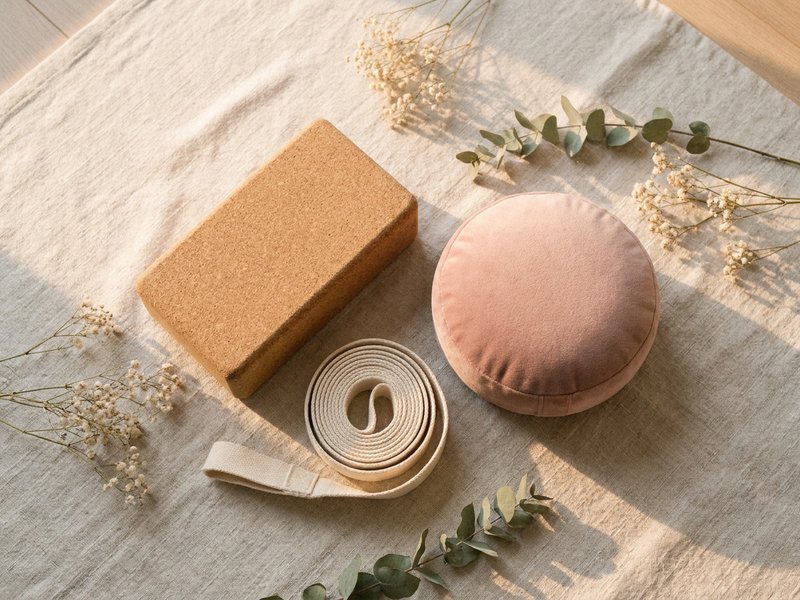
Four pieces of gear earn their place: a cork block, a strap, a bolster, and earplugs for loud classes. Each one lowers the effort of a session instead of adding a task.
- Cork block: brings the floor closer for stretches, and stays where you put it.
- Strap: lets you hold a stretch without straining, and coils small enough to live on the mat.
- Bolster: turns a rest pose into a supported one, which is the point of a soft workout.
- Earplugs: turn the room down in a studio with music, chatter, and a teacher’s voice.
The earplug idea comes from lived experience. One woman used to leave parties early because the music turned from fun to painful about an hour in. She tried adjustable earplugs at a dance party and stayed, and halfway through she took the mute insert out because it was doing more than she needed. They also look like jewelry, which matters to her more than she would admit. It worked for her, and ears differ, so try each ear tip size before you decide.
Yoga Mats and Gear at a Glance: Which Ones Win?
The table lines up all 9 picks by the job each one does. Prices are typical United States ranges and shift with size, color, and sales.
| Product | Best For | Price Range | My Take |
|---|---|---|---|
| Manduka PRO, 6 mm | Cushion and stability | $110 to $150 | Heavy at 7.5 pounds, so leave it in place instead of carrying it. |
| Liforme Classic, 4.2 mm | Printed alignment guides | $150 to $190 | Steady and lovely to look at, and the price asks for commitment. |
| JadeYoga Harmony, 5 mm | Grip and color choice | $80 to $120 | Light at about 5 pounds. Air out the rubber smell first. |
| lululemon The Reversible Mat, 5 mm | Warm or restless hands | $80 to $100 | Two textures in one mat, at 5.24 pounds. |
| Gaiam 6 mm mat | A low risk first mat | $30 to $45 | Thick and cheap, so expect it to wear sooner. |
| Cork yoga block | Bringing the floor closer | $15 to $25 | The first accessory worth buying. |
| Yoga strap | Stretching without strain | $8 to $15 | Small, cheap, and easy to keep on the mat. |
| Yoga bolster | Supported rest poses | $35 to $70 | Turns a floor corner into a calm nook. |
| Adjustable earplugs, Loop style | Loud classes | $30 to $55 | Turn the room down, and test every tip size. |
How Do You Set Up Your Space So You Actually Use It?
Set up your space so the mat is visible and ready, because an unrolled mat removes the first hurdle. Why does that matter so much? Every step between you and the floor is a chance to change your mind. Five small steps turn a corner into a cue.
- Pick a corner you pass daily. Near the bedroom door, the sofa, or the kettle all work.
- Leave the mat out. Roll it standing up in the corner, or leave it flat if the floor allows.
- Park the gear on the mat. A block and a strap ready to grab means no searching.
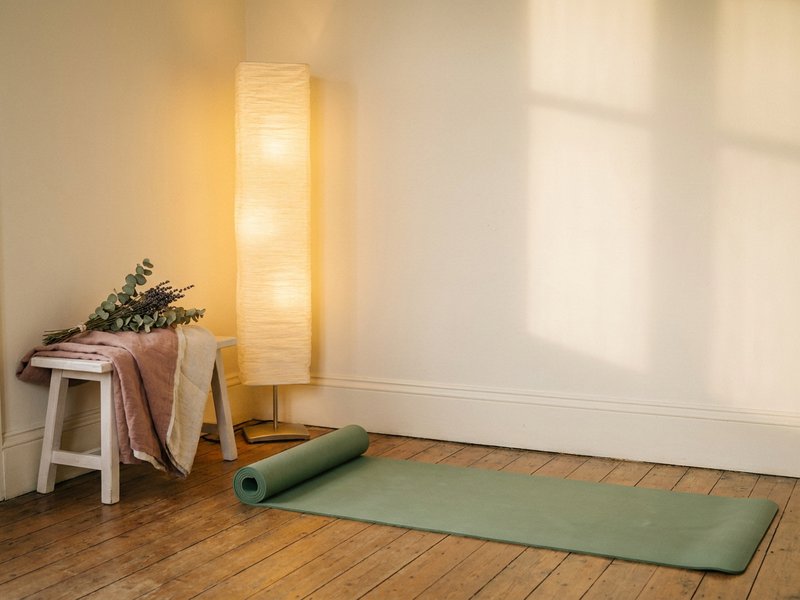
- Style the corner softly. One lamp, one basket, and two colors give a nervous system regulation aesthetic that invites you in.
- Set a 10 minute floor. Attach it to something you already do, such as the morning coffee.
For gentle first sessions once the corner is ready, see how to start a yoga practice when you have ADHD. If you want the bigger picture behind all of this, how to regulate your nervous system with ADHD covers the basics.
How Much Yoga Is Enough for a Soft Workout?
Ten minutes is enough to start, and the 2023 trial above used exactly 10 minutes. What if 10 minutes still feels like too much? Start with 3. Consistency matters more than length, so a short session you repeat beats a long session you dread.
Safety matters too. The National Center for Complementary and Integrative Health says yoga is generally safe when performed properly under the guidance of a qualified instructor, and the most common injuries are sprains and strains, mostly in the knee or lower leg. New practitioners should skip headstands, shoulder stands, the lotus position, and forceful breathing, and hot yoga carries extra risks of overheating and dehydration.
Set your expectations to a longer timeline as well. One r/adhdwomen commenter mapped a multi year burnout recovery: “I burned out 6 years ago and I’m doing much better now but it did take time.” Progress showed up as fewer relapses more than feeling better, and she credited mindfulness based stress reduction training and a full round of EMDR alongside medication. A soft workout sits inside a longer recovery and does not replace it. More ideas live in these gentle movement ideas for ADHD women who hate the gym.
What If You Buy the Mat and Stop Using It?
If you stop using the mat, move the mat before you blame yourself. A mat that vanished into a closet has lost its cue, and putting it back in view often restarts the habit. Try a smaller session first, such as 3 minutes of stretching, instead of buying a different mat.
One woman on r/ADHD celebrated a whole week without ordering takeout once, after cancelling the delivery apps she used to pour most of her income into. Moving her body again steadies her brain more than she expected. Friends do not see why this was such a mountain for her. She does, and that is exactly why she is proud. You’re not behind. You’re just differently wired.
Found this helpful? Pin this guide so you can come back to it anytime.
Frequently Asked Questions
Why does yoga help ADHD?
Yoga combines slow breathing with steady movement, which can lower perceived stress and anxiety. Research on ADHD symptoms themselves is limited and mixed, so treat it as a regulation tool, not a treatment. Even 10 minutes helped temporal impulsivity in one trial of adults with ADHD.
What is the best yoga mat for ADHD?
The best mat is one you enjoy looking at, can carry easily, and does not slide. For most women that means 5 mm thick, under 6 pounds, and a color you want to see daily. Natural rubber and polyurethane tops grip well when hands get warm.
Is an expensive yoga mat worth it for ADHD?
Only after you have used a cheaper one for about three weeks. A $30 to $45 mat tests the habit at low cost. If you still unroll it weekly, a $80 to $150 mat can add grip, cushion, and a look you love.
Aesthetic yoga mat ideas for late diagnosed ADHD women?
Choose two or three soft colors, such as sage, blush, and cream, and keep the corner simple with one lamp and one basket. Leave the mat visible, since a mat you see is a mat you use. Match the color of your gear to the mat.
Should I take a yoga class or practice at home with ADHD?
Both work. The National Center for Complementary and Integrative Health recommends learning under a qualified instructor to lower injury risk. Try one class, then practice short sessions at home. If studios feel loud, earplugs or a quieter time slot can help.