Visual storage ideas for ADHD women who forget put memory in the room instead of asking your brain to hold onto it. The 15 below use clear containers, open shelving, and labeled systems so what you own stays visible, not filed away and forgotten. One woman described reorganizing her battery drawer, rearranging furniture, and sorting her books by subject while a Christmas tree from 4 months earlier stayed exactly where it was. Her brain would do anything with focus and energy, as long as it was not the actual thing. These ideas work with that pattern instead of against it.
Visual storage ideas work by keeping belongings in your line of sight instead of behind a closed door, since an ADHD brain treats hidden items as items that do not exist. Clear bins, open shelves, and labeled systems all put the reminder in the object itself. The 15 ideas below are grouped by container type so you can start with whichever category matches the room giving you the most trouble.


Save this for later
You will want this again. Pin it to your planning board so it is one tap away when you need it.
Pin it for laterWhat Makes Storage “Visual” Instead of Just Storage?
Storage counts as visual when you can identify what is inside it without opening it, moving it, or remembering what you put there last week. A closed cardboard box is storage. Swap in a clear bin holding the exact same contents, and that becomes visual storage, since the difference is not aesthetic, it changes whether you remember the item exists at all. What if you already own mostly closed containers? You do not need to replace everything at once. Start with the 1 or 2 spots where you lose track of things most often.
Why Do ADHD Brains Need to See Things to Remember Them?
ADHD brains need to see things to remember them because the underlying issue is working memory, not object permanence. A study on cluttering and working memory in ADHD found that impaired working memory makes it harder to hold organizational rules in mind while sorting or storing items, which is a large part of why clutter accumulates even when someone knows exactly how they would like a space to look. Why does this matter for storage specifically? Because a hidden item asks your working memory to carry it. A visible item does that job for you. One professional organizer working with the ADHD YouTube channel How to ADHD once classified a client as a “Butterfly” organizing personality, a visual type who has to see belongings to remember they exist, which explained why the client’s counters kept refilling with clutter faster than they were ever cleared.
Which Clear Container Ideas Work Best?
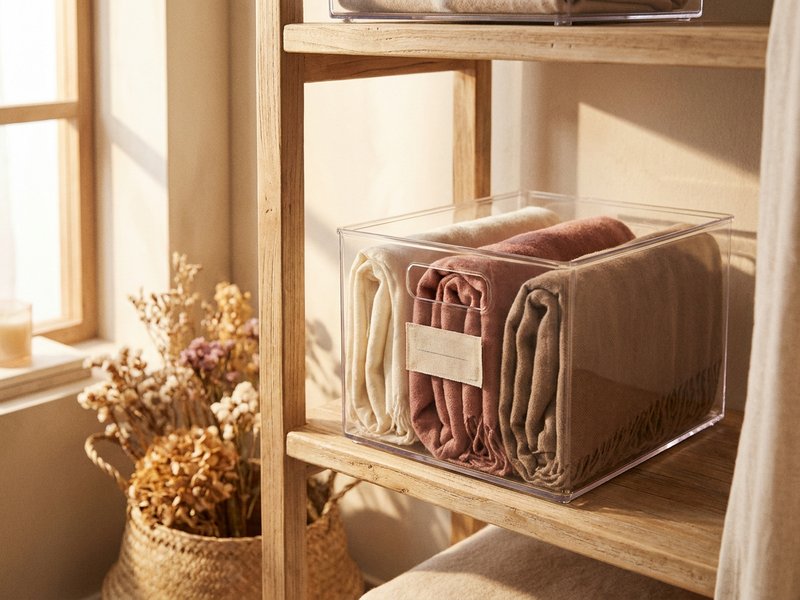
Clear container ideas work best when they replace an opaque version of the exact same thing you already use. Swap opaque pantry boxes for clear ones so contents are visible without lifting a lid. Use clear shoe boxes in a closet instead of the original branded boxes, since a matching set of clear boxes lets you scan a whole shelf at once. Does the container need to match exactly? No, visibility matters more than a matched set ever will. On the bathroom counter, a clear toiletry organizer keeps daily items visible instead of scattered in a drawer. By the entry, a clear filing bin catches mail before it becomes a pile you stop seeing.
Which Open Shelving Ideas Work Best?
Open shelving ideas work best in the rooms where a closed door has quietly become where things go to be forgotten. An open bookshelf instead of a closed cabinet keeps books, folders, and bins visible instead of stacked out of view. In the kitchen, a wall mounted open shelf holds items you use daily, cutting boards, spices, so they never disappear behind a cabinet front. For tools or craft supplies, a pegboard turns a drawer’s worth of small items into a wall you can scan in 2 seconds. An open closet rod instead of a closed wardrobe door means your actual outfit options stay visible every morning.
Which Labeled System Ideas Work Best?
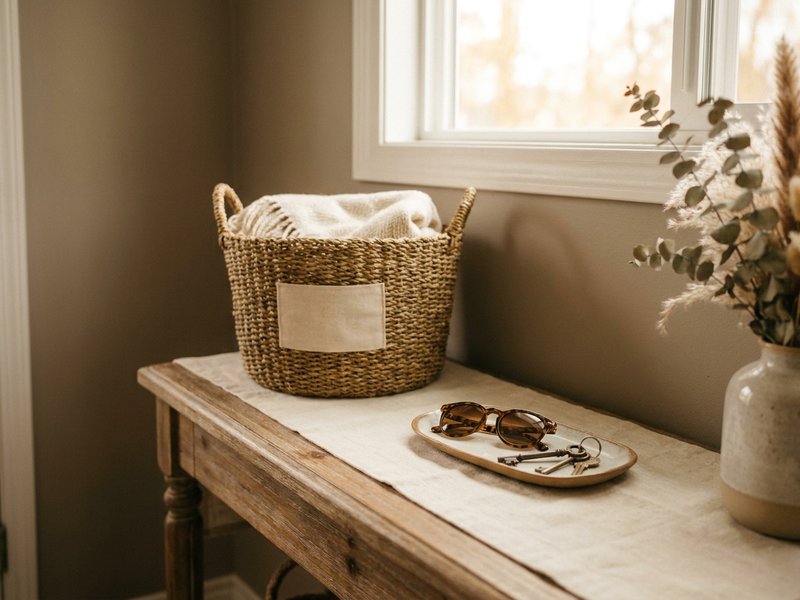
Labeled system ideas work best when each label names a real category, not “misc,” since a catch all bin becomes invisible clutter within a week. Label bins by specific category, cords, batteries, gift wrap, rather than by room or by guess. Use labeled drawer dividers for a junk drawer so small items land in a named spot instead of a single pile. Is a junk drawer always a bad sign? Not if every item in it actually has a named home inside it. Keep a landing zone tray by the main door for keys, wallet, and sunglasses, the 3 items that vanish most often when they have no fixed spot. One woman kept autopay on every bill and visible storage for everything she needed to use, after her electricity got cut off more than once for a forgotten payment. She stopped hiding the things that embarrassed her and started putting them exactly where she would actually deal with them. None of it was pretty. All of it worked.
Which Entryway and Daily Use Ideas Work Best?
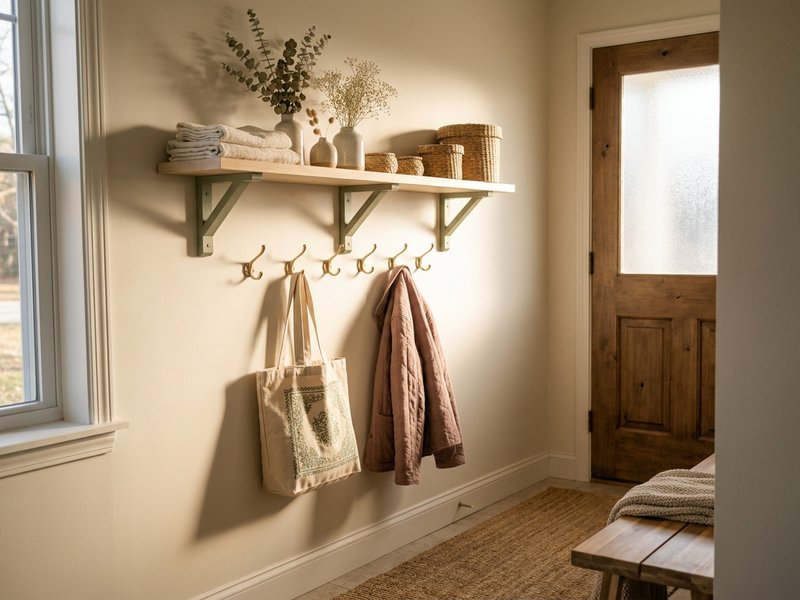
Entryway and daily use ideas work best when they intercept items on their way in or out of the house, not after they have already scattered. By the door, a command hook wall holds bags and coats at the exact spot you take them off, so they never make it to a chair instead. On a console table, a shallow bowl becomes a charging station that also keeps phones and small electronics visible. And a dedicated returns basket by the door holds anything that needs to leave the house again, a library book, a borrowed item, so it does not get reabsorbed into a room and forgotten.
What Should You Avoid When Setting Up Visible Storage?
Avoid decorative storage that hides contents for the sake of looking tidy, a woven basket with a lid, a matching set of opaque boxes, since that trades visibility for a look that undoes the whole point. Our guide to ADHD friendly home organization ideas covers more of this same principle across the rest of the house. What if a system already feels like too much upkeep? Skip it, since systems that need daily rearranging to stay legible were never sustainable to begin with. A visual system should get easier to maintain over time, not harder, and if it is not, the container is fighting your brain instead of helping it.
How Do You Know a Visual Storage System Is Actually Working?
A visual storage system is working when you stop rebuying things you already own because you can see what you have. Track 1 signal over a month: whether you catch yourself about to buy a duplicate and stop because you spotted the original first. If a bin or shelf still gets ignored after a few weeks, the visibility is not the problem, the location probably is. Move it to somewhere your eyes already land during the day.
Save this before you buy a third pair of scissors you already own 2 of, somewhere.
My own small win was putting all my laundry away for the first time in over a year. The piles had taken over the dresser, the bench, and a whole spare room. I finally folded and put every piece in its place. It had been driving my husband quietly crazy, and honestly it had been wearing on me too. You’re not behind. You’re just differently wired.
Found this helpful? Pin this guide so you can come back to it anytime.
Frequently Asked Questions
What are visual storage ideas for ADHD?
Visual storage ideas keep belongings visible instead of hidden behind closed doors or opaque containers, since an ADHD brain treats hidden items as items that do not exist. Clear bins, open shelves, and labeled systems all put the reminder in the object itself.
How do you stop forgetting what you own with ADHD?
Swap closed containers for clear ones and open cabinets where you can, especially in the spots you lose track of things most. Working memory struggles to carry hidden items, so a visible item does that job for your brain instead.
Is open shelving actually better than closed cabinets for ADHD?
Yes, for the rooms and items you use daily. Closed cabinets work fine for items you rarely need, but daily use items disappear from memory once a door closes on them, which makes open shelving the better default for kitchens and closets.
Visual storage ideas for ADHD women in a small apartment?
Prioritize a landing zone tray by the door and clear bins in the pantry first, since small spaces make lost items even more disruptive to find. A pegboard also solves storage without taking any floor space at all.
How do you know if a visual storage system is actually working?
A system is working when you stop rebuying things you already own because you can see what you have. If a bin or shelf still gets ignored after a few weeks, move it to a spot your eyes already land during the day.